Plan the Temple of Apollo at Didyma and the Sacred Way with historical context, transport, heat and current visiting conditions.
The Short Answer
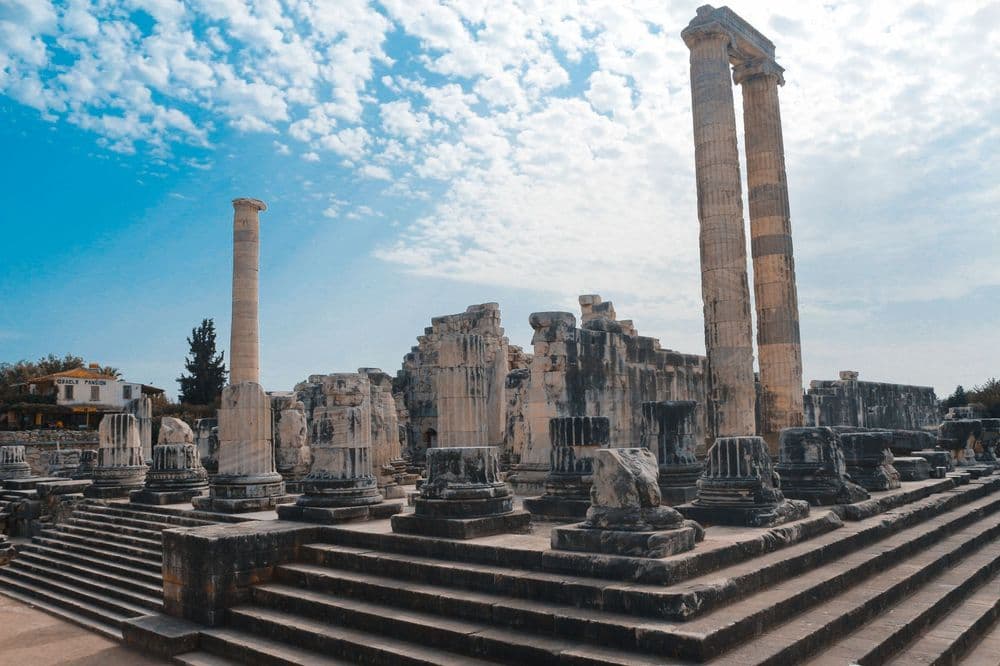
The Temple of Apollo at Didyma — the sanctuary Didim is named after — was one of the largest temple projects of the ancient world, and it was never finished. Heart of an oracle that rivaled Delphi, it now stands right inside the town, shrinking every visitor with the sheer scale of its columns. The visit takes 1–1.5 hours; in summer go in the first hour of the morning or after mid-afternoon, because shade barely exists.
Why It Matters
Didyma was Apollo's oracle: kings and cities came here to ask about the future. Connected to Miletus by the Sacred Way, the temple began rising again around 300 BC with one ambition — to be the largest temple on earth. More than 120 columns were planned; construction ran for centuries and still never finished. That unfinishedness is the most instructive part of the visit today: some columns are fluted, others left raw, so you read every stage of ancient stoneworking in a single building.
What You'll See
- The colossal columns and platform: photographs always undersell the scale — shoot with a person in the frame.
- The Medusa relief: the temple's iconic frieze fragment greets you near the entrance and doubles as the town's visual emblem.
- The adyton (inner court): sloping tunnel corridors descend into the sacred inner chamber where prophecies were delivered — the most atmospheric corner of the structure.
- Traces of the Sacred Way: sections of the ceremonial road from Miletus are marked around the site.
Planning Your Visit
The temple sits in the town center, minutes from Altinkum by dolmuş or car. Tickets are sold at the gate; check current hours and fees before you go. Between 11:00 and 16:00 in summer the marble floor turns into an oven — hat and water are non-negotiable. Pairing the visit with Miletus and the Ilyas Bey Mosque builds the perfect ancient-sites day: Miletus in the morning, the mosque's shade at noon, Apollo in the late afternoon.
Honest Warnings
- Shade on the site is close to zero; a midday visit halves the pleasure.
- The ground is uneven and the marble slippery in places; wear grippy shoes, not sandals.
- At the souvenir stalls by the gate, ask prices first and bargain gently; the first quote is rarely the last.
- Climbing the walls and columns is forbidden — for the stone's sake and yours.
Frequently Asked Questions
- How long does the visit take? 1–1.5 hours at a calm pace; 2 with serious photography.
- Do I need a guide? Not strictly, but a guide or audio guide telling the oracle ritual and the story of the unfinished build enriches the visit noticeably.
- Does it work with kids? Yes — the scale impresses children too; avoid the hot hours and carry water.
- Can it share a day with Miletus? Easily: the two sites are about 25–30 minutes apart by car; a morning–late-afternoon split is ideal.
Planning questions
What does this Aydın guide cover?
Plan the Temple of Apollo at Didyma and the Sacred Way with historical context, transport, heat and current visiting conditions.
Can I watch a 4K walking tour of Aydın?
Yes. The page links to Travel Walk Tours films so you can preview the Aydın route on a big screen before you go.
How should I use this page to plan?
Read the quick answer first, skim the route notes, then compare street texture, timing, and nearby guides through the linked city page and walking films.