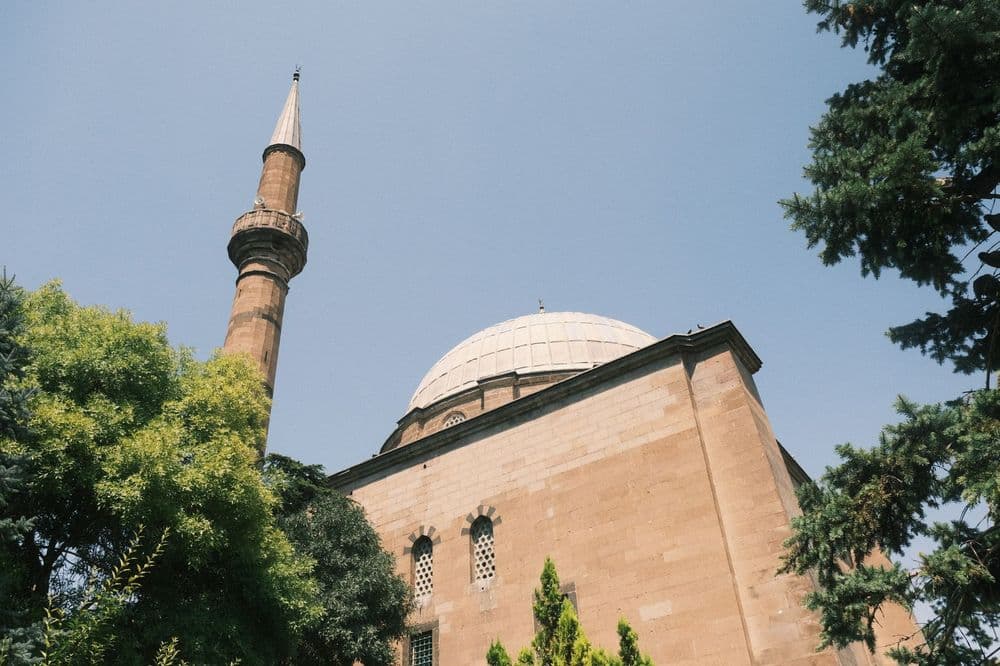
A complete guide planning Bursa with realistic distances: the Great Mosque, the Green Mausoleum, Cumalikizik, Uludag and Iznik.
Places on the map
14 pinsNumbers match the order in the article. Tap a pin for directions.
Best Things to Do in Bursa: The Ottoman Capital, Cumalikizik and Uludag
People who sum Bursa up as "Iskender kebab and Uludag" do not realise they are walking in the city where the Ottoman Empire was born. Beneath the twenty domes of the Great Mosque, before the tiled walls of the Green Mausoleum and at the tomb of Osman Gazi, the empire's first century is cast in stone. Ten kilometres east is the UNESCO-listed village of Cumalikizik; to the south, Uludag, Turkey's first ski resort. Bursa is not a kebab stop but a six-hundred-year-old capital; the real task is to read those layers correctly.
This guide is written for a first visit, but not for the one who wants to pass Bursa in "half a day of mosques, half a day of cable car." The centre needs a day, Uludag and Cumalikizik a day, Iznik a separate day. This guide groups places as the historic centre, mountain-village and Iznik, and you should build your days around that.
The distances below are measured straight-line from the Great Mosque; city traffic and mountain roads extend the real time. The numbers match the pins on the map exactly.
Quick Answer
Bursa's historic centre fits into one day; Cumalikizik and Uludag into one, Iznik into a separate day. Tour the Ottomans' first capital without hurry, in the mosque-mausoleum-han triangle.
- **First visit:** Day 1 the centre (Great Mosque, Green complex, hans, tombs), Day 2 Cumalikizik and Uludag.
- **Base:** Central Bursa; the historic buildings are within walking and tram distance.
- **Car-free:** The centre works by tram and on foot; Uludag by cable car, Iznik needs a bus/car.
Understanding Bursa in Five Minutes
Bursa is the city where the Ottoman Empire was born. The siege Osman Gazi began in 1317 ended with his son Orhan Bey's conquest of the city on 6 April 1326; the principality's centre moved to Bursa in 1335. This first capital is full of the monuments of the empire's founding century: the twenty-domed Great Mosque built by Yildirim Bayezid between 1396 and 1400; the tiled marvel of the Green Mosque and Green Mausoleum, raised in the 15th century under Celebi Mehmed; the tombs of Osman and Orhan Gazi at Tophane. The city was a centre of silk production from the 14th century; Koza Han still sells silk today.
To the east of the city, Cumalikizik is a village from the Ottoman founding period; with its timber-and-adobe houses and narrow streets surviving to today, this settlement was declared a UNESCO World Heritage Site in 2014 as "Bursa and Cumalikizik: The Birth of the Ottoman Empire." Uludag to the south, Mount Olympus of Mysia by its ancient name, is Turkey's first ski resort. Sixty kilometres east stands Iznik (ancient Nicaea): the First Council of Nicaea, the most important gathering in the history of Christianity, was held here in 325, the second in 787; the city's tiles adorned Mimar Sinan's buildings in the 16th century.
Knowing these layers changes the visit. Looking at the dome over the fountain in the Great Mosque, you stand in an empire's first monument; at the tomb of Osman Gazi, you see where the dynasty began; at Iznik, you enter the hall where a religion's fate was decided. Bursa lays its history not in a museum but in mosque, tomb and village.
The Historic Centre: Mosques, Tombs and Hans
The centre is toured on foot and by tram; the mosques, tombs and hans are within a few kilometres. The stops below fit comfortably into one day.
1. The Great Mosque (Ulu Cami)
The masterpiece of Bursa and of early Ottoman architecture. Built by Yildirim Bayezid between 1396 and 1400, the mosque, with its twenty domes, the fountain at its centre and its giant calligraphy panels, is the grandest example of the multi-domed mosque type. The fountain inside is open to the sky; the sound of water and the art of calligraphy together form the city's spiritual centre.
- **Getting there:** The centre's ground zero; by tram and on foot (0 km).
- **Best time:** Morning or afternoon; outside prayer times.
- **While you're here:** Koza Han (2) and the Tophane tombs (3) are within walking distance.
- **Budget:** Free entry; a place of worship, modest dress.
- **Common mistake:** Only looking from outside; the fountain and calligraphy panels inside are the mosque's soul.
2. Koza Han
The 1491 silk han beside the Great Mosque; the six-hundred-year-old heart of Bursa's silk trade. The plane tree and fountain in its courtyard and the surrounding silk and textile shops are still lively. Listening to the courtyard's hum over tea in the upstairs tea garden and buying a silk scarf or fabric is the classic Bursa experience.
- **Getting there:** Beside the Great Mosque (1), on foot (0 km).
- **Best time:** Early afternoon; for the courtyard tea garden.
- **While you're here:** The Great Mosque (1) adjoins it; Emir Han and the covered bazaar are around.
- **Budget:** Free to wander; silk goods are mid-to-upper, open to bargaining.
- **Common mistake:** Buying silk at the first price; compare in the han bazaar and bargain.
3. Tophane and the Tombs of Osman and Orhan Gazi
On the Tophane hill overlooking the city, the tombs of Osman Gazi, founder of the Ottomans, and his son Orhan Gazi. This hill, where the dynasty began, is Bursa's spiritual and historic centre, with its clock tower and terrace overlooking the city. The simplicity of the tombs and the view over the plain convey an empire's modest beginning.
- **Getting there:** On foot up from the Great Mosque (1); 1 km from the centre.
- **Best time:** Sunset; the terrace overlooks the city and plain.
- **While you're here:** The Muradiye Complex (6) is nearby; the centre below.
- **Budget:** Free entry.
- **Common mistake:** Skipping the clock tower terrace and passing the tombs quickly; both the view and the dynasty's origin are here.
4. The Green Mosque and Green Mausoleum
The 15th-century complex east of the city, named for its green-blue tiles. The tiled mihrab of the Green Mosque, built under Celebi Mehmed, and the turquoise tiles covering the exterior of the Green Mausoleum are the peak of early Ottoman tile art. Celebi Mehmed's tiled sarcophagus in the mausoleum crowns the whole complex.
- **Getting there:** East by tram or on foot from the centre (1); 1 km from the centre.
- **Best time:** Morning; the tiles shine in the light.
- **While you're here:** Emir Sultan (5) continues east; the Museum of Turkish and Islamic Art is in the complex.
- **Budget:** Free entry; a place of worship.
- **Common mistake:** Skipping the mausoleum and seeing only the mosque; the turquoise-tiled exterior is Bursa's most special work.
5. Emir Sultan Mosque
The complex east of the city, loved for its plane-tree courtyard and spiritual atmosphere. Dedicated to Emir Sultan, son-in-law of Yildirim Bayezid, the mosque, though rebuilt many times, is a peaceful stop with its courtyard, cemetery and position overlooking the city. Visited by locals, this complex is a spiritual place rather than a touristy one.
- **Getting there:** East on foot or by tram from the Green Mosque (4); 2 km from the centre.
- **Best time:** Morning and late afternoon; the courtyard is calm.
- **While you're here:** The Green Mosque (4) is to the west.
- **Budget:** Free entry; a place of worship.
- **Common mistake:** Expecting a touristy monument; its value is in the peace of its courtyard and its spiritual atmosphere.
6. The Muradiye Complex
The complex built by Murad II, of a mosque, madrasa and twelve princes' tombs. Carrying the tragic stories of the Ottoman dynasty, the tombs, with their tiles and garden, are a quiet history lesson; the princes killed in succession struggles lie here. Its garden and the inner tiles of the tombs are among the centre's most serene corners.
- **Getting there:** West on foot from Tophane (3); 1 km from the centre.
- **Best time:** Afternoon; the garden is calm and shaded.
- **While you're here:** The Tophane tombs (3) and the centre are nearby.
- **Budget:** Free entry.
- **Common mistake:** Passing without entering the tombs; the inner tiles and dynasty stories are the real value.
7. Cekirge Thermal Springs
The thermal area west of the city, used since antiquity. The heart of Bursa's healing waters, Cekirge is known for its historic baths (Eski Kaplica, Yeni Kaplica) and thermal hotels. Enjoying the thermal water in baths from the Roman and Ottoman periods adds a restful break to a city visit.
- **Getting there:** West by tram/car from the centre (1); 2 km from the centre.
- **Best time:** Late afternoon; for a rest after touring.
- **While you're here:** The Inkaya Plane Tree (8) is nearby.
- **Budget:** Baths are mid-range; the historic springs are popular.
- **Common mistake:** Staying long in the thermal water; it is hot and intense, so soak briefly and rest.
8. The Inkaya Plane Tree
The giant monumental plane tree near Cekirge, about 600 years old. As old as the Ottoman founding, this tree, with the tea garden beneath it and its position facing a waterfall, is the classic escape for the people of Bursa. Its trunk is tens of metres in girth; drinking tea beneath it shows the city's face intertwined with nature.
- **Getting there:** West by car from Cekirge (7); 3 km from the centre.
- **Best time:** Afternoon; for tea and shade.
- **While you're here:** The Cekirge springs (7) are nearby.
- **Budget:** The tea garden is cheap.
- **Common mistake:** Just taking a photo and leaving; sitting beneath it over tea is the experience itself.
Mountain and Village: Cumalikizik, Uludag
South and east of the centre, an Ottoman village and Turkey's first ski resort. Reached by car or cable car.
9. Cumalikizik
A timber-and-adobe village from the Ottoman founding period and a UNESCO World Heritage Site. This 700-year-old village on the slope of Uludag is famous for its narrow stone streets, bay-windowed houses and village breakfast. In 2014 it entered the UNESCO list together with Bursa as "The Birth of the Ottoman Empire." The real texture of the village, which fills up at weekends, emerges in the upper streets and in the morning hours.
- **Getting there:** East by bus or car from the centre (1); 9 km from the centre.
- **Best time:** Weekday morning; the village breakfast queue grows at weekends.
- **While you're here:** Uludag (10) continues on the southern route.
- **Budget:** The village is free; breakfast and handmade goods are mid-range.
- **Common mistake:** Just having breakfast in the entrance square and turning back; climb up to the quiet stone streets.
10. Uludag
The mountain south of Bursa and Turkey's first ski resort. Mount Olympus of Mysia by its ancient name, the mountain is reached by cable car (one of Turkey's longest cable-car lines) or by car. It offers skiing in winter and highland and nature walks in summer; from the summit, the Bursa plain and the Iznik direction are in view. The mountain, within a national park, is a different experience in all four seasons.
- **Getting there:** South by cable car or car from the centre (1); 11 km from the centre (the road and cable car are longer).
- **Best time:** Winter for skiing; summer for the highlands and walking. Confirm the weather first.
- **While you're here:** Cumalikizik (9) is on the same east-south route.
- **Budget:** The cable car is mid-to-upper; ski equipment separate.
- **Common mistake:** Taking the cable car on a foggy/windy day; the view closes, so check the weather.
11. Karagoz Museum
The museum north of the city, dedicated to Bursa, the birthplace of Turkish shadow theatre (Karagoz and Hacivat). With its shadow-play figures, history and live performances, it tells this tradition, on the UNESCO intangible cultural heritage list. Karagoz and Hacivat are believed to have lived in Bursa; the museum is the home of this humour tradition.
- **Getting there:** North by tram/car from the centre (1); 4 km from the centre.
- **Best time:** According to performance times; suits families with children.
- **While you're here:** The centre and the spa area are nearby.
- **Budget:** Cheap entry.
- **Common mistake:** Not checking the performance schedule; a live shadow play is the finest part of the experience.
Iznik and Mudanya
East and north of the centre, ancient Nicaea and the armistice town. A separate day and a car are needed.
12. Iznik (Nicaea)
The ancient city east of Bursa, where the history of Christianity and of ceramics intersect. The First Council of Nicaea was held here in 325, the second in 787; the fundamental decisions of the Christian faith were taken in this walled city. In the Ottoman period, Iznik tiles (which adorned Mimar Sinan's buildings in the 16th century) became world-famous. Byzantine walls, the Hagia Sophia (Orhan Mosque) and tile workshops surround the city.
- **Getting there:** East by car or bus from the centre (1); 62 km from the centre.
- **Best time:** Morning; the town is small, half a day is enough.
- **While you're here:** Lake Iznik (13) is on the western shore.
- **Budget:** The Hagia Sophia and museum are paid, cheap.
- **Common mistake:** Turning back without seeing the council church (Hagia Sophia) and the walls; Iznik's two layers, Christian and Ottoman, complete each other.
13. Lake Iznik
The large lake west of Iznik; a natural complement to the town with its calm shores and sunset. It is known for the lakeside villages, fish restaurants and the sunken basilica (the underwater church of St Neophytos). It adds a restful shore break to an Iznik visit; at sunset the lake and the walls catch the light together.
- **Getting there:** From the Iznik (12) centre to the shore; 49 km from the centre.
- **Best time:** Sunset; the lake shore is calm.
- **While you're here:** The Iznik centre (12) adjoins it.
- **Budget:** The shore is free; fish restaurants are mid-range.
- **Common mistake:** Skipping the lake and seeing only the town; the shore break completes the Iznik day.
14. Mudanya
The historic town on the Marmara shore north of Bursa. The house where the Armistice of Mudanya was signed in 1922 is a museum; with its Greek-Ottoman stone houses, fishing harbour and seafront promenade, the town is a calm escape. It offers together the history of the ceasefire that ended the War of Independence and the calm of the Marmara shore.
- **Getting there:** North by car from the centre (1); 27 km from the centre.
- **Best time:** Afternoon; for the promenade and fish.
- **While you're here:** The stone houses of Zeytinbagi (Trilye) are nearby.
- **Budget:** The Armistice House is cheap; seafront restaurants mid-range.
- **Common mistake:** Seeing only the museum; the stone houses and church-mosque of Trilye are worth seeing too.
How Many Days for Bursa
- **1 day:** The historic centre (Great Mosque, Koza Han, the tombs, the Green complex, Muradiye).
- **2 days:** Add Cumalikizik and Uludag.
- **3 days:** Iznik (Nicaea) and the lake; a separate day.
- **4 days:** Add Mudanya-Trilye and a thermal rest.
Classic Mistakes
- **Reducing Bursa to kebab and cable car.** The city is the Ottomans' first capital; the mosque-tomb-han triangle tells the birth of an empire.
- **Going to Cumalikizik at weekend noon.** The village breakfast queue grows; go on a weekday morning and climb to the upper streets.
- **Going up Uludag without checking the weather.** In fog and wind the cable car closes and there is no view.
- **Skipping the Green Mausoleum.** The turquoise-tiled exterior is Bursa's most special work; see it with the mosque.
- **Squeezing Iznik into a day trip.** It is 62 km away; set aside a separate day for the council church, the walls and the tiles.
Bad-Weather Plan
Bursa's summer is mild, its winter cool and wet; Uludag is snowy in winter. On a rainy day the historic centre (mosques, hans, museums) offers an enclosed, dry route; Uludag and Cumalikizik are open-air, so in bad weather switch to the centre or the springs. The Cekirge thermal baths are relaxing in any season. The Iznik walls and Hagia Sophia can be toured in the rain too.
Where to Stay
**Central Bursa** is closest to the historic buildings and the tram, ideal for a first visit. **Cekirge** is a rest-focused alternative with its thermal hotels. **Cumalikizik** offers a village-guesthouse experience, **Uludag** ski accommodation in the winter season. Iznik is more comfortable to tour if you stay a night rather than as a day trip.
Transport and Car-Free Bursa
Bursa is reached from Istanbul by the ferry road (the Mudanya/Guzelyali pier) and by bus; the city's tram and metro are strong. The historic centre is toured on foot and by tram. Uludag is reached by cable car; there is a bus to Cumalikizik. But for Iznik and Mudanya, a bus or car is needed. Confirm detailed transport through official channels on the day.
Frequently Asked Questions
**How many days do you need for Bursa?** One day for the historic centre, another for Cumalikizik and Uludag; a classic visit is 2 days. With Iznik and Mudanya it stretches to 4.
**Why is Bursa important?** It is the first capital of the Ottoman Empire; Orhan Bey conquered it in 1326. The Great Mosque, the Green Mausoleum and the tombs of Osman and Orhan Gazi carry the empire's founding century; with Cumalikizik it became a UNESCO World Heritage Site in 2014.
**How do you get to Cumalikizik?** East by bus or car from the centre, 9 km. Go on a weekday morning; it fills up at weekends for the village breakfast.
**What is there to see in Iznik?** The Hagia Sophia (Orhan Mosque) where the First Council of Nicaea (325) was held, the Byzantine walls and the world-famous Iznik tile workshops. It is 62 km from the centre and needs a separate day.
**Can you reach Bursa without a car?** The historic centre is toured by tram and on foot, Uludag by cable car. But for Iznik and Mudanya, a bus or car is needed.
Planning questions
What does this Bursa guide cover?
A complete guide planning Bursa with realistic distances: the Great Mosque, the Green Mausoleum, Cumalikizik, Uludag and Iznik.
Can I watch a 4K walking tour of Bursa?
Yes. The page links to Travel Walk Tours films so you can preview the Bursa route on a big screen before you go.
How should I use this page to plan?
Read the quick answer first, skim the route notes, then compare street texture, timing, and nearby guides through the linked city page and walking films.