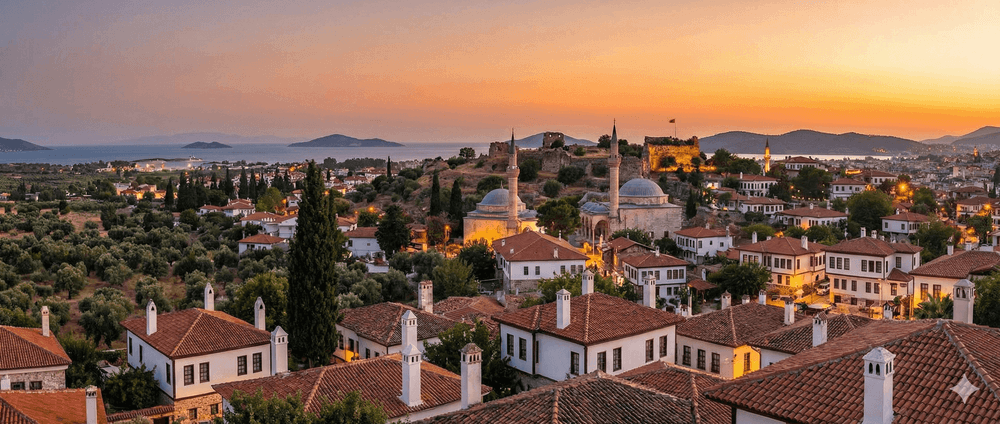
Plan Milas around Labranda, the Euromos Temple of Zeus, Becin castle, Gumuskesen and Herakleia, with the airport irony in mind.
Walk this route
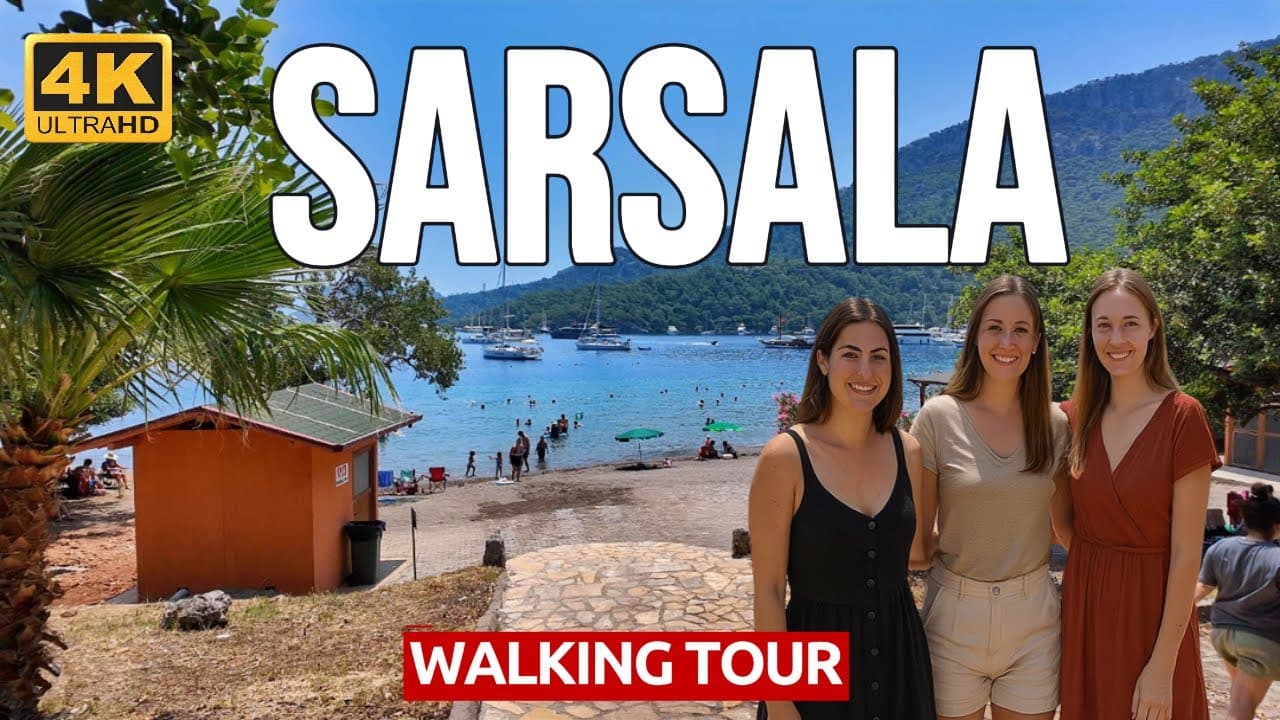
🇹🇷 Muğla, Sarsala Beach Walking Tour - Crystal Clear Waters & Stunning Hidden Cove 4K 60fps
Watch the 4K walkPlaces on the map
16 pinsNumbers match the order in the article. Tap a pin for directions.
--- title: "Milas travel guide: Labranda, Euromos, Beçin and the Caria most visitors fly past" description: "An honest guide to Milas: the mountain sanctuary of Zeus at Labranda, the sixteen standing columns at Euromos, the UNESCO tentative-list town of Beçin, the difference between Herakleia and Lake Bafa, the monumental tombs in the center, and the coast. When to go, how many days, what to eat, where you actually land." city: "Milas" lang: "en" ---
Milas: where everyone lands and nobody stops
Every year millions of people land in Milas and almost none of them see it. The reason is buried in a name. The region's airport is called Bodrum-Milas, the plane touches down on Milas soil, and the passengers pick up their bags and drive straight south to Bodrum. The district in between becomes a place you pass over rather than a place you visit. Yet that district is the heart of ancient Caria. The Menteşe principality had its capital here. Roman tombs still stand in the streets. A sanctuary of Zeus climbs a mountainside just to the north.
Treating Milas as an extension of Bodrum gets it wrong. Bodrum has its own story and we cover that in a separate guide. Milas is a trip in its own right, independent of a beach holiday. In the center, Roman and Menteşe-era buildings sit side by side. Ancient cities are scattered across the district in every direction. To the north the land reaches Lake Bafa, to the south it drops to the Gökova coast.
Who is it for? Anyone who wants to see ancient cities without the crowds, anyone who enjoys touring a region by car, anyone who would rather move around than pin themselves to a single beach. The most common mistake is treating Milas as a half-day stop on the way to somewhere else. The ancient sites are far apart and the road to some of them is narrow. Underestimate that and the day ends before you have seen half the list.
Quick answer
Milas rewards a visitor who walks the center, drives to the ancient cities, and comes in spring or autumn. Everyone who lands at Bodrum-Milas airport is already here. The trick is stopping to look.
- Center: monumental tombs, two old mosques, a museum, and the bazaar are all within walking distance. Half a day to a full day.
- Ancient cities: Labranda, Euromos, Iasos, Beçin, and Herakleia lie in different directions. At least one full day, two for a relaxed pace.
- Labranda: up a mountain on a steep, narrow road. Drive carefully, and expect it to get harder in the wet.
- Lake Bafa is administratively mostly in Aydın province. Herakleia sits on the Milas shore. Do not confuse the two.
- A car is effectively required. Public transport between the ancient sites is weak.
- Food: olive oil, goat cheese, çökertme, and the region's olive products.
1. Gümüşkesen Monument
A Roman funerary monument standing in a residential quarter on the western side of the center. A burial chamber sits below, and above it a pyramidal roof is carried on columns. The scale is modest but the design feels familiar, because most sources read this building as a scaled-down interpretation of the Mausoleum at Halicarnassus. Since the original mausoleum in Bodrum was almost entirely destroyed, Gümüşkesen is one of the closest surviving examples of how that architecture actually stood.
The stonework rewards a close look. The blocks are laid without mortar, fitted into one another, and the column capitals and the carved decoration on the ceiling can still be read. The monument sits in its own courtyard and the surroundings are quiet, so there is no rush to move on. Starting a tour of the center here makes sense, because Gümüşkesen is where you first see how thoroughly the ancient past is woven into the modern town of Milas. Opening hours and access can change, so confirm with an official source before you go.
2. Baltalı Kapı
The northern gate of ancient Mylasa. It dates to the Roman period, a single-arched stone gateway, and today it stands inside the street fabric, wedged among houses. The name means the gate with the axe, and it comes from the carving on the keystone: a double-headed axe, the labrys. That axe was a symbol tied to the region's chief deity, and the same motif appears in the name of Labranda, so the gate is more than a passage. It is a marker pointing to the belief world of the area.
The structure is not showy and it is easy to walk past. That is exactly why it is worth seeking out. A two-thousand-year-old city gate standing on a modern street with balconies overhead sums up what kind of place Milas is: a city lived in layer over layer. The coordinate we give is approximate. The gate sits at the upper end of the street that carries its name, and the best way to find it is on foot while wandering the surrounding quarter.
3. Uzunyuva and the Tomb of Hekatomnos
The most striking and most unfortunate excavation story in Milas is here. Uzunyuva was known for centuries only as a podium with a single ancient column rising from it. What lay beneath it came to light only in 2010, when looters tunneled into the burial chamber. Inside was a painted sarcophagus and a chamber decorated with wall paintings. The structure is assessed as belonging to Hekatomnos, satrap of Caria, in other words the founder of the very dynasty that would later build the Mausoleum at Halicarnassus.
The looting caused a major stir in the region, and the site was placed under protection. Today it is covered by a protective roof and archaeological work continues. For that reason the visiting situation can be uncertain: open in some periods, closed for excavation in others. Before going, confirm through an official source whether the site is open to visitors. Some of the finds are displayed in the Milas Museum, so even if the tomb is closed you can pick up the thread of the story there.
4. Milas Museum
The place to stop before or after touring the district's ancient cities. Finds from excavations in and around Milas are gathered here: Carian-era objects, pieces from the Uzunyuva dig, ceramics, sculpture, and coins. The collection is not large, but it is well organized and it is the right starting point for understanding the region.
The museum's real function is this. The things you will see outside as scattered rubble get placed into context here. The temple at Euromos, the harbor of Iasos, the sanctuary at Labranda can each look like a heap of stones when seen alone. The labels and finds in the museum bind them together as parts of the same civilization. Spending half an hour here at the start of a tour of the center makes every site you visit afterward easier to read. Opening days and hours can change, so confirm with an official source.
5. Firuz Bey Mosque
A mosque from 1394, from the era of the Menteşe principality. Locally it is also called the Kurşunlu (leaden) Mosque. What sets it apart is the greenish, veined marble used on the facade and the entrance section, the stone itself worked as an element of decoration. It is a plain but carefully made example of early principality architecture and one of the most valuable buildings in the center.
Inside is a single-domed, balanced space. The decoration is not lavish. The weight falls on the texture of the stone and the proportions. For anyone who wants to see the transitional stage that pre-Ottoman Anatolian Turkish architecture passed through, this is a good stop. The design has not yet reached the scale of the great mosque complexes, but it has also moved beyond the Seljuk tradition. The mosque is still in use for worship, so visit outside prayer times and dress appropriately. Check for a suitable hour on site.
6. Ulu Mosque
One of the oldest buildings in the center, again from the Menteşe period. The name Ulu, meaning great, is used across Anatolia for a town's principal mosque, and this one served that role. Its most notable feature is that its supports reuse columns salvaged from antiquity. In other words, the mosque was built with the stones of the old cities around it. This is a concrete way to see the region's layered history inside a single building.
The plan is simple: a transverse prayer hall and an upper covering carried by the reused columns. More than any decoration, it is the building itself, its material, and its age that matter. Since it is within walking distance of the Firuz Bey Mosque, seeing the two on the same walk is natural, and the contrast is instructive, because you are placing two buildings of the same era but different scale side by side. The mosque is in use for worship, so plan your visit around prayer times and mind the dress code at the entrance.
7. The Milas bazaar and Saturday market
Between the ancient cities and the mosques, the living side of Milas is in the bazaar. Coppersmiths, weavers, and vendors selling olive products work in the narrow streets. The weekly market that sets up on Saturday fills with producers coming in from the district's villages, and whatever is in season is on the stalls. This is not a tourist shopping street. It is where the town does its own shopping, and that is the best thing about walking it.
When people think of Milas craft, they think of carpets. The area's weaving tradition is old, and the Milas carpet is recognized by its own patterns and color scheme. There are still shops selling carpets in the bazaar, but do not rush a purchase. Ask the seller for clear information on origin, age, and weave type, and ask for written documentation. We do not state the specific type or date tied to any geographical-indication registration for the carpet here, because relying on a verified record is the soundest way to buy.
8. The sanctuary of Labranda
North of Milas, a sanctuary of Zeus built in terraces up a mountainside. People came here not to a city but to a place of worship. In antiquity it was linked to Mylasa by a sacred processional way. Temples, banqueting halls, and fountain buildings line the terraces cut into the slope. The view down over the plain is open, and you only grasp how the site is set into the mountain once you climb up to it.
The most important practical warning here is the road. The route up to Labranda is steep and in places narrow, winding, and at times in poor condition. In dry weather it can be driven with care, but the wet makes it harder and it can be risky for low vehicles. Factor in your time and your tires, and do not get caught out after dark. The site is an open archaeological area and visiting conditions can vary with the season, so before setting off it is worth confirming the state of the road and the site through an official source or with locals.
9. Euromos and the Temple of Zeus Lepsynos
On the road between Milas and Söke, set among olive trees, a temple with sixteen columns still standing. What sets Euromos apart is access. Unlike Labranda, the temple is almost at the roadside, a few minutes on foot from where you park. Dedicated to Zeus Lepsynos, the building dates to the reign of the Roman emperor Hadrian, and in the words of the English-language Wikipedia entry it is considered one of the best preserved classical temples in Turkey.
Some of the standing columns carry inscriptions. The names of the citizens who funded their construction are cut into the stone, so the temple can also be read as a kind of donor list. It is also clear that the temple was never finished, with the fluting on some columns left unstarted. This is a rare detail showing how an ancient building was actually put up. You walk through an open area among the olive trees. Early morning is best for both light and crowds. Confirm entry conditions with an official source.
10. Iasos ancient city
In the village of Kıyıkışlacık, a harbor city built on a peninsula that reaches out toward the sea. Iasos lived on seafood and fishing, and its position says so at once: the ruins interlock with the shoreline. An agora, a theater, stretches of city wall, and buildings from the city's different periods sit together. The view from the tip of the peninsula is open, and because the walk runs along the water it offers a different experience from the ancient cities in the center.
The village itself is part of the visit. Kıyıkışlacık is a small fishing settlement and the ancient city sits right beside it, so it is easy to sit by the water after touring the ruins. The road to Iasos branches west from the Milas center toward the Güllük gulf. The distance is not long, but it needs to be fitted into your route when moving between ancient cities. The excavation site's opening days and access can change, so confirm with an official source before going.
11. Beçin Castle and medieval town
South of the Milas center, a medieval town built on top of a rock mass rising from the plain. Beçin was the capital of the Menteşe principality, meaning this was the seat of the power that governed the region before the Ottomans. It is a whole of castle, madrasa, bathhouse, mosque, and tomb structures, not just a wall. Its height explains both the defensive logic and its commanding position over the plain.
Beçin carries a further distinction: it is on the UNESCO World Heritage tentative list. Turkey proposed the site to the tentative list in 2012 under the name Medieval City of Beçin. This does not mean it has entered the definitive list, but it does show that the area has a value recognized on an international scale. As you walk it, you will find the buildings scattered but legible, with the madrasa and bathhouse remains especially clear. The site is an open protected area and visiting conditions can change, so confirm the current situation with an official source.
12. Herakleia (Latmos)
On the shore of Lake Bafa that faces Milas, at the rocky foot of Mount Latmos, an ancient city. The setting around Herakleia is remarkable: the granite rocks of the mountain behind, the lake in front. The city walls survive to a great extent and can be traced along the mountain slope, and the Temple of Athena stands at a point overlooking the lake. The ruins spread into and around the present-day village of Kapıkırı, so as you walk, the ancient and the living village interlock.
Let us make a key distinction clear here. Herakleia is administratively in Milas. Lake Bafa, by contrast, belongs mostly to Aydın province, and the two are mixed up in many guides. You are looking at the lake, but the ancient city you are standing on is Milas ground. The Latmos region is also known for prehistoric rock paintings. These are up in the mountains, at points that are hard to reach, and they are generally visited with a guide. The city area is open. Confirm visiting conditions and access to the rock paintings locally.
13. Lake Bafa
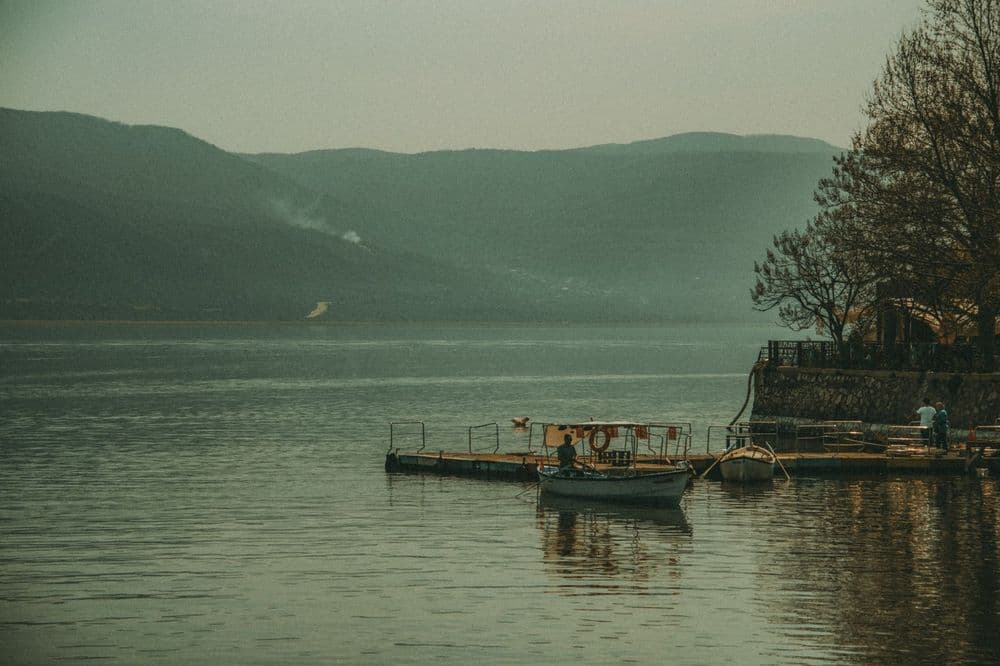
A body of water that was once part of the sea, turned into a lake when the alluvium carried by the Büyük Menderes river closed the mouth of the gulf. This geological story matters, because cities like Herakleia sat on the sea coast in antiquity. The reason they now sit on a lakeshore is exactly this shift. With its birds, the olive groves around it, and the rocky silhouette of Latmos, the lake forms a broad natural area.
The administrative distinction matters again here. Most of Lake Bafa belongs to Aydın province, on the Söke side. A visitor coming from Milas usually sees the lake from its southern and eastern shore, by way of Herakleia. So you experience the lake as part of a Milas trip, but the lake itself is not the property of a single district. There are small settlements and places to stay along the shore, and at sunset the Latmos side is good for photographs. Because of its protected status, access to some areas may be restricted, so assess the current situation on site.
14. Ören
In the south of the district, a quiet seaside town on the shore of the Gökova gulf. What is particular about Ören is that the ruins of the ancient city of Keramos are spread through the present settlement. You come across ancient stones among the houses and in the gardens. With its pebble beach and the mountain view of the opposite shore, the town offers beach time and archaeology in the same place. It is the right address for anyone looking for a slower coast, away from the intensity of Bodrum.
The route to Ören drops south from the Milas center on a mountain road, and the distance can take longer than it looks because the road winds. Factor that in. The town itself is small, so it suits an afternoon or a night; you can spend time on the beach and see the traces of Keramos on foot. We do not name places to stay or eat. There are small businesses in the area, and the choice depends on the season and how full things are. Assess the beach and access conditions on site.
15. Güllük
On the shore of the Güllük gulf, a harbor town that grew from a fishing shelter. This is the face Milas turns to the sea. Boats along the quay, the coves of the gulf across the water, and its closeness to Iasos make Güllük the natural center of a coastal tour. Because it is also near the airport, it is a practical starting point for anyone who lands at Milas and wants to head straight for the sea.
The town is not a large resort but a settlement with a working daily life, and that is what sets it apart from the crowded points on the Bodrum coast. A walk along the quay, watching the fishing boats come back, and passing time looking out over the gulf all suit the rhythm of the place. If you plan to see Iasos, putting Güllük on the same day makes sense, because the two are close together. Boat tours and sea transport are seasonal. Confirm schedules and prices on site or through an official source. We do not recommend named businesses.
16. Boğaziçi
A small coastal settlement south of Güllük, looking out over the Güllük gulf. Although the name may get confused with the strait in Istanbul, this is an entirely different place: with its narrow coves, calm shore, and fabric far from the crowds, it is one of the most tranquil corners of the Milas coast. Do not expect a large hotel or a lively seafront. You come here precisely because there is none.
Boğaziçi suits anyone who wants to explore the coast slowly. A walk by the sea, time in the small coves, and the view over the gulf are what stand out. It is reached in a short drive from the Milas center or from Güllük, and it usually becomes part of the same trip as Güllük. Because the settlement is small, services are limited, so it is worth thinking about food and lodging in advance. Road and shore conditions change with the season, so check the current situation before going and decide by what you find locally rather than looking for named venues.
When to go
The inland parts of Milas and its ancient cities get very hot in summer. In July and August, the midday hours can be punishing at open sites like Labranda that offer no shade. The most comfortable window is spring and autumn: April, May, October. In these months the temperature is reasonable and the ancient cities are quieter. Rain increases in winter, so steep routes such as the road to Labranda can become risky. The coast is calm in winter but it is not the season for swimming.
If a beach holiday is the priority, June and September are a balanced choice: the sea is right and the crowds are not at their peak. If touring ancient cities is the priority, spring is clearly the best, because the countryside is green and the light is soft for photographs.
How many days
Two days is a realistic minimum to genuinely see Milas. One day for the center and its immediate surroundings: the monumental tombs, the mosques, the museum, the bazaar, and Beçin to the south. A second day for the ancient cities: Euromos and Iasos fit on the same day, while Labranda takes time because of its steep road. Herakleia and Lake Bafa lie to the north, so spreading them into a third day makes them more relaxed to see.
If you have only one day, you have to choose. If ancient cities draw you, take Euromos and Labranda. If history and urban fabric are what you are after, take the center and Beçin. Trying to cram everything into a single day ends in disappointment because of the time spent on the road.
Getting there and around
Arrival to the region is mostly through Bodrum-Milas airport, and the airport is administratively already in Milas. In other words, everyone who lands here has landed in Milas, and most passengers move on to Bodrum without noticing. Reaching the center by car is a short drive. To move around within and beyond Milas, a car is effectively required, because the ancient cities are far apart and public transport does not connect them.
For those arriving by bus, Milas has its own bus terminal with connections to nearby districts. But reaching points like Labranda, Euromos, or Iasos by public transport is difficult and time-consuming. Renting a car or arranging private transport noticeably increases what you get out of the trip. Build into your plan that the road to Labranda is steep and narrow, and that the roads down to the coast wind.
What to eat
Milas cuisine leans on the olive-oil tradition of the Aegean. Olives and olive oil are the region's staple, appearing at breakfast and in the meze. Dishes made with wild greens gathered in season, goat cheese, and the area's sourdough bread are among the flavors that stand out. Down on the coast, seafood comes into play. Güllük and Ören are both associated with fish.
A known dish of the region is çökertme: finely cut or sliced meat served over fried potatoes and yogurt. In the local market you can find seasonal produce, olive varieties, and local cheese. We do not recommend prices or venues. Make your choice by the current situation and by what you see locally, and if you can time a market day, buying from the producer is the freshest option.
Frequently asked questions
Are Milas and Bodrum the same place? No. The Bodrum-Milas airport is on Milas soil, but Milas and Bodrum are separate districts. Most tourists who land at the airport move on to Bodrum without seeing Milas. Milas has its own ancient cities, mosques, and coast, and it is a trip independent of a beach holiday.
Is Lake Bafa in Milas or in Aydın? Lake Bafa belongs mostly to Aydın province, on the Söke side. The lake's link to Milas is made through the ancient city of Herakleia on its southern shore. So Herakleia is in Milas while the lake is largely in Aydın, and the two should not be confused.
Is Stratonikeia in Milas? No. The ancient city of Stratonikeia is in the neighboring district of Yatağan, not in Milas. When planning a Milas trip, keep the two separate. Anyone wanting to go to Stratonikeia should map out a separate route.
Is it hard to drive up to Labranda? The road is steep, narrow, and in places in poor condition. In dry weather it can be driven with care, but the wet makes it harder and the risk rises for low vehicles. It is worth not getting caught out after dark, being sure of your tires and brakes, and confirming the state of the road locally before setting off.
How many days do I need for Milas? At least two days is realistic, one for the center and Beçin, one for the ancient cities. If you add Herakleia and Lake Bafa, three days is more relaxed. Squeezing it into a single day leaves most of the list behind because of the time spent on the road.
Planning questions
What does this Muğla guide cover?
Plan Milas around Labranda, the Euromos Temple of Zeus, Becin castle, Gumuskesen and Herakleia, with the airport irony in mind.
Can I watch a 4K walking tour of Muğla?
Yes. The page links to Travel Walk Tours films so you can preview the Muğla route on a big screen before you go.
How should I use this page to plan?
Read the quick answer first, skim the route notes, then compare street texture, timing, and nearby guides through the linked city page and walking films.