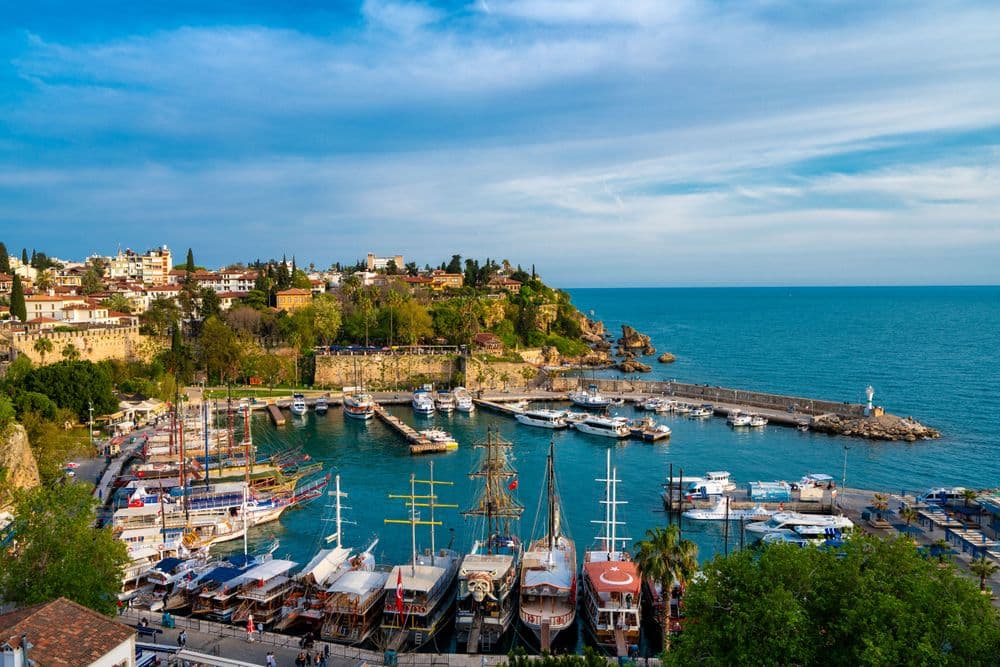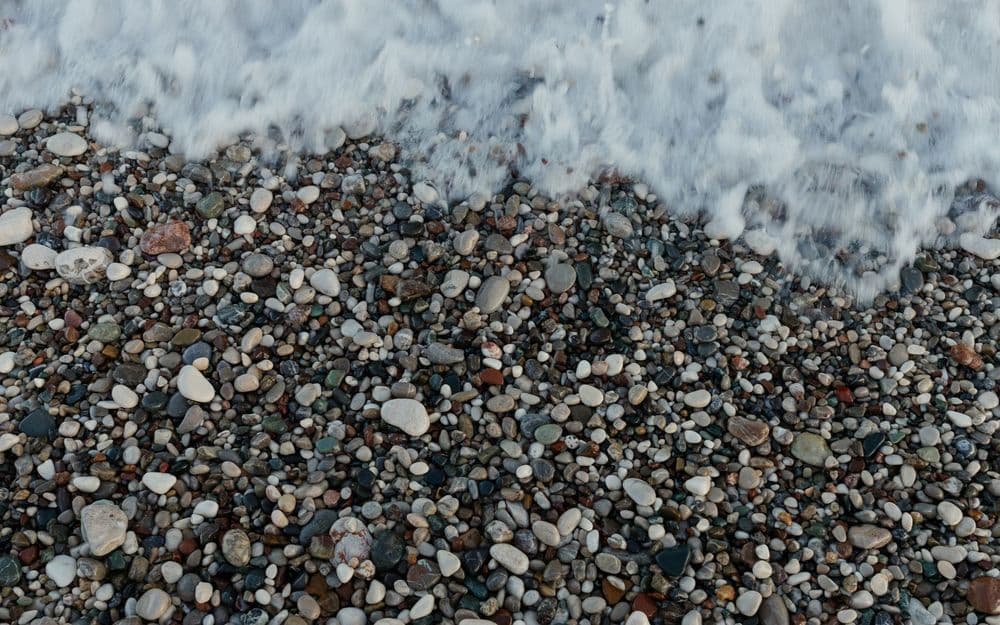
Plan Cirali Beach and Yanartas around conservation, night walking, equipment, transport and the Olympos connection.
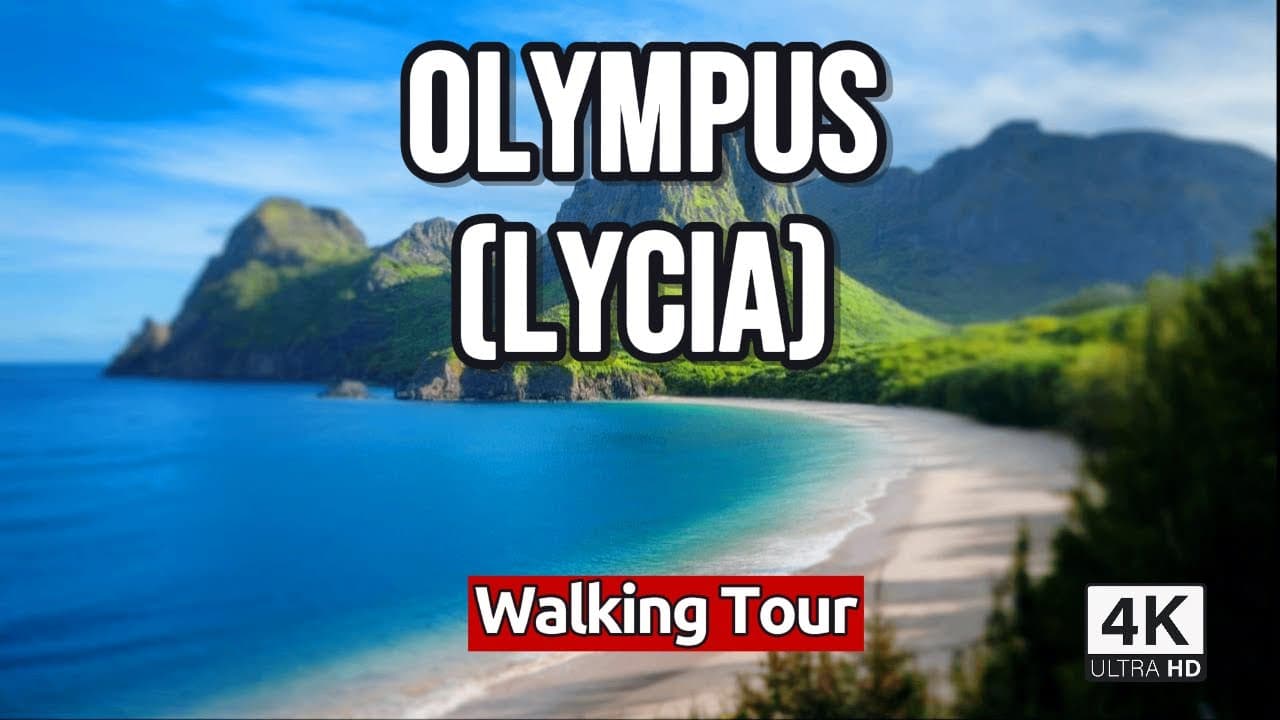
Walk this route
Antalya Olympos Ancient City and Beach: A 4K Walking Tour of History and Nature
Watch the 4K walkPlaces on the map
12 pinsNumbers match the order in the article. Tap a pin for directions.
--- title: "Cirali and Yanartas guide: the eternal flames, a protected turtle beach and the Olympos valley" description: "An honest guide to Cirali, Yanartas, Olympos, Adrasan and the surrounding valley: what the natural flames really are, the two ends of one long protected beach, loggerhead nesting rules, the trail, and how to get there. How many days you need, when to go, what to eat, and what not to confuse." city: "Antalya" lang: "en" ---
Cirali: where the mountain meets the sea and the rock burns
Cirali is a small coastal settlement in the Kemer district of Antalya, and the reason it has stayed quiet is simple. The beach in front of it is protected, so no wall of hotels could rise behind it. Where the concrete stops you find orange groves and a scatter of small pensions, and along the shore a long pebble-and-sand beach that runs for kilometres. At the southern end of that same beach the ruins of ancient Olympos begin, and on the slope above the village natural flames burn from cracks in the rock. Two different eras and two different characters sit side by side inside one valley.
Most people who plan Cirali badly make two mistakes. The first is treating it as a half-day beach stop from central Kemer, when the distance and the final winding descent really turn it into a full day. The second is imagining Yanartas as a flat viewing terrace, when reaching the flames takes a stony uphill walk, and because they show best in the dark, the descent happens in the dark too. This guide numbers the places and maps them, so you can build your day around the rhythm of the valley itself rather than a checklist.
Quick answer
Cirali can be squeezed into a single day by linking a beach afternoon to an evening walk up to Yanartas, but it shows its real character when you stay two or three nights.
- Cirali Beach and village: half a day to a full day. The shore is protected and turtle-nesting rules apply.
- Yanartas: late-afternoon start, flames after dark, descent by torch. Stony climb.
- Olympos ancient city: the southern end of the same beach, separate entrance, archaeological site.
- Adrasan: a separate cove and settlement to the south, its own day.
- Ulupinar and Beycik: mountain villages above the coast, roadside stops.
- Car: much more comfortable in practice. Public transport thins out on the final connection.
- When to go: spring and autumn are the most balanced; summer is hot and crowded.
1. Yanartas (Chimaera)
On the slope above Cirali, natural gas seeps from cracks in the rock and ignites on its own, producing a cluster of flames. The gas is mostly methane, and the fires have been recorded since antiquity, which is why they are described locally as continuous. A warning without a guarantee, though: the number and strength of the flames vary, and observers report that they have weakened over the years. On the evening you visit, it is normal for some vents to be faint and others lively.
The name comes with a legend. In the ancient story, the fire here was the breath of the Chimaera, a monster that spat flame, and the hero Bellerophon is said to have killed it from the back of Pegasus. That is a myth, not history; the story itself is worth telling, but it should be told as a story.
The flames look dull in daylight, and the real effect appears only after dark. That is why the timing of your climb matters so much. Reach the top in time to catch the darkness, but do not leave the descent too late, because a stony downhill in full dark is where accidents happen.
2. Olympos ancient city
At the southern end of the same beach as Cirali, a Lycian harbour city spreads across both banks of a stream. What sets Olympos apart from other ancient cities is the way the ruins are folded into the forest and the water. Sarcophagi sit in the shade of trees, arched structures stand among the reeds, and the path leads you through the remains and out onto the same beach. Do not expect a tidy, cleared site; this one is wilder.
The city was an important member of the Lycian League, and it continued in use through the Roman and Byzantine periods, remembered too for stories of pirates and trade. Pinning it to a single date would be misleading. What you see is a layered settlement that grew and changed over centuries rather than one architect's plan.
The Olympos site may charge admission, and access to the beach from this side may depend on that entrance. Check the current entry situation and any fee from an official source. Do not climb on the ruins, which are fragile and easily damaged.
3. Cirali Beach
The coordinate given here belongs to the northern end of the shore, the stretch in front of the village, and because the beach is long you should treat it as approximate. Cirali Beach is a protected coast, and its character comes from that protection. There is no high concrete behind it, the shore has kept its natural form, and once the late-afternoon crowd thins it grows quiet.
This is also a loggerhead sea turtle nesting beach, and that is a binding rule rather than a decorative sign. Do not approach marked nests, do not dig holes in the sand, do not touch wildlife, and do not use bright white light or flash on the shore at night. Those lights disorient the hatchlings and turn them away from the sea. Set your loungers and umbrellas outside the marked areas.
A long beach does not mean every section is the same. Shade, sea depth and entry all change from point to point. Before you swim, judge the wind, the waves and any lifeguard warning where you actually are, not from a photo.
4. Olympos Beach
The southern end of the same protected beach, the side where the Olympos ruins open to the sea. The coordinate given here belongs to that southern section and is again approximate, because Cirali Beach and Olympos Beach are really two names for one continuous shore. A stream mouth and reed bed sit in the middle, so the two ends face each other yet feel different.
The difference is in character. The Cirali side, with its pensions and orange groves, carries a calm, family feel, while the Olympos side has traditionally been associated with tree-house lodges, hostels and a younger, louder crowd. They swim in the same water but spend their evenings very differently. Choose your side of the shore according to which of those you want.
This end may be reached through the Olympos site entrance, so verify entry and any fee separately. The turtle rules apply here in exactly the same way as on the Cirali side, and they do not relax because the crowd is younger.
5. Cirali village
The settlement immediately behind the beach is a village of mostly small pensions scattered among orange and pomegranate groves. The appeal of Cirali is not in luxury resorts but in the opposite of them: staying a few nights in a slow place, breakfast from the garden in the morning, a walk on the shore in the evening. That is why people trying to escape crowds choose it.
When you pick a place to stay, ask a few things in writing: air conditioning, mosquito control, breakfast, parking, late check-in and the cancellation policy. Verify the phrase "close to the beach" against the actual road, lighting and distance, because a dark track through a field can stretch a hundred metres into something longer.
Keep one distinction in mind. Being close to the beach is not the same as being close to the Yanartas entrance. The two sit at different ends of the village, so choose your location according to your priority. There are small shops in the village, but do not set your expectations high; do any large shopping before you arrive.
6. Ulupinar
Above the Cirali turn-off, close to the main road, is a mountain village. Ulupinar is known for its spring water and for being a trout valley, and the greenery along the cold stream creates a clear drop in temperature on a hot summer day. It is a stop people make on the way down to Cirali or on the way back up.
Its role is geographic. Cirali sits at sea level and gets hot, while Ulupinar is a few hundred metres higher and shaded, and the difference in climate between the two is noticeable after a short drive. In the valley you get the sound of water, the shade of trees and cool air together in one place.
I do not recommend a named venue, and you should be cautious of guides that do, because there are many options in the valley and prices can surprise you when they are not agreed in advance. Whatever you order, settle the price before it arrives. The ground by the stream can be damp and slippery, so watch your footing.
7. Beycik
At the foot of Tahtali mountain, high above the coast, sits a forest village. Beycik's place in a Cirali trip is a little indirect. It is not on the shore but up above, and it stays on the radar of walkers because it opens onto the mountain stages of the Lycian Way and toward Tahtali. It offers a cool, wooded air that is completely different from the heat of the coast below.
The altitude of the village is an advantage in summer. When the shore is oppressive, there is shade and a breeze up here, which is why people looking for highland air head this way in the hot months. On clear days the view drops all the way to the sea.
A note for anyone adding Beycik to the plan: the road climbs the mountain and winds, so measure it by real driving time rather than the kilometres on the map. If you plan to walk, settle your route, timing and return plan in advance, because the paths leaving a mountain village are not all suited to every level of fitness.
8. Adrasan
South of Olympos, with a cove of its own, is a separate coastal settlement. Adrasan is often mistaken for the same place as Cirali, but it is not. It sits on the Kumluca side, in a separate valley, with its own beach. In character it carries a calm similar to Cirali, but its bay is wider and its entry shallower, which can make the sea side easier for families with children.
What links the two places is the Lycian Way. There is a walking stage that crosses the mountain ridge between Olympos and Adrasan, and quiet coves such as Ceneviz lie along that route. For anyone who does not want to walk, the road connection is separate and longer, so do not confuse the two ways of getting there.
Do not try to add Adrasan to a Cirali day. It is a separate settlement that wants a separate day. If you want to see both coves, widen the plan to fit it rather than squeezing them into the same afternoon, which will leave you tired on the road with little time in either place.
9. Adrasan Bay
A wide beach ringed by mountains, with a boat harbour. The sea entry at Adrasan Bay is shallower and more sheltered than at Cirali, which makes it comfortable for swimming and resting. The shore is also the departure point for boat trips; anyone wanting to reach Ceneviz and the surrounding coves by sea starts here.
The coordinate given belongs to the main section of the beach and is approximate, because entry and surface change along the shore. Depending on the wind, the bay can be calm one day and choppy the next, so check the sea conditions before you get in rather than after.
If you are thinking about a boat trip, settle the route, the duration, the swim stops and the total price before departure, in writing. On coves reached by sea, the return time and any change in weather matter, so talk the return plan through with the captain. On coves without a lifeguard, keep children within sight and do not rely on the calm of the moment.
10. Ceneviz Bay (Porto Ceneviz)
Between Olympos and Adrasan, reached on foot by a marked path or by boat, is a remote Lycian Way cove. What makes Ceneviz special is the difficulty of reaching it. You cannot drive to the shore, so the crowd thins out on its own. It is a clear-water inlet squeezed between steep cliffs, and the effort of getting there is part of why it stays empty.
If you come overland, remember that this is a walk. The path is stony and steep, and you must carry your own water and sun protection. Coming by boat is easier, but then you are tied to the return time and the state of the sea, so neither approach is free of planning.
Expect no infrastructure at the cove. Shade, drinking water and service are limited or absent, so you manage with what you bring and carry your rubbish back out. The value of remote coves lies precisely in that emptiness, but that emptiness is a risk for anyone who arrives unprepared. If you are alone and inexperienced, do not descend overland by yourself.
11. Tahtali mountain
The 2,365-metre summit that looks down on the whole region, also known by its ancient name of Mount Olympos, is the ridge that closes the western horizon of the Cirali valley. The peak is reached by cable car, but the cable-car line is not on the Cirali side; it runs from the Tekirova direction to the north. Adding Tahtali to a Cirali day is therefore not a direct plan but a separate trip.
For Cirali, the real function of the summit is scale and orientation. Seen from the shore or from Yanartas, this peak shows how mountainous the region is and how the sea begins right at the foot of the mountains.
We cover the cable car, ticketing and summit conditions in a separate guide, so I will not repeat them here. When you plan Cirali, treat Tahtali as a backdrop and a possible separate day rather than a stop to be squeezed into the same afternoon. The weather at the summit is very different from the coast, so go up prepared for a sharp change in wind and temperature.
12. Lycian Way (Cirali to Olympos stage)
Cirali sits on a long-distance walking route, the Lycian Way. The coordinate given is at the northern end of the beach, placed approximately where the path begins to climb toward Yanartas, because a route cannot be reduced to a single point. This stage links the Cirali shore up to Yanartas and, to the south, toward Olympos, Ceneviz and Adrasan.
The Lycian Way is a marked route, followed by red-and-white paint marks on rocks and trees. Being marked, though, does not mean it is easy. The ground is stony, some stages are steep and without shade, and distances feel long at walking pace, especially in the heat.
Even for a one-day trial walk you need water, sun protection, sturdy shoes and a return plan. Do not rely on unverified figures for stage distance or duration; confirm them from a current source or with local knowledge. Do not set out on a long stage alone and inexperienced, and plan to be back before dark, because the same stony ground that is manageable in daylight becomes dangerous once the light goes.
When to go
Spring and autumn are the most balanced. April, May and June, then September and October, are the months when the temperature is reasonable for both the beach and the trail. In this period the walk up Yanartas does not exhaust you, the sea is swimmable, and the crowd has not reached its summer peak.
Summer is a mixed picture. July and August are the most reliable time for the sea, but in the same months the shore is hot, shade is valuable, and even an evening walk makes you sweat. If you climb Yanartas in these months, wait out the hottest part of the day and go up in the late afternoon. Summer is also the busiest period, so if you want quiet, choose weekdays and early hours.
Loggerhead nesting and the hatchlings' run to the sea fall in the summer months. During this period the night-time shore rules matter even more: bright light, flash and entering marked areas are treated as forbidden. I will not give exact dates, because the season shifts from year to year, so follow the signs and staff warnings on the ground.
Winter is calm and green but can be cool and wet. It is not a sea season, though some prefer this period for walking and silence. If you come then, plan around rain and short days, and do not count on beach weather.
How many days you need
One full day covers the core. Cirali Beach and rest during the day, the Olympos ruins in the afternoon, then the climb to Yanartas as the light fades and a descent by torch. In that single day you see the essence of the area, but you have to keep a firm pace and accept that nothing gets much lingering time.
Two nights makes it comfortable. Splitting one day for the beach and village and another for Olympos and Yanartas means you squeeze nothing, and you get to live the slowness that is Cirali's real value. Garden breakfast in the morning, the sea at midday, the flames in the evening, without hurry.
Three days and more brings in the surroundings. A separate day for Adrasan, roadside stops at Ulupinar and Beycik, and if you like, a separate day for the Tahtali cable car. Trying a stage of the Lycian Way also becomes possible at this width. Stretch it to five days and you can take in both the coast and the mountain without rushing either.
How to get there
Coming by car is the most comfortable option. I say this plainly: reaching Cirali itself, and especially the surrounding points such as Ulupinar, Beycik and Adrasan, by public transport is either hard or leaves you stranded on the final kilometres. The winding road down to Cirali from the main road thins out at the last stage even where a minibus connection exists.
A practical warning for those coming by public transport: a vehicle from the Kemer or Antalya direction usually drops you at the main-road junction, and the connection down to the shore from there is a separate stage. Verify the current minibus, shuttle and final return times before you travel. Do not treat being dropped at the junction and walking a long way down as a safe plan, especially after dark.
Because the return from Yanartas will most likely fall after dark, arrange a night taxi or transfer in advance. Do not rely on finding a vehicle on the spot or on phone coverage. Agree the exact pickup point, the waiting time and the total price with the driver in writing. In winter and after rain, the mountain roads and the final descent to the shore can become harder.
What to eat
The food here is not an ambitious cuisine but a plain combination of coast and mountain produce. The Ulupinar valley is associated with trout, and fresh fish beside a spring-fed stream is a common choice. I do not recommend a named venue, but settle the price and portion before you order, because valley spots vary widely.
On the coast side, seafood and grilled fish come to the front. In Adrasan bay, fish after a boat trip is common; again, agree the price in advance. Breakfast is the strongest part of the pension culture in Cirali, and a table set with garden jam, olives, cheese and seasonal fruit can be the most enjoyable meal of the area.
Oranges and pomegranates are the garden produce of the region, and in season you will find freshly squeezed juice at the roadside. I am not writing invented prices or hours; wherever you eat, ask for the bill terms at the start and treat venue recommendations with caution.
Frequently asked questions
**Are the Yanartas flames always burning?**
The flames are fed by natural gas and have been recorded since antiquity, but they are not something to guarantee. The number and strength of the active vents change, and some sections have been observed to weaken over the years. On the evening you visit, it is normal for part of the field to be lively and part faint. The flames look dull in daylight; the real effect comes out in the dark, so people go in the evening, but a torch is required for the descent.
**Are Cirali and Olympos the same place?**
They are two ends of the same beach, but not the same place. Cirali village is on the Kemer side, calm, with pensions and orange groves, while Olympos is at the southern end, the side of the ruins and, traditionally, of tree-house and hostel culture. The sea is single and continuous, but the two ends spend their evenings very differently. Choose your side of the shore according to which atmosphere you want.
**What should I be careful about with the turtles at Cirali?**
The beach is a nesting area, so the rules are binding. Do not approach marked nests, do not dig holes in the sand, do not touch wildlife, and do not use bright white light or flash on the shore at night, because those lights disorient the hatchlings. Set your loungers and umbrellas outside the marked areas. Because the season shifts from year to year, I will not give exact dates; follow the signs and staff warnings on the ground.
**Can you climb Yanartas with children or at any fitness level?**
Beyond the entrance there is a stony, inclined walk, not a flat viewing terrace. For people with balance problems, knee or ankle trouble, cardiovascular or respiratory conditions, or anxiety about walking in the dark, it is reasonable to consider daytime or to skip it. If you go up with children, judge their age, fitness and the safety of the dark descent separately. Carry a torch for each person and do not treat a phone light as your only source.
**Can Adrasan be added to Cirali as a day trip?**
Do not force it. Adrasan is a separate cove and a separate settlement; its road connection is separate and winding, and the Lycian Way walk between them is a serious stage. If you want to see both coves, widen the plan and give Adrasan its own day. Squeezing both coves into the same afternoon will only leave you worn out on the road with little time in either.
Planning questions
What does this Antalya guide cover?
Plan Cirali Beach and Yanartas around conservation, night walking, equipment, transport and the Olympos connection.
Can I watch a 4K walking tour of Antalya?
Yes. The page links to Travel Walk Tours films so you can preview the Antalya route on a big screen before you go.
How should I use this page to plan?
Read the quick answer first, skim the route notes, then compare street texture, timing, and nearby guides through the linked city page and walking films.