Plan Cesme Castle, Alacati, Ilica, Altinkum, Ayayorgi and Boyalik area by area.
Walk this route
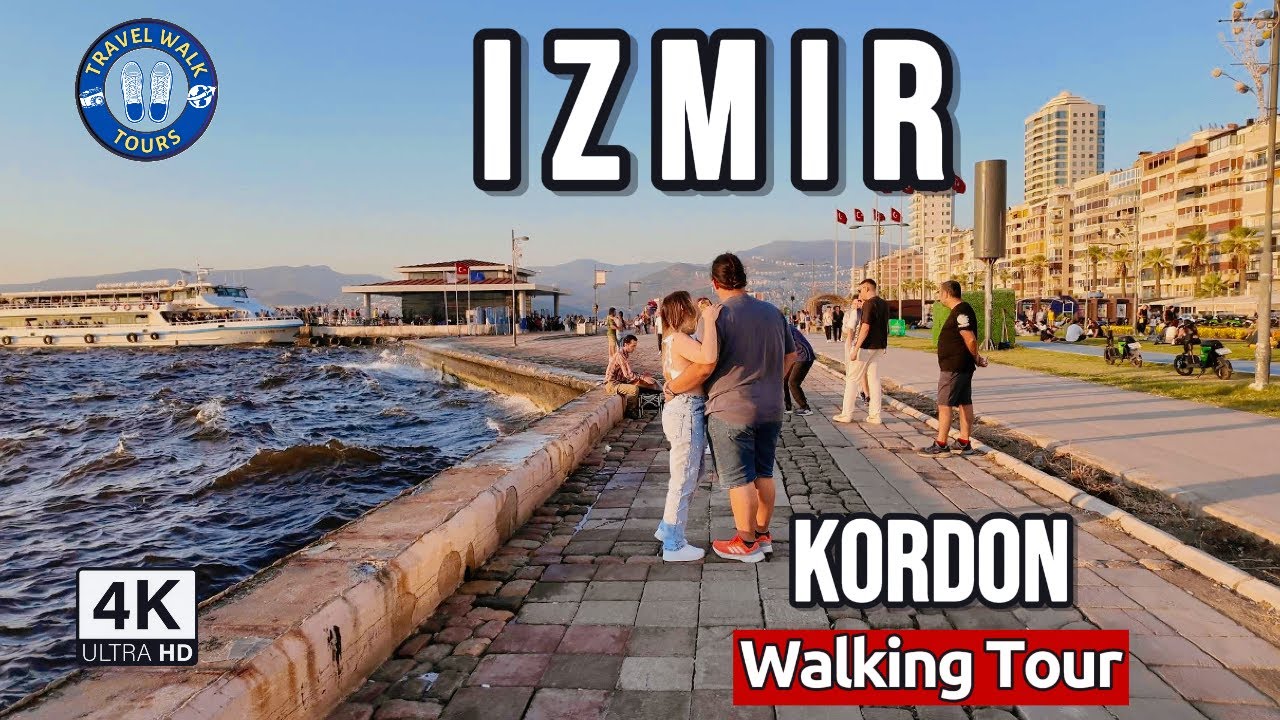
Walking Tour of Izmir's Coast | Konak & Alsancak Kordon in 4K
Watch the 4K walkPlaces on the map
19 pinsNumbers match the order in the article. Tap a pin for directions.
--- title: "Cesme and Alacati travel guide: the castle, the wind, the beaches and Erythrai" description: "An honest guide to Cesme and Alacati: Cesme Castle with its museum inside the walls, the ancient city of Erythrai at Ildiri, the shallow sea at Ilica, the wind at Pirlanta, Alacati's stone houses and its mosque that began as a church. Who the wind is a reason for and who it is a problem for, how much of the beaches sit in private hands, how many days you need and when to go." city: "Izmir" lang: "en" ---
Cesme: a peninsula the wind built
The shortest way to understand Cesme is through the wind. The peninsula reaches forty kilometres west of Izmir into the Aegean and faces open sea on both sides. The consequence: the wind blows almost every day, and the summer northerly builds through the afternoon and does not drop until evening.
The wind decides everything in this guide. For a windsurfer, Cesme is the best place in Turkey without argument, and that is exactly why Alacati Bay is on the world map. For someone who wants to open a lounger and read on the sand, the same wind throws grit across the towel and churns the sea white. Both are true. The brochures print the first one.
Correct a common error right away. Alacati is not a separate district. It is a neighbourhood within the Cesme district, about ten kilometres from the centre. It has no municipality of its own but an identity of its own, so the person who says "I am going to Cesme" and the person who says "I am going to Alacati" often do not mean the same holiday.
Who is it for? Anyone windsurfing or willing to learn. Anyone drawn to stone-house architecture and the fabric of a pre-exchange Aegean town. Families who want shallow, warm sea, since Ilica is one of the best beaches in Turkey for that. Anyone curious about an ancient city who does not mind quiet.
Who is it not for? Anyone after a silent, cheap holiday. Alacati is one of the most expensive and, in July and August, most crowded places in Turkey; the reaction "I went, I found it pricey, it was packed" is common and largely fair. Nor is it for anyone expecting free public sand, because a serious share of the most talked-about coves sit in private hands.
Quick answer
- Cesme centre: castle, museum, caravanserai and market are all within walking distance. Half a day.
- Alacati: market, windmills and quarters, half a day. If you plan to surf, give it a separate day.
- Ilica: shallow sea, long sand. The most sensible beach on the peninsula for families with children.
- Pirlanta and Alacati Bay: windsurfing. If you do not surf, you have no reason to be there.
- Ildiri and Erythrai: half a day, by car. The quietest corner of the peninsula.
- A car: not essential for the centre and Alacati, but effectively needed for the rest of the coast.
- Wind: strong on summer afternoons. Build your beach plan around the morning.
1. Cesme Castle and Cesme Museum
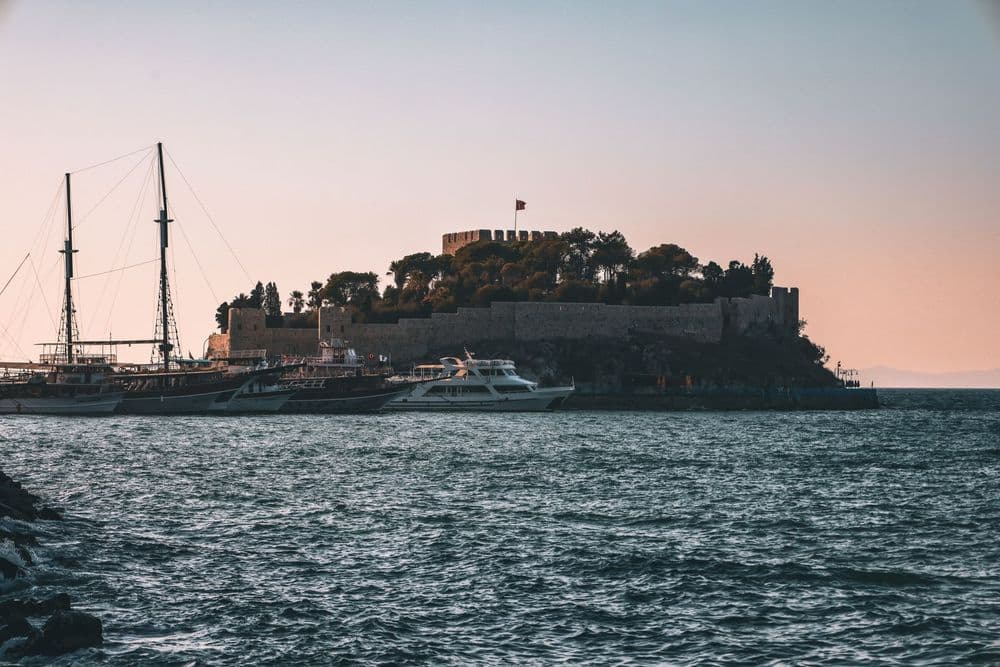
Let me clear up a frequent question: the Cesme Museum is inside the castle, not a separate building. Entry is through the castle courtyard and a single ticket covers both. I verified this at coordinate level; the museum record falls inside the polygon of the castle walls.
The castle was built in the early sixteenth century to guard the harbour, and it still looks the part: low, thick, unshowy. Climb onto the walls, because that is where the point is. On one side the harbour and the ferry pier, across the water the island of Chios, behind you the roofs of the town, and only from here do you understand why the peninsula mattered.
There is a statue at the gate, often confused: it is not Suleiman the Magnificent but Cezayirli Gazi Hasan Pasha, standing with his lion. The name Suleiman belongs to the caravanserai here, not the statue. The 1770 naval battle of Cesme was fought off this shore, and Hasan Pasha was the figure on the Ottoman side. Confirm visiting hours from an official source.
2. Suleiman's Caravanserai
One street down from the castle, inside the market. This is a two-courtyard caravanserai from the sixteenth century, and it explains what Cesme did as a harbour town. The castle guarded the harbour, the caravanserai housed the goods and the merchants who came off it. Because the two stand side by side, the relationship is visible.
Let me be honest about its present state: the building has been restored and now runs as a private accommodation business. A hotel, not a museum. I will not name it, but go knowing that; someone expecting to walk in and wander freely is surprised at the door, and for anyone wanting to see the courtyard, the management's attitude varies by day and season.
Even so it is worth it from the outside. The stone facade, the arched entrance and the cut-stone work are visible from the street, and you pass it while walking the market anyway. A four-hundred-year-old building in the middle of a busy shopping street is a reminder that central Cesme is older than it looks.
3. Cesme market and Inkilap Street
The pedestrian zone running down from the castle, parallel to the shore. It is divided in two, and seeing the split makes your visit easier.
On one side there are real tradespeople: greengrocer, dried-fruit seller, fishmonger, tailor. This is where people who live in Cesme shop, and it stays open in winter too. On the other side are the souvenir shops and everything touristic, interwoven with the first on the same street.
Let us touch on the mastic question, because it is Cesme's best-known product. The mastic tree grows mainly on the island of Chios across the water, and a share of the products sold here comes from the island. Mastic-flavoured Turkish delight, ice cream and jam are in every shop. Buying or not is up to you, but know that the phrase "Cesme mastic" is geographically flexible.
The market fills up in the evenings, and the afternoon is hot and shadeless; walking it in the morning is easier.
4. Cesme Marina and the ferry port
The strip of shore below the castle. The yacht marina and the pier where the ferries to Chios depart are here, close together.
The marina shows Cesme's character: boats, shops along the shore, an evening crowd out walking. If you do not own a yacht there is nothing concrete to do, but walking the shore at sunset is free and the view faces across to Chios.
Let me be clear about the ferry. There are crossings from Cesme to Chios, one of the shortest routes from Turkey to a Greek island. But the number of sailings, the hours, the season and the passport conditions all change; writing them here would mislead you. If you are going, get current information directly from the operator and official sources, and settle your visa in advance.
Parking around the marina is a problem in summer; do not try to drive down.
5. Tekke Beach
Northwest of the centre, the nearest beach you can walk to. If you are in the centre without a car, this is the practical answer.
Set the expectation. Tekke is not one of the peninsula's showcase beaches; it lacks the length of Ilica or the sand of Altinkum. It exists because it is small, plain and close to the centre, and the crowd is day-trippers from Izmir and locals.
A warning about the wind. Tekke faces northwest, directly exposed to the summer breeze. Waves build in the afternoon and the sea turns rough. It is one place in the morning and a different one after midday. If you are coming with a small child, factor that in.
The beach itself is largely public, but the lounger arrangement of the surrounding businesses varies. Because the location data comes from a single source, the map pin is approximate.
6. Ayayorgi Cove
One of the places that needs the most warning. Ayayorgi is a narrow cove carved into the rocky shore north of Cesme, and its name is among the best known.
There is no sand here. The cove is rocky; you enter the water from concrete jetties and ladders, and most of these jetties and the shoreline are in private hands. So if you arrive expecting a public beach where you spread a towel and swim for free, you find a place where you pay at the gate. This is not ill will but the physical shape of the cove; nobody tells you in advance.
The water is clear and deep, and on a rocky shore you can see the bottom. For someone who loves swimming and does not care about sand, it is genuinely good. For anyone with a small child, it is not.
A naming quirk too: this inlet, shown on maps as "Aya Yorgi Cove," appears in hydrographic records as "Baba Cove." Same place, two records.
7. Dalyan village and fishing harbour
A small settlement built around a sheltered harbour north of Cesme. One of the quietest corners of the peninsula, and I say that cautiously because it is changing.
The value here is that the harbour still works. The fishing boats really go out, the nets are laid on the pier, and if you come early you see them return. This is not touristic decor but a working harbour, the houses around it low and white.
Dalyan is a few kilometres from the centre; short by car, not walkable. Most visitors come for dinner, and the fish restaurants along the harbour keep the place alive. I will not name a venue, but a warning is fair: eating here is not cheaper than central Cesme, and coming without a reservation at the weekend is risky.
During the day there is no crowd. Half an hour walking to see the harbour gives you a different place from its evening self.
8. Ilica Beach
The longest beach on the peninsula and the clearest recommendation in this guide: if you are coming with a child, build your beach day here.
The reason is geological. Ilica Bay is extremely shallow; the sea stays at waist height until it is metres out. A small child can walk hundreds of metres out and still be standing, a scale rare on Turkey's coasts. The sand is fine and pale, the water clear.
The name comes from this too: there are hot springs under the bay and the sea is unexpectedly warm in places. This is not a legend; where the springs surface you really feel it. Ilica is also a thermal centre, hence the density of hotels on the shore.
An honest note: Ilica is very crowded in July and August. Because the beach is long the crowd spreads out, but the sections in front of the hotels are in private use, and reaching the public part can mean a walk. The shallow-sea advantage holds on windy days too; there is less wave here.
9. Sifne Cove and the hot springs
East of Cesme, beyond Ilica. Sifne is the peninsula's second point known for hot springs, and it is away from Ilica's crowd.
The matter here is not water but mud. Sifne's known feature is the spa mud along the shore, with a long history as a place people came to for healing. I am not passing on the medical claims; if you are coming for health reasons, ask your doctor, not a travel guide.
Set the expectation. Sifne is not an organised beach. The cove is shallow, the bottom muddy in places, and the sea not as clear as Ilica's, so someone coming to swim may be disappointed. There are spa facilities, but their arrangements and whether they are open change by season; confirm before you go.
Sifne's real function is on your route: it is on the way to Ildiri, and does not make a day on its own. The pin is placed on the cove record; I could not verify the facilities' exact location from an independent source.
10. Altinkum Beach
At the southwest tip of the peninsula, a wide beach facing the open Aegean. The name means "golden sand," and it earns it: fine, pale, genuinely good sand.
Solve a confusion from the start. Altinkum is not a single beach but the shared name of several neighbouring stretches of sand, and more than one record carries the name on the map. The westernmost stretch, where the main access road ends, is the largest and has a car park. The ones to the east are smaller and less crowded, each reached by a separate road.
Clarify the difference from Ilica, because people choose between the two. Ilica is shallow, sheltered and family-friendly. Altinkum faces open sea, deepens quickly and takes waves. The sand is better at Altinkum, the sea safer at Ilica. The young crowd goes to Altinkum, families to Ilica, and that split is not a coincidence.
The beach businesses are dense here and the public section is narrower than you would think. The pin is approximate.
11. Pirlanta Beach
On the west coast, where the wind hits hardest. As you read this entry, ask yourself one question: do you use a surfboard?
If the answer is yes, Pirlanta is one of the best spots on the peninsula. It faces open sea, the waves come in and the wind barely lets up. It is one of the few places in Turkey where wave surfing is possible, the second leg of Cesme's surf culture, independent of Alacati.
If the answer is no, my honest advice: do not go, or go in the morning. Swimming here in the afternoon is not enjoyable. The waves throw you into the shore, grit flies, the umbrella will not stay up. People leave saying "the beach was lovely but we could not get in the water," and that complaint is fair. The beach is not bad; you came at the wrong hour.
The name misleads too. "Pirlanta" means diamond and comes from the brightness of the sand, not from any calm, luxurious cove. The pin is from a single source and is approximate.
12. Ildiri village
At the northeast of the peninsula, about twenty kilometres from the centre. A small fishing village, and you come here for two reasons: the village itself and the ancient city beneath it.
Start with the village. Ildiri is the settlement least affected by the peninsula's tourism pressure, and you feel it. No chain shops on the streets, no beach club on the shore, no crowd. There are seafood restaurants and the village survives on them, but the scale is small.
The real thing to see is in the walls. Ildiri was built on top of Erythrai, and for centuries the villagers used the ancient city's stone as building material. In the house walls you see marble blocks, pieces of column and inscribed stones, not in a museum but in someone's garden wall. Archaeologically troubling, historically an honest sight. Across the water sit the islets of the Ildir gulf, calm because nobody comes here.
13. The ancient city of Erythrai
On the slope above the village. One of the twelve cities of the Ionian League, so a settlement in the same league as Ephesus and Miletus. But lower your expectations.
Erythrai is largely underground. Do not expect anything like Ephesus: no marble street, no restored facade, no visitor centre. The main standing piece is the theatre cut into the slope, and even that only partly. Beyond it are remains of the walls, the foundations of the Temple of Athena and excavated areas. The site is large, the signs limited, and understanding what you see requires reading beforehand.
This is a warning, not criticism. With the right expectation this place is good: nobody is here, you sit on the theatre steps and the gulf lies across the water. With the wrong one you leave saying "there was nothing there."
The visiting arrangement and entry conditions can change; confirm from an official source. Sources give two points 200 metres apart for the city centre; I chose the eastern point where the theatre and temple records cluster.
14. Alacati market and stone houses
Kemalpasa Street and the lanes scattered around it. Alacati's whole story is here, and without it you see only a crowded shopping street.
Alacati was a Greek town in the nineteenth century. It lived by viticulture and winemaking, and its houses were the houses of that culture: cut stone, two storeys, closed to the street and open to the courtyard. The Greek population left in the 1923 population exchange, people from the Balkans settled in their place, and the town was forgotten. Alacati's stone houses are still standing because for eighty years nobody found them worth demolishing.
Then surfing arrived, then the wave of boutique hotels, then everyone. What you see today is restored and largely commercialised.
Let me be honest: the market is a shoulder-to-shoulder walk on July and August evenings, and it is expensive. The reaction "I could not see the street for the crowd" is justified. Go in the morning; the same lanes are empty at eight, and only then do you see the stonework.
15. Alacati Windmills
The row of stone mills on the hill above the town. Alacati's most photographed place, and its most misunderstood.
The mills do not work. They have no sails, or the sails are decorative; you cannot go inside and no grain is ground. The sailed version in photos is mostly a restoration addition, so you are not coming to see a working mill.
Why come, then? Because these mills are the one structure that explains why Alacati is where it is. A windmill is not built just anywhere; it needs steady, strong wind. If a row of mills was planted on this hill, the wind here blew in the nineteenth century as it does today. The same wind that makes Alacati a surf centre was grinding wheat here two centuries ago. Same wind, different work.
You walk up from the market; there is a slope but it is short. Crowded at sunset.
16. Alacati Pazaryeri Mosque
Inside the market, hard to miss, stands the most concrete trace of the population exchange in this guide.
The building was not built as a mosque. It was built in the nineteenth century as a church for Alacati's Greek community, dedicated to Saint Constantine. After the 1923 exchange the community left and the building was converted. The bell tower was turned into a minaret; the minaret you see today is actually that tower, and its proportions do not resemble one, because it is not one.
This conversion is not the only example in Turkey, but the one in Alacati is unusually visible and central. It stands among the souvenir shops at the busiest point in town, and most who pass do not know what it is. I verified the church origin from independent records. If you go inside, mind the prayer times; a headscarf is required for women. This is a working mosque, not a tourist structure. There is a market beside it; I could not confirm which day it is held, so ask on the spot.
17. Hacimemis
The neighbourhood south of the market. Most visitors walk the market and leave without setting foot here, and I think they are making a mistake.
Shop density is low in Hacimemis. This is largely residential: stone houses with courtyards, narrow lanes, bougainvillea over the walls and quiet. You walk out of the market crowd in five minutes, and only here can you guess what Alacati was like before it was commercialised.
The mosque that gives the neighbourhood its name and its graveyard are here. The mosque is modest; the real matter is the gravestones and the fabric that shows the neighbourhood's age. In recent years Hacimemis too has changed and boutique hotels have grown in number, so "untouched" would be wrong. But compared to the market it is still a place to breathe.
Close the map, walk south from the market; the neighbourhood is small and you will not get lost. People live here; do not point a camera into a courtyard. Because the pin is anchored to the mosque it is approximate.
18. Alacati Bay and the surf centre
About four kilometres south of the town, on the coast. The Alacati on the world map is here, not the stone-house town.
The bay's feature is physical. Shallow, flat-bottomed, wide and constantly windy. This combination is rare for windsurfing: the water is waist height so you stand up after a fall, the bottom is flat so the waves stay small, the wind is strong so the board moves. For a beginner it is one of the safest learning areas in Turkey, and for advanced surfers there is wind enough.
Surf schools and facilities line the shore. If you are not surfing there is little to do; the sand is narrow and it does not suit calm swimming.
The wind season generally runs from May to September, the strongest period July and August, which is also the most crowded. Get equipment and lesson conditions directly from the operators. The pin is from a single source and is approximate.
19. Delikli Cove
West of Alacati, on the southern coast. A small cove wedged between the rocks, its name heard a great deal in recent years.
The warning I wrote for Ayayorgi applies here too, more sharply: Delikli Cove is largely under the control of a single business. If you come expecting a public, free cove where you spread a towel, you have come to the wrong place. The clear-water photos on social media are taken from that business's jetty, and getting in there is not free.
The cove itself is small and lovely. The water is clear, the shore rocky, the surroundings bare. Because it is on the southern coast it is not as exposed to the northerly as Ayayorgi, an advantage: on windy days the sea here can be calmer.
Let me be honest about the location: I could get the coordinate from only one record, and that record is internally labelled inconsistently. The pin is approximate; on the ground, trust the road signs. Confirm the entry conditions before you go.
When to go
May, June and September are the most balanced period. The sea is swimmable, the wind is there but not oppressive, the crowd does not overflow and prices are not at their peak. You see everything in this guide comfortably then.
Let us be clear about July and August. The sea is warmest, the wind strongest, the surf season at its peak. But Cesme, and especially Alacati, is one of the busiest places in Turkey in these two months. Weekends are a separate category. Walking the Alacati market on an August evening is an experience, but not necessarily a good one.
April and October are a mixed picture. Ideal for the town and the ancient city: nobody around, the air mild, and you really see the stone houses. The sea, though, is cold for most people.
Winter is quiet. Most businesses are closed, Alacati is largely empty, and central Cesme carries on as a living town. Verify in advance that the places you are going to are open.
The shortest answer: July and August for surfing, May and September for sightseeing, October for quiet.
How many days is enough
Two full days finish the centres of Cesme and Alacati. Day one Cesme: castle, museum, caravanserai, market and marina are within walking distance and done in half a day; give the afternoon to a beach. Day two Alacati: market and Hacimemis in the morning, the windmills towards noon, the surf cove or a beach in the afternoon.
A third day is for Ildiri and Erythrai, twenty kilometres from the centre and wanting a car; route it via Sifne and you fill the day. A fourth and fifth day are beach days; choose among Ilica, Altinkum, Pirlanta, Ayayorgi and Delikli Cove, because trying to see them all means spending the day in the car.
A week is too much for sightseeing. But if your aim is not to sightsee but to swim, the question is not "how many days to see it" but "how many days do you want to stay."
Getting there
The motorway from Izmir to Cesme, about eighty kilometres, is the easiest part of your trip. But be honest about the traffic: on summer Friday evenings and Sunday returns it clogs, and a drive that normally takes an hour can double.
From the airport, Izmir Adnan Menderes is the nearest to the peninsula and connects directly to the motorway. There are bus services between the airport and Cesme, but the number and hours vary; writing a timetable here would mislead you, so confirm with the operator.
By intercity bus there are regular services from Izmir to Cesme and the bus station is near the centre. A dolmus runs between Cesme and Alacati; getting between the two without a car is practical.
A warning about parking: finding a spot in central Cesme and in Alacati in summer is a serious problem. Do not try to drive into the Alacati market; leaving the car at the edge and walking is always faster.
Can you do it without a car
Partly. And I will not soften this, because it shapes your route.
What you can do without a car: the whole of central Cesme fits into one walk. Tekke Beach is walkable from the centre. You reach Alacati by dolmus, and the market and Hacimemis are within walking distance. There is a dolmus to Ilica too. So you see half the points in this guide without a car.
What is hard without a car: Ildiri and Erythrai, Dalyan, Sifne, Pirlanta, Altinkum, the Alacati surf cove and Delikli Cove. There is either no public transport, or it leaves you on the road for the last kilometres.
The practical outcome: a two-day trip to the two centres without a car is entirely possible and good. To tour the coast, you need a car.
What to eat
Start with wild greens, because this is Cesme's most genuine food tradition. The peninsula is rich in them and the cooking is built on them: samphire, chicory, golden thistle, fennel, wild radish greens, with olive oil and lemon, plain. In spring the variety on the menus grows. This is not invented for tourism; people here always ate this.
Artichoke is the signature of the Urla and Cesme line. Olive-oil artichoke is fresh in spring and frozen the rest of the year; you can tell the difference.
Mastic products are everywhere, most commonly as mastic ice cream and milk pudding. Again: mastic is mainly the product of the island across the water.
Be realistic about seafood. Fish is expensive in the Aegean and more so in Cesme. The restaurants at the Dalyan and Ildiri harbours are the best located, and the price matches. Ask the portion and price before ordering; this is standard, not rudeness.
I do not name venues. Naming one in Alacati is especially pointless, because the businesses change quickly.
Frequently asked questions
**Is Alacati a separate district?**
No. Alacati is a neighbourhood within the Cesme district, about ten kilometres from the centre. It has no municipality of its own; in administrative records it belongs to Cesme. The confusion comes from Alacati having its own brand, presented in the tourism story as a separate place. In practice they are in the same district, with a dolmus between them.
**Is the Cesme Museum inside the castle?**
Yes. The museum is within the castle walls and entered through the courtyard, not a separate building or a separate ticket. I verified this at coordinate level: the museum record falls inside the castle polygon. Confirm the hours from an official source.
**Does the wind spoil a holiday in Cesme?**
It depends who you ask, and this is a real split. If you windsurf, the wind is the thing that makes Cesme Cesme; there is no point being here without it. If you want a calm day on the sand, the summer afternoon wind can genuinely be a nuisance. Build your beach plan around the morning. Ilica is less exposed to the northerly than the other beaches; Pirlanta is the opposite.
**Is Alacati really expensive?**
Yes, expensive by Turkish standards, and this complaint is as fair as it is common. I give no figures because they date quickly, but set your expectation: accommodation, eating out and beach facilities here are in the country's upper segment, peaking on July and August weekends. There are ways to lower the budget: staying in central Cesme instead of Alacati, going midweek, choosing May or September.
**Are the beaches public?**
Partly, and this is the most important warning here. In Turkey the shore is legally public, but in practice access and the service on it are with the businesses. Ayayorgi and Delikli Cove are almost entirely in private hands; do not go expecting to spread a towel and swim for free. Ilica and Altinkum have public sections, but the areas in front of the hotels are in use, so a walk may be needed. Tekke is the closest to the centre and the least commercialised. Confirm entry and lounger conditions directly with the business.
Planning questions
What does this İzmir guide cover?
Plan Cesme Castle, Alacati, Ilica, Altinkum, Ayayorgi and Boyalik area by area.
Can I watch a 4K walking tour of İzmir?
Yes. The page links to Travel Walk Tours films so you can preview the İzmir route on a big screen before you go.
How should I use this page to plan?
Read the quick answer first, skim the route notes, then compare street texture, timing, and nearby guides through the linked city page and walking films.