A guide to ancient Phocaea (Foca) around its Genoese castle, twin harbours, Fatih Mosque, ancient theatre and the Siren Rocks boat tour.
Walk this route
Walking Tour of Izmir's Coast | Konak & Alsancak Kordon in 4K
Watch the 4K walkPlaces on the map
8 pinsNumbers match the order in the article. Tap a pin for directions.
Foca: Izmir's protected fishing town
Foca sits about 70 kilometres northwest of Izmir, a small coastal town built between two bays. Its ancient name was Phokaia, and that name carries real weight: around 600 BC, the sailors who founded Marseille set out from here. The mother city of France's biggest port is now one of the quietest corners of the Aegean. The whole town is under protection, so there are no high-rise hotels on the shore, just fishing boats and two-storey stone houses along the quay.
The most common mistake is arriving with Cesme or Bodrum in mind. Do not come looking for long sand beaches, rows of beach clubs or nightlife. Foca works at a slow pace: the castle and the market streets in the morning, a boat trip at midday, fish on the quay in the evening. If you match that rhythm you will like it a lot; if you expect a resort strip you will be disappointed.
One more warning: on summer weekends the town fills up with day-trippers from Izmir. If you want a quiet Foca, come midweek or in the shoulder months. The eight stops in this guide follow the numbered pins on the map; the first six are in town, the last two a short drive away.
Quick answer
Foca is a protected fishing town about an hour by road from Izmir, known for its fortress and twin bays. The castle, the Kucuk Deniz quay, the Buyuk Deniz shore and the market streets are all walkable; the Siren Rocks need a boat trip. With a car you can add Yeni Foca and Kozbeyli village. Come for a slow weekend, not a beach holiday.
1. The Beskapilar fortress
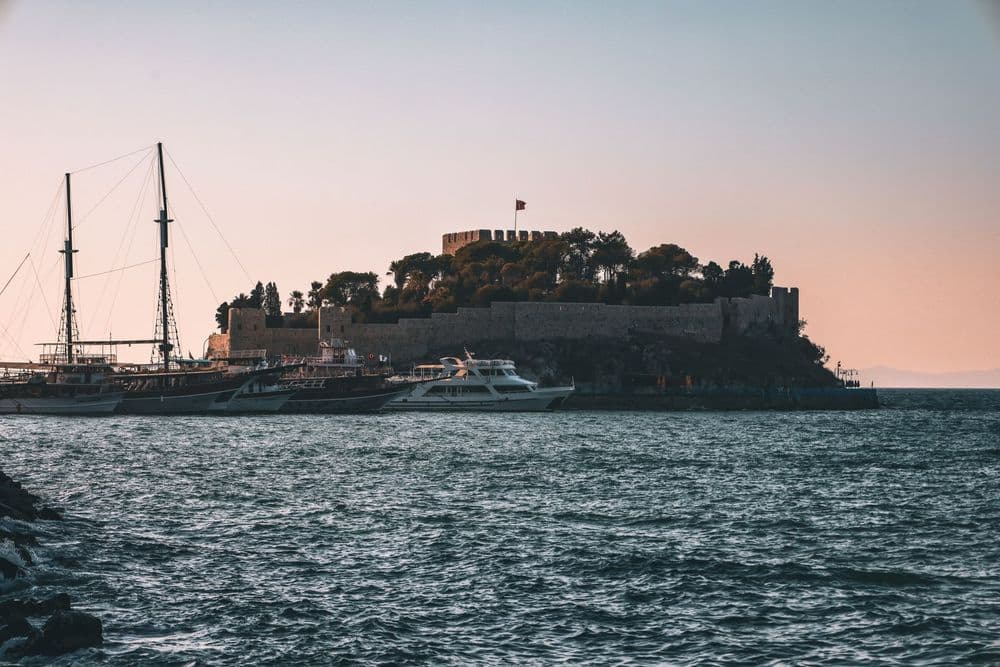
The stone fortress that defines the town sits on the point between the Kucuk Deniz and Buyuk Deniz bays, watching over both harbours at once. Traces of ancient Phokaia survive in its foundations, but most of what you see today is Genoese and Ottoman work, topped up with modern restoration. The name means "five gates", a reference to its defensive layout.
It does not take long to visit, and the best part is looking down over the two bays and the houses on the far shore from the walls. The fortress hosts occasional exhibitions and events, so whether the interior is open depends on the season. Even if you find it closed, the shore path below the walls is always free to walk. The light is best in late afternoon, when the low sun warms the stone and the water together. Starting your walk here and dropping down to the quay makes a natural route.
2. The Kucuk Deniz shore and fishing harbour
Kucuk Deniz is the heart of the town. Fishing boats sit moored along the shore, and the quay is lined with fish restaurants, coffee houses and old stone buildings. Most of your time in Foca will pass along this strip whether you plan it or not; morning tea, midday ice cream and evening fish all happen within the same few hundred metres.
This is still a working fishing harbour, not a stage set. Come early and you will see boats hauling in nets, cats waiting for scraps and the day's catch sold on the quay. The boats running trips to the Siren Rocks usually leave from here too; their booths are on the quayside, so asking about times and prices is easy.
Late afternoon is the best moment. The light softens, the tables fill and the harbour settles into its own rhythm. At midday the quay is half empty, so save those hours for the market streets or a boat and keep the evening for here. The stone paving is uneven in places; comfortable shoes are enough.
3. Buyuk Deniz and the shore walk
On the other side of the fortress, Buyuk Deniz is the quieter bay despite its name meaning "big sea". While Kucuk Deniz fills with restaurants, this side offers a more open, less crowded shoreline. A wide promenade runs along the water, with benches, a few cafes and steps leading down to the sea.
Walking from one bay to the other takes less than half an hour, and it is the best free activity in Foca. Passing the fortress between the two, you also understand why the town was founded here in the first place: two natural harbours with a defensible headland between them.
If you want to swim, the Buyuk Deniz side is the better bet, though this is a shore you enter from the rocks, not an organised beach. Finding a flat stone for your towel is the whole setup. At sunset the promenade becomes the town's busiest walking route, a small local version of the evening seafront ritual you see all along Izmir's coast.
4. The Foca stone houses and market streets
The narrow streets just behind the quay carry the real fabric of the town. Most of the two-storey stone houses date from the Greek population that lived here before the 1923 population exchange; some have been restored into guesthouses and cafes, others are still ordinary homes. Bay windows, walls built from sea-worn stone and bougainvillea share the same lane.
What passes for the market district is a handful of streets running parallel to the quay. There are small shops selling olive oil, soap, dried herbs and spices, a few boutiques and some bakeries. Do not expect serious shopping; the pleasure here is the streets themselves rather than the shop windows.
Wandering without a plan is the right approach. Getting lost is not a real risk at Foca's scale; the worst case is that you come out at the sea again three minutes later. The lanes stay shaded and cool through the middle of the day, so on hot days save them for the midday hours.
5. The Siren Rocks boat trip
The islands and rocks off Foca are sold with a story the tour captains tie to Homer: these, they say, are the rocks where the sirens of the Odyssey called out to passing sailors. How seriously you take the literary claim is up to you; the view from the water justifies the trip on its own.
In summer the boats leave from the Kucuk Deniz quay, circling the islands on day-long trips with swimming stops in several coves. Prices and programmes vary from boat to boat, so the sensible move is to walk the quay the day before, ask around and compare.
The area is also a marine protected zone and one of the few remaining habitats of the endangered Mediterranean monk seal. The seals are real, but they are few and extremely shy, so your chances of seeing one are low. Do not believe any pitch that promises a sighting; if you get one, count it as a lucky day. For anyone prone to seasickness, the route mostly stays in calm water.
6. The open-air Kybele temple
This open-air temple dedicated to the mother goddess Kybele consists of niches and steps cut directly into the rocks on the shore. Dated to the 6th century BC, the site is read as a cult place where Phokaia's sailors made offerings before setting out to sea. Do not expect a grand temple ruin; this is a modest but striking spot carved into the rock, right against the water.
It sits on the shoreline within walking distance of the town centre. Access, however, changes from time to time; the site can be closed for excavation, maintenance or protection work. The safest approach is to ask at your guesthouse or the tourism office on the quay before you set off.
If it is open, even a fifteen-minute visit is enough; the way the niches face the sea explains by itself why this spot was chosen. For anyone curious about the Kybele cult in ancient coastal cities, Foca is one of the rare places to see it on the ground.
7. Yeni Foca
Yeni Foca is the second, quieter town about 12 kilometres north of the main one. Watch the naming: when people say Foca they usually mean Old Foca, while Yeni Foca ("New Foca") is a separate town with its own small bay, stone houses and quay. The name goes back to the settlement the Genoese founded here.
The fabric feels like Old Foca, but the scale is smaller and the pace slower. Along the water you will find a few restaurants and coffee houses, and restored stone houses in the back streets. There are swimming spots along the shore, and the road between the two Focas is a pleasure in itself, with coves and viewpoints along the way.
With a car, fitting both towns into one day is easy. Without one, minibuses connect them in summer, but departures can be sparse, so do not set out without a plan for getting back. Think of Yeni Foca for a daytime swim and some quiet; for dinner and harbour atmosphere, Old Foca has more to offer.
8. Kozbeyli village
Kozbeyli lies inland from Foca, up in the hills, an old village known for its stone houses. Sitting a few kilometres back from the sea has kept it off the main tourist flow; the streets are calm and most houses keep their original stonework. The centuries-old plane tree and the coffee house on the village square complete the classic Aegean village scene.
These days the village's reputation rests on breakfast. Places serving big spread-style Turkish breakfasts in garden settings have opened in and around Kozbeyli, and on weekends the tables fill with visitors from Izmir. To avoid the crowd, come midweek or early in the morning.
Beyond breakfast, set your expectations correctly: this is a living village, not an open-air museum. It suits an hour of walking, a few photographs and a long meal. The drive from central Foca takes 15 to 20 minutes on a signposted road. Heading back down to Foca to end the day on the quay rounds the trip off nicely.
Getting there
Foca is about 70 kilometres northwest of Izmir. By car it takes around an hour from the city centre via the ring road and Menemen, on fully paved and signposted roads. Without a car, municipal buses and minibuses run from Izmir to Foca; departures generally leave from the northern transfer hubs, and timetables shift with the season, so check before you travel. Once you arrive, you will not need a vehicle; the centre is entirely walkable. Yeni Foca and Kozbeyli require a car or local minibus. On summer weekends parking in the centre gets difficult, so leaving the car at the lots near the entrance and walking in is the easier option.
When to go
The best months are May, June and September. The sea is warm enough to swim and the town is free of the August crush. July and August run hot, and on weekends the quay fills with day-trippers from Izmir; in those months, coming midweek makes a real difference. April and October are calm, cooler options for travellers who are not set on swimming. In winter the town goes very quiet: boat trips stop and some restaurants close, but the fortress and the shore walk are still there. Within the day, early morning and late afternoon are the best hours; give the midday heat to the shaded market streets.
Eating and drinking
Eating in Foca largely means the fish restaurants along the Kucuk Deniz quay. The season's fish comes grilled or steamed, with samphire, herb mezes and olive-oil dishes as the standard supporting cast. Because fish prices change with the season and the day's catch, asking about weight and price before ordering is not rude, it is necessary. Farmed sea bream and sea bass are the reliable budget options year round.
There is life beyond fish too: the back streets have simple eateries doing pide, meatballs and home-style cooking. Driving up to Kozbeyli for breakfast is a popular plan; if you stay in town, the quayside cafes do a simple breakfast with a view. Reservations for quay tables are not essential on summer evenings, but arriving early on weekends secures a spot.
Frequently asked questions
**Can Foca be done as a day trip from Izmir?** Easily. The classic plan is to leave in the morning, see the fortress, the market streets and both bays, eat fish in the evening and head back. If you want to add a boat trip, start earlier; if Yeni Foca and Kozbeyli are on the list, an overnight stay is the more relaxed option.
**Can you swim in Foca?** Yes, but Foca is not a beach destination. You can swim from the Buyuk Deniz shore and the coves around town, just do not expect an organised sand beach. For a swimming-focused day, the cove stops on the boat trips are the best option.
**Will I see monk seals on the Siren Rocks trip?** No guarantee. The area is protected habitat for the Mediterranean monk seal, but the animals are few and shy. Take the trip for the coastline, the coves and the swimming stops; treat a seal sighting as an unexpected bonus.
**Old Foca or Yeni Foca?** Old Foca for accommodation, food and the widest choice of things to see. Yeni Foca is smaller and calmer, good for a quiet half day by the sea. With a car, combining the two is simple.
Planning questions
What does this İzmir guide cover?
A guide to ancient Phocaea (Foca) around its Genoese castle, twin harbours, Fatih Mosque, ancient theatre and the Siren Rocks boat tour.
Can I watch a 4K walking tour of İzmir?
Yes. The page links to Travel Walk Tours films so you can preview the İzmir route on a big screen before you go.
How should I use this page to plan?
Read the quick answer first, skim the route notes, then compare street texture, timing, and nearby guides through the linked city page and walking films.