Plan Ephesus Ancient City around its two gates, Library of Celsus, Curetes Street, Great Theatre and Terrace Houses.
Walk this route
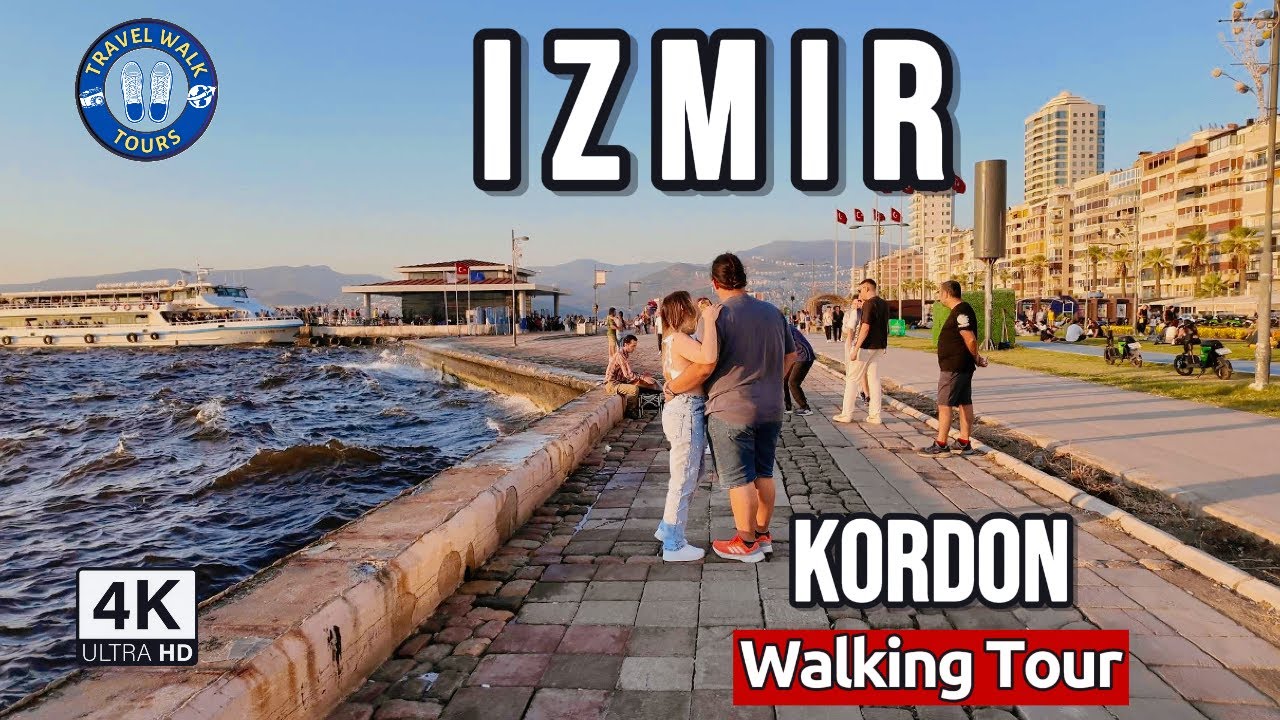
Walking Tour of Izmir's Coast | Konak & Alsancak Kordon in 4K
Watch the 4K walkPlaces on the map
12 pinsNumbers match the order in the article. Tap a pin for directions.
Best Things to Do in Ephesus and Selcuk: Ancient City, Artemis and Ayasuluk
People who take Ephesus for "a two-hour visit" cannot see that a wonder of the world, a three-thousand-year-old city and one of Christianity's earliest sites stand stacked in the same valley. Beneath the marble Curetes Street you walk lies Rome's largest port city; a few kilometres away, one of the seven wonders of the world; on the hill, the tomb of an apostle. Ephesus is not a ruin but a layered atlas of history; the real task is to read those layers in the right order.
This guide is written for a first visit, but not for the one who takes Ephesus as a single stop. The town of Selcuk that surrounds Ephesus is an open-air museum reaching from the Temple of Artemis to Ayasuluk Castle, from the Isa Bey Mosque to the Seven Sleepers; Sirince and the House of the Virgin Mary are in the same valley too. This guide groups places as the Ephesus core and the Selcuk centre, and you should build your day around it.
The channel toured the Ephesus Museum and the Experience Museum on camera. The distances below are measured straight-line from central Selcuk; walking inside the ancient city takes longer. The numbers match the pins on the map exactly.
Quick Answer
The ancient city of Ephesus takes half a day, and the Selcuk centre (Artemis, Isa Bey, St John, the museum) another half. You can fit both into one full day and spread Sirince and the Virgin Mary over a second.
- **First visit:** Ephesus in the morning (from the upper gate), the Virgin Mary and Selcuk centre in the afternoon; Sirince the next day.
- **Base:** The town of Selcuk; closest to Ephesus, Artemis and Sirince.
- **Car-free:** IZBAN from Izmir to Selcuk; minibus to Ephesus. The Virgin Mary needs a taxi or tour.
Understanding Ephesus and Selcuk in Five Minutes
This valley has lived without a break for three thousand years. Ephesus was founded by Ionian colonists in the 10th century BC and became Anatolia's largest port city in the Roman era; its population was among the most crowded of its time. The city's grandest structures date from this age: the two-storey facade built in 106 AD as a tomb-library for the governor Celsus, and the 24,000-seat Great Theatre completed under Trajan. But geography decided Ephesus's fate too: the alluvium carried by the Kucuk Menderes filled the harbour, the sea withdrew, and the city was slowly abandoned. Ephesus was declared a UNESCO World Heritage Site in 2015.
Three kilometres from Ephesus stood one of the seven wonders of the world: the Temple of Artemis. Completed around 550 BC with the support of the Lydian king Croesus, measuring 130 by 68 metres, this giant temple has a single standing column left today. As the temple fell, importance shifted to Ayasuluk hill: by Christian tradition the tomb of the apostle St John was here, and a great basilica rose over it. In the Ottoman-Beylik period, in 1375, Aydinoglu Isa Bey had the architect Ali of Damascus build the Isa Bey Mosque at the foot of the hill. The town's name was Ayasuluk until 1914; that year it became Selcuk.
Knowing these layers changes the visit. At Ephesus you stand in the theatre named in the Bible; at Artemis you look at the single column of a wonder of the world; at Ayasuluk you see pagan, Christian and Islamic layers stacked within three hundred metres. Selcuk does not squeeze its history into a single age; it lays them all side by side.
Ephesus Ancient City
The ancient city in the southwest of the valley; it needs at least half a day and has two gates. Entering from the upper gate and walking down turns the slope in your favour.
1. Ephesus Ancient City
Turkey's most magnificent ancient city and a UNESCO World Heritage Site. With its marble-paved streets, terrace houses, baths and monumental structures, it lays a whole Roman city before you. Entering from the upper gate (Magnesia) and walking down Curetes Street to Celsus and the theatre is the most sensible route; it is downhill, and the city opens chronologically.
- **Getting there:** Minibus or taxi from Selcuk; 3 km from the centre. From Izmir, IZBAN to Selcuk, then minibus.
- **Best time:** At opening or late afternoon; at midday there is no shade on the marble street and the summer heat is brutal.
- **While you're here:** Celsus (2) and the theatre (3) are inside the city; the Virgin Mary (4) is up the mountain road.
- **Budget:** Upper-tier entry; Museum Pass valid, terrace houses need a separate ticket.
- **Common mistake:** Entering from the lower gate and climbing. Enter from the upper gate and arrange the car or the return to the lower gate.
2. Library of Celsus
The most famous facade of Ephesus and perhaps of the whole ancient world. When Celsus, governor of Ephesus, died in 106 AD, his son had the library built as a tomb monument in his father's name; the two-storey marble facade with its statue niches rises today, restored, at the end of Curetes Street. It was one of the largest libraries of the ancient world.
- **Getting there:** Inside Ephesus (1), at the end of Curetes Street; 3 km from the centre.
- **Best time:** Morning, before the crowds and shade; the light matters for a photo of the facade.
- **While you're here:** The Great Theatre (3) is right beside it; the terrace houses on the opposite slope.
- **Budget:** Included in Ephesus entry.
- **Common mistake:** Only photographing the facade and moving on; examine the interior and the marble craftsmanship too.
3. Great Theatre of Ephesus
The 24,000-seat ancient theatre and the city's largest structure. Begun under Claudius and completed under Trajan (98-117 AD), the theatre, with its tiers rising along the slope, overlooks the whole Harbour Street. In the Bible, the crowd gathered against St Paul is said to have shouted here; its historical and religious layer is deep.
- **Getting there:** On the slope facing Harbour Street beside Celsus (2); 3 km from the centre.
- **Best time:** Morning; shade and cool are good for climbing the upper tiers.
- **While you're here:** Harbour Street runs from the theatre towards the sea (now land).
- **Budget:** Included in Ephesus entry.
- **Common mistake:** Turning back without climbing the upper tiers; the best city view is from above.
4. House of the Virgin Mary
On Mount Bulbul above Ephesus, the house where, by Christian tradition, Mary spent her final years. This stone house, recognised by the Catholic Church as a place of pilgrimage and visited by popes, sits in a pine forest. Whatever your belief, the stillness on the hill is moving.
- **Getting there:** By car up the mountain road from Ephesus (1); 5 km from the centre. Public transport does not go up; a taxi or tour is essential.
- **Best time:** Afternoon; tour buses crowd it in the morning.
- **While you're here:** It is on the mountain road out of Ephesus (1); the two on one day.
- **Budget:** Paid entry; parking separate.
- **Common mistake:** Planning without a car; public transport does not climb the mountain.
Central Selcuk: From Artemis to Ayasuluk
The town centre is walkable; Artemis, Isa Bey, St John and the museum are within a few hundred metres. Ancient, Byzantine, Beylik and Ottoman layers stand stacked here.
5. Temple of Artemis
One of the seven wonders of the world, left today with a single standing column. Completed around 550 BC with the support of the Lydian king Croesus, measuring 130 by 68 metres, this was one of the largest temples of the ancient world. Today a single column and foundation remains stand in a reedy field; imagining its grandeur is left to the visitor.
- **Getting there:** On foot from central Selcuk; on the Isa Bey Mosque road (0 km).
- **Best time:** Morning or late afternoon; the area is open and shadeless.
- **While you're here:** The Isa Bey Mosque (6) and Ayasuluk (8) are just above; the Ephesus Museum (9) in the centre.
- **Budget:** The area is free.
- **Common mistake:** Dismissing it as "just one column" and passing by. Remember you stand on the site of a wonder of the world; it gains meaning together with the Artemis statues in the Ephesus Museum.
6. Isa Bey Mosque
The 1375 Beylik-period mosque at the foot of Ayasuluk hill. Built for Aydinoglu Isa Bey by the architect Ali of Damascus, the building is one of the most important examples of early Turkish architecture, with its marble facade, tiled domes and asymmetrical plan. The marble craftsmanship and geometric-calligraphic ornament on the western facade stand out; its minarets were damaged in 16th-century earthquakes.
- **Getting there:** Between Artemis (5) and St John (7), at the foot of the hill; 0 km from the centre.
- **Best time:** Morning or late afternoon; mind the prayer times.
- **While you're here:** The St John Basilica (7) and Ayasuluk Castle (8) are above.
- **Budget:** Free entry; a place of worship, modest dress required.
- **Common mistake:** Skipping the mosque and going straight to the castle; Isa Bey is the finest example of the valley's Beylik layer.
7. St John Basilica
On Ayasuluk hill, the Byzantine basilica rising over the tomb of the apostle St John by Christian tradition. Once one of the largest churches in the region, the building's columns, arches and tomb site are visited today as restored remains. From the hill, Selcuk, Artemis and the distant Ephesus plain are in view.
- **Getting there:** Up the hill from the Isa Bey Mosque (6); 1 km from the centre.
- **Best time:** Late afternoon; for the hill view and sunset.
- **While you're here:** Ayasuluk Castle (8) is just above; Isa Bey (6) below.
- **Budget:** Paid entry; Museum Pass valid.
- **Common mistake:** Turning back without seeing the tomb site and the apse; the heart of the basilica is there.
8. Ayasuluk Castle
The castle on the hill above Selcuk and the place that gave the town its name (Ayasuluk until 1914). The interior of the walls, carrying Byzantine and Beylik-Ottoman layers, is plain today, but the view is without question the best: all of Selcuk, Artemis, the Ephesus plain and the distant sea unroll beneath your feet. On the same hill as the St John basilica.
- **Getting there:** Up the hill from St John (7) to the summit; 1 km from the centre.
- **Best time:** Sunset; the plain and sea catch the light.
- **While you're here:** St John (7) is just below.
- **Budget:** Paid entry; may be ticketed together with St John.
- **Common mistake:** Not checking the visiting hours; the castle may close early.
9. Ephesus Museum
The museum in central Selcuk; home to the most precious finds from the Ephesus excavations. The many-breasted statues of Artemis, gladiator tombstones, mosaics and everyday objects are displayed here. Stopping here before or after touring Ephesus helps you understand the people behind the stones.
- **Getting there:** In central Selcuk, in the market; 0 km from the centre.
- **Best time:** In the midday heat; an enclosed, cool break.
- **While you're here:** Artemis (5) and Isa Bey (6) are within walking distance. For the channel's Ephesus Experience Museum footage, see Ephesus Museum and Experience Museum in 4K.
- **Budget:** Paid entry; Museum Pass valid.
- **Common mistake:** Skipping the museum; the Artemis statues and terrace-house finds complete the ancient city.
10. Cave of the Seven Sleepers
The cave and legendary pilgrimage site at the foot of Panayirdag. By legend, seven youths fleeing persecution fell into a long sleep in a cave here and woke years later; it is a legend found in both Christian and Islamic tradition. With its surrounding rock tombs and church remains, it is a quiet, shaded stop.
- **Getting there:** By car or a long walk from central Selcuk; 2 km from the centre.
- **Best time:** Afternoon; the area is shaded and calm.
- **While you're here:** Panayirdag (11) and Ephesus (1) are on the same slope.
- **Budget:** The area is usually free; confirm visiting conditions.
- **Common mistake:** Expecting a grand structure; its value is in the legend and the quiet.
11. Panayirdag
The hill between Ephesus and Selcuk; a viewpoint over part of the ancient city and the surrounding plain. There are ancient remains and walking paths on its slope. It offers a quiet climb for seeing Ephesus from above and grasping the geography of the valley.
- **Getting there:** Between Selcuk and Ephesus; on foot or a short drive; 2 km from the centre.
- **Best time:** In the cool of the morning; the climb is shadeless.
- **While you're here:** The Seven Sleepers (10) at its foot; Ephesus (1) on the opposite slope.
- **Budget:** Free.
- **Common mistake:** Climbing at a summer noon; there is no shade, so prefer the morning.
12. Sirince Village
The old Greek village on the hill above Selcuk; with its stone houses, wine houses and narrow lanes, it is the valley's most beloved escape. Home to Greeks until the 1923 population exchange, the village is known for its fruit wine and handicrafts. It is the natural continuation of an Ephesus visit; the ancient city in the morning and Sirince in the afternoon is a good order.
- **Getting there:** By minibus up the hill from Selcuk; 7 km from the centre. For detail, see [Sirince travel guide](/travel-guides/sirince-travel-guide-things-to-do).
- **Best time:** Weekday morning; it fills up on weekends and at midday.
- **While you're here:** Ephesus (1) and the Selcuk centre are on the same route.
- **Budget:** The village is free; wine tasting and shopping are mid-range.
- **Common mistake:** Lingering only at the entrance stalls; climb up to the quiet streets.
How Many Days for Ephesus and Selcuk
- **1 day:** Ephesus in the morning (upper gate), the Virgin Mary and the Selcuk centre (Artemis, Isa Bey, museum) in the afternoon.
- **2 days:** Add St John, Ayasuluk Castle and Sirince.
- **3 days:** The Seven Sleepers, Panayirdag and the surroundings; a calm pace.
For detail, see [How long for Ephesus: a 1-2 day Selcuk itinerary](/travel-guides/how-long-for-ephesus-one-two-day-selcuk-itinerary).
Ticket and Gate Notes
Ephesus has two gates (upper/Magnesia and lower); entering from the upper gate and walking down turns the slope in your favour. The Museum Pass is valid at Ephesus, the Ephesus Museum, St John and around Artemis, but the terrace houses need a separate ticket. Confirm the current fee and hours on the day. For detail, see [Ephesus tickets, Museum Pass and terrace houses](/travel-guides/ephesus-tickets-museum-pass-terrace-houses-guide).
Classic Mistakes
- **Entering Ephesus from the lower gate and climbing.** Enter from the upper gate; it becomes downhill and the city opens chronologically.
- **Being on the marble street at midday.** There is no shade; go in the first hours of the morning or late afternoon.
- **Planning the Virgin Mary without a car.** Public transport does not climb the mountain; a taxi or tour is essential.
- **Dismissing Artemis.** You stand on the site of a wonder of the world; it gains meaning together with the Ephesus Museum.
- **Skipping the Selcuk centre.** The valley's Byzantine, Beylik and Ottoman layers are here; seeing only Ephesus is half a visit.
Bad-Weather Plan
Summer is brutal at Ephesus; the real "bad weather" is the midday heat. On a very hot day, Ephesus in the morning, the Ephesus Museum at noon (enclosed and cool), and the shaded Seven Sleepers in the afternoon is a good order. On a rainy day Ephesus is slippery on wet marble; the museum and the Isa Bey Mosque offer a dry alternative. Sirince can be visited in the rain too, but the stone streets get slippery.
Where to Stay
**The town of Selcuk** is ideal for a first visit: closest to Ephesus, Artemis and Sirince, on the IZBAN line. Kusadasi is an alternative for the sea, Sirince for a quiet village experience. For detail, see [Where to stay for Ephesus, Selcuk, Sirince, Kusadasi](/travel-guides/where-to-stay-for-ephesus-selcuk-sirince-kusadasi).
Transport and Car-Free Ephesus
The IZBAN suburban train reaches Selcuk directly from Izmir; minibuses from Selcuk to Ephesus are frequent. There are also buses from Kusadasi. The House of the Virgin Mary and the mountain points need a taxi or tour; the centre and Ephesus are quite comfortable to see car-free. For detail, see [Car-free Ephesus-Selcuk: Izmir, Kusadasi, Sirince](/travel-guides/ephesus-selcuk-without-car-izmir-kusadasi-sirince).
Get to Know the Route Through Real Footage
The channel recorded the Ephesus Museum and the Ephesus Experience Museum in continuous 4K walking footage. Seeing the finds and the space before you go makes your plan realistic.
Frequently Asked Questions
**How many hours do you need for Ephesus?** The ancient city takes at least half a day. The Selcuk centre (Artemis, Isa Bey, the museum) another half; with the Virgin Mary and Sirince it spreads to two days.
**Which gate should you enter Ephesus from?** The upper gate (Magnesia). Entering and walking down turns the slope in your favour and the city opens chronologically; arrange the car or the return to the lower gate.
**How do you get to Ephesus from Izmir?** By the IZBAN suburban train to Selcuk, then minibus or taxi to Ephesus. There are also buses from Kusadasi.
**Can you reach the House of the Virgin Mary without a car?** No. Public transport does not climb the mountain; a taxi or tour from Selcuk is needed. It is combined with an Ephesus visit on the same day.
**Where should you stay in Ephesus and Selcuk?** The town of Selcuk for a first visit; closest to Ephesus, Artemis and Sirince. Kusadasi for the sea, Sirince for a quiet village.
Explore nearby towns and neighbourhoods
Planning questions
What does this İzmir guide cover?
Plan Ephesus Ancient City around its two gates, Library of Celsus, Curetes Street, Great Theatre and Terrace Houses.
Can I watch a 4K walking tour of İzmir?
Yes. The page links to Travel Walk Tours films so you can preview the İzmir route on a big screen before you go.
How should I use this page to plan?
Read the quick answer first, skim the route notes, then compare street texture, timing, and nearby guides through the linked city page and walking films.