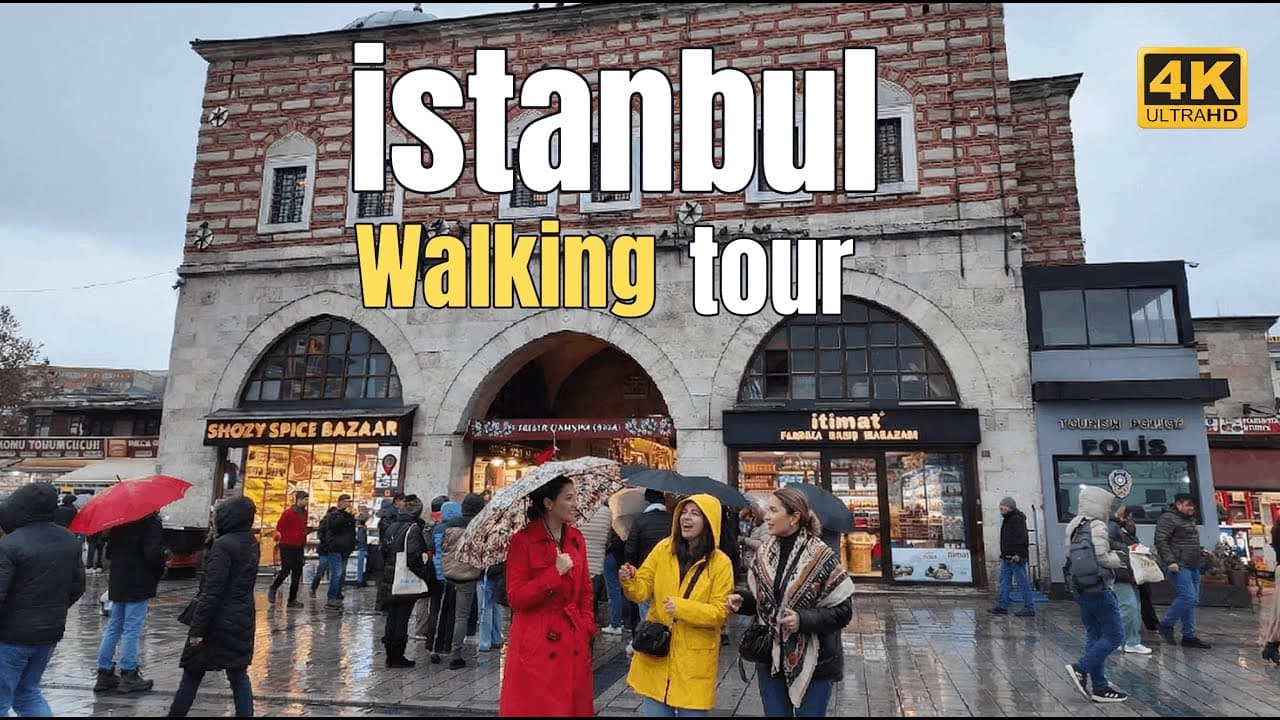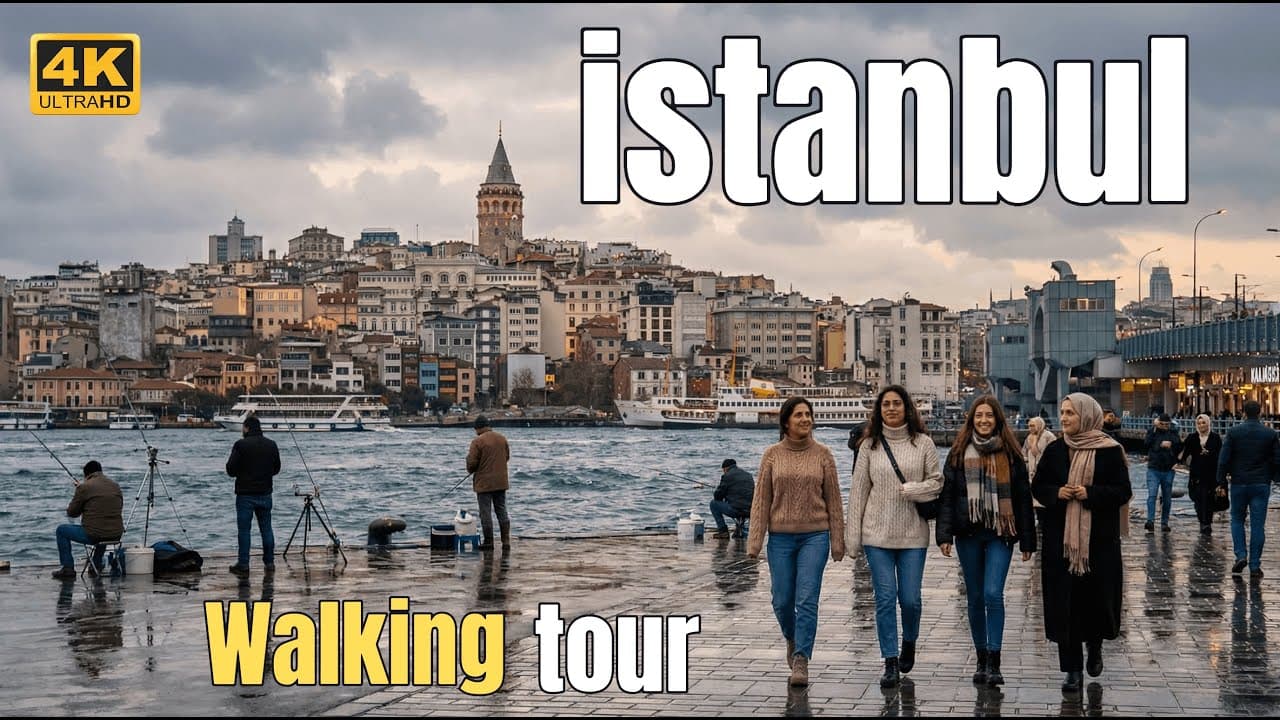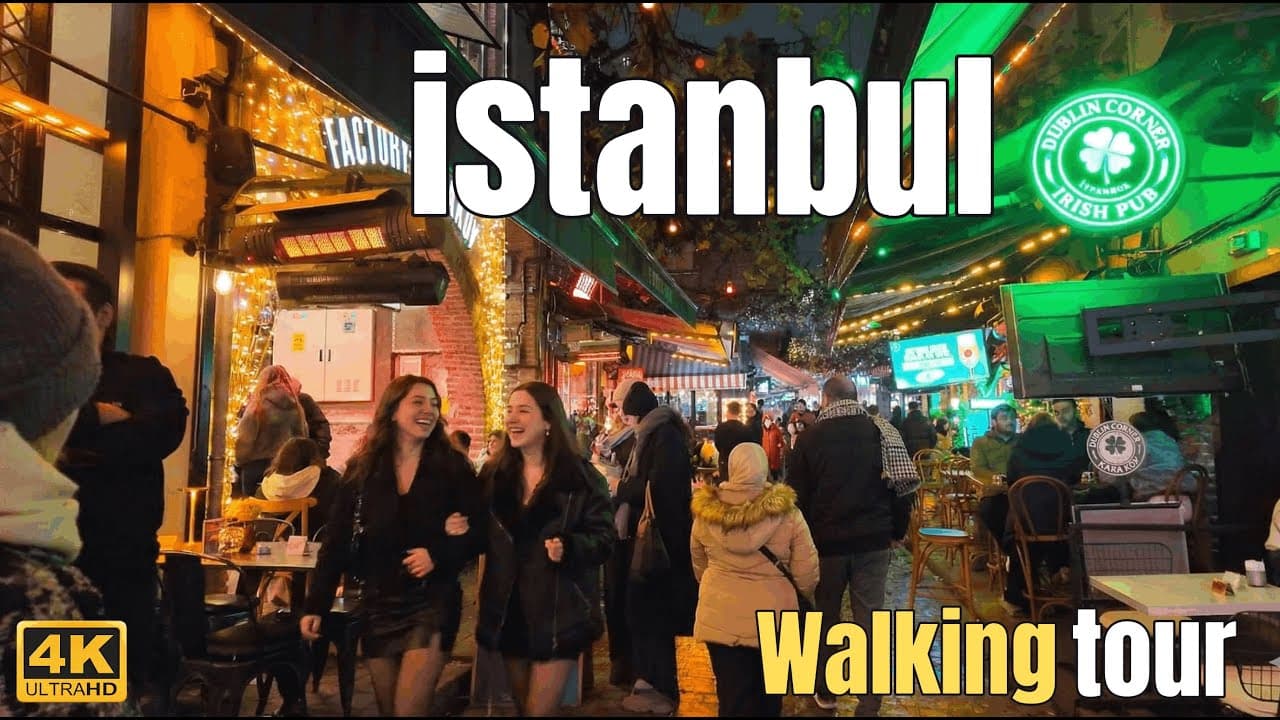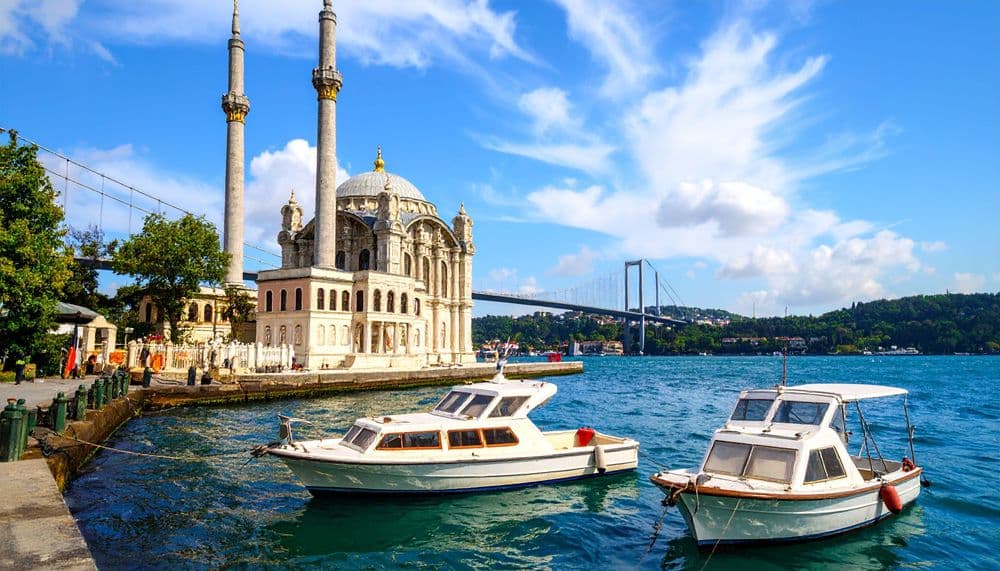
Plan Eminonu around the Spice Bazaar, the New Mosque, Rustem Pasha, the Galata Bridge, Sirkeci and the Grand Bazaar, with crowd and practical notes.
Walk this route
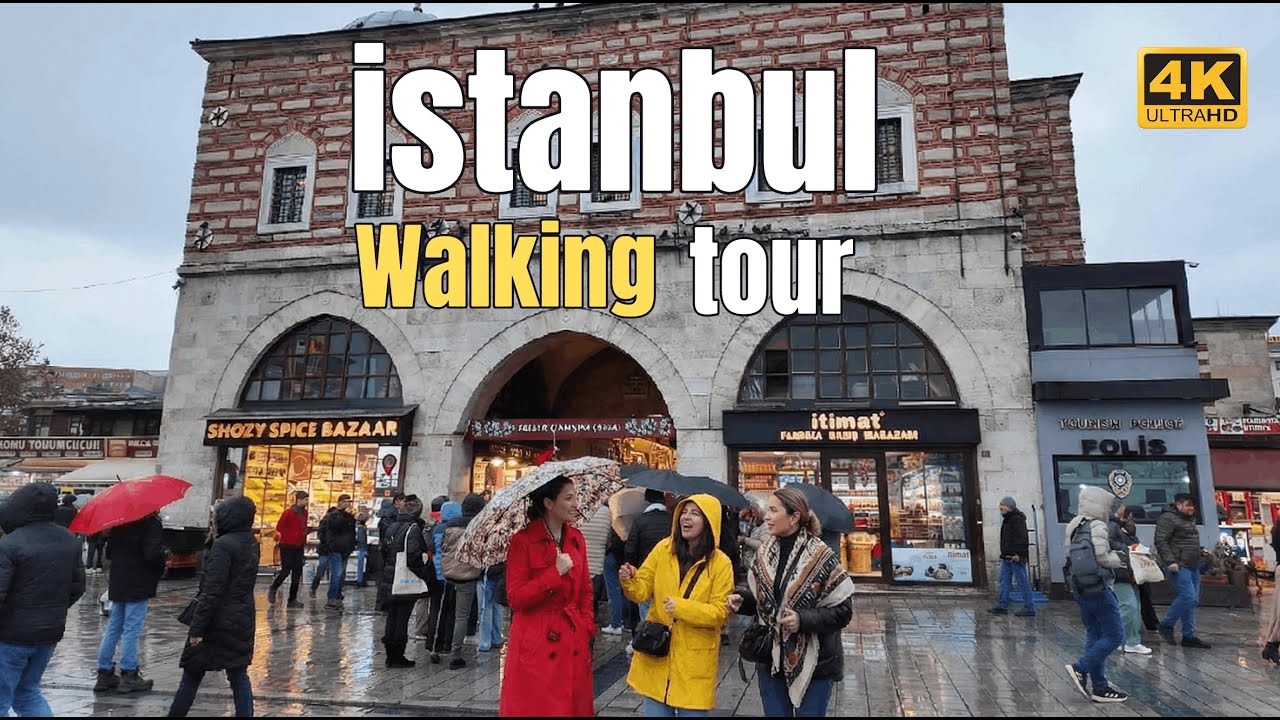
Istanbul Walking Tour 4K – Historic Streets, Crowded Bazaars & Timeless Atmosphere
Watch the 4K walkPlaces on the map
13 pinsNumbers match the order in the article. Tap a pin for directions.
--- title: "Eminönü travel guide: 13 stops from the bazaars to Beyazit" description: "An honest neighbourhood guide to Eminönü and the bazaar slope: the Spice Bazaar, Galata Bridge, Sirkeci, the Grand Bazaar, Cemberlitas and Beyazit Square, in map order." slug: "eminonu-guide" lang: "en" city: "İstanbul" district: "Fatih" neighbourhood: "Eminönü" type: "guide" ---
Eminönü: the working city between the bazaars and the water
Eminönü is a loud commercial waterfront at the mouth of the Golden Horn, in İstanbul's old city. The New Mosque rises over the square, and around it there is constant movement: porters shoving hand trolleys, wholesalers hauling suitcases of goods, ferry docks, simit carts. This is not a quiet neighbourhood. It is crowded, tight and noisy, and that is exactly why it suits anyone who wants to see the working face of İstanbul.
The real character of the area lives in the trading corridor between the two great markets and the water. The Spice Bazaar sits on the shore, the Grand Bazaar on the hilltop, and the slope between them has moved goods, money and people for centuries. Over on the Sirkeci side there is a separate world of trains, the old post office and tradesmen's lunch counters. The further uphill you walk from the shore, the fewer tourist stalls you see and the more real wholesalers and hans take over.
The most common mistake is to visit the Spice Bazaar and the Grand Bazaar and call the area done. The Mahmutpasa slope between the two markets, the historic hans inside and around the Grand Bazaar, and the Hocapasa food lanes behind Sirkeci are places most visitors never see. This guide covers 13 stops from the waterfront up to Beyazit Square, in map order.
Quick answer
Eminönü and the bazaar slope form a trading route you can walk from the shore to Beyazit in anything from half a day to a full one.
- Best time: early on a weekday morning, as the bazaars open and before the crowds settle.
- Do not miss: the tiles of Rustem Pasha, a fish sandwich, the Mahmutpasa slope and the hans of the Grand Bazaar.
- Watch out: the Grand Bazaar is closed on Sundays; carry your bag in front in the crowds.
1. The Spice Bazaar
The Spice Bazaar is an L-shaped, domed, covered market running parallel to the waterfront. It was built in the 17th century as part of the New Mosque complex, with its income endowed to the mosque. Inside, stalls of spices, nuts, Turkish delight, tea and honey line up in blocks of colour, and the air carries cinnamon, cumin and dried fruit.
To be honest, it is touristy and crowded. Shops on the main corridor tend to quote visitor prices, bargaining is expected, and sellers can be pushy. The atmosphere is still worth seeing. For better prices and less theatre, step out through the side gates to the wholesale shops on Hasırcılar and Tahmis streets; that is where locals buy.
The market is usually open every day, but verify the hours before you go. Never buy Turkish delight without tasting it, compare a few shops, and confirm the total before paying.
2. The New Mosque
The New Mosque is the large imperial mosque that dominates the Eminönü square. Its construction dragged on through changes of patron and was finally completed in 1663. The two minarets and cascade of domes make the most recognisable view of Eminönü from the water and the bridge.
The forecourt is full of pigeons; feed was once sold here, and that is still the character of the square. Inside, the space is airy and bright, dressed in late Ottoman decoration. The İznik tiles, the royal loge and the great chandelier reward a slow look.
The mosque is an active place of worship, so avoid prayer times and check the daily schedule before visiting. Entry requires clothing that covers shoulders and knees, women are expected to cover their hair, and wraps are available at the door. Shoes come off, and entry is free. Mind your bag in the busy square and be wary of people selling pigeon feed or photos.
3. Rustem Pasha Mosque
Rustem Pasha Mosque is a small but extraordinary building perched above the shops of Eminönü. It was designed by the architect Sinan and completed in the 16th century. You cannot see it from street level; you reach it up a stone staircase tucked between the wholesale shops, which is why most visitors walk right underneath it without going in.
Once inside, you understand the climb. The interior is covered top to bottom in İznik tiles: red, blue and green tulips, carnations and geometric patterns wrap the walls, the columns and the mihrab. It is one of the richest tile interiors in İstanbul, and because the room is small, the effect is concentrated.
To find it, head for Hasırcılar Street and look for the stairs between the shops. Visit outside prayer times, follow the dress code and take off your shoes. Morning light shows the tiles at their best. This is the easiest place in Eminönü to miss.
4. The Galata Bridge and the fish-bread piers
The Galata Bridge is a double-deck bridge over the Golden Horn linking Eminönü to Karaköy. The upper deck carries road traffic, the tram and a walkway, with anglers lining the rail; the lower deck holds fish restaurants and tea gardens facing the Horn.
Walking the bridge end to end is one of İstanbul's classic walks. On one side you get the old-city skyline and its mosques; on the other, the Galata Tower. At the Eminönü end, the fish-bread boats and stalls sell the neighbourhood's signature meal: grilled fish in bread with onion and lemon, eaten standing up, fast and filling.
As you walk, watch the fishing lines and the wet deck. On the lower level, waiters may try to pull you to a table; ask for the menu and the price before you sit. Check the price at the boats before ordering too. The bridge fills up at sunset, but that is also when the light is best.
5. Sirkeci Station
Sirkeci Station is a historic railway terminus just east of Eminönü, close to the shore. It opened in 1890 and for decades was the İstanbul terminus of the Orient Express; passengers from Europe ended the legendary journey here.
The building, in an orientalist style with coloured brick, arched windows and a broad eaved roof, was one of the smartest stations of its era. Mainline trains no longer depart from it, but the structure stands and houses a small railway museum with old ticket windows, locomotive parts, uniforms and objects from the Orient Express years.
The station is a few minutes on foot from the Eminönü square, and the Marmaray Sirkeci station sits directly beneath it. The museum is small; verify its opening days before you go. The old hall and platform make a short, calm break after the noise of the markets. On some evenings a whirling dervish performance is held in the station hall; ask on site for the programme.
6. The Grand Post Office
The Grand Post Office sits between Sirkeci and Sultanahmet, filling its own street with a monumental facade. Completed in 1909, it is counted among the largest works of the First National Architecture movement, and its stone front, tile panels and arched entrance immediately break any expectation of an ordinary post office.
The interior is the real surprise. The main hall rises through galleries with iron railings to a glazed roof that lets daylight pour down, giving it the openness of a railway terminus. It is still a working post office: real transactions happen at the counters, so this is a living building rather than a preserved set piece. There is also a small postal history display inside; ask on site whether it is open.
Buying stamps or a postcard is a good excuse for the visit, and a card mailed from here makes a nice souvenir. It keeps weekday office hours; verify the weekend situation. When taking photos, keep out of the way of staff and customers.
7. The Hocapasa food lanes
Hocapasa is a knot of narrow pedestrian lanes just behind Sirkeci Station, and it is an island of food. This is tradesman cooking, not tourist menus: köfte grills, pide bakeries, kebab houses and steam-tray lokantas sit door to door. At lunchtime the lanes fill with workers from the surrounding offices, and that crowd is a good sign.
The pleasure here is choice. One door offers daily home-style dishes ladled straight from the pot, the next a pide fresh from a wood oven, and across the lane a köfte house that has done one thing for decades. Ordering by pointing at the trays in the window is completely normal; no Turkish required.
The calmest hour is before noon and the busiest is between 12.00 and 14.00. Tables turn fast; this is not a place to linger. Prices are generally fairer than on the Eminönü waterfront, but still check the menu before ordering. For dessert, look for the bakeries in the same lanes doing oven-baked rice pudding and kadayıf.
8. Mahmut Pasha Mosque and the bazaar slope
The Mahmutpasa slope is the steep, busy shopping street that connects the Spice Bazaar to the Grand Bazaar. Goods have moved up and down this line for centuries, and today it is packed with cheap clothing, fabric, wedding dress and home textile shops. It is not touristy; most of the shoppers are locals, and this is the area at its most genuine.
Near the top of the slope stands Mahmut Pasha Mosque. Dating to 1463, it is one of the oldest mosques built after the conquest of the city and carries the plainness of early Ottoman architecture. Its main space, under two domes in a row, looks clearly different from the showier mosques of later centuries. The tomb in the grounds belongs to its founder, the grand vizier Mahmut Pasha.
Climbing the slope from bottom to top is tiring but rewarding; give way to the porters' trolleys. The mosque is active, so enter outside prayer times and follow the dress code.
9. The Grand Bazaar
The Grand Bazaar is a vast covered market on the crown of the old city. Founded in the 15th century, it grew over the centuries into a labyrinth of thousands of shops and more than sixty streets, with jewellers, carpet dealers, leather, ceramics and souvenirs sorted into their own lanes.
Getting a little lost inside is part of the experience. The main streets are touristy, sellers can be insistent, and bargaining is expected; the first price is a starting point. Take your time, compare a few shops, and if you feel pressured, smile and walk on. Quoting fixed prices here would be misleading, so confirm the total before you pay, and ask for a receipt on anything valuable.
The bazaar is closed on Sundays and public holidays; verify the day before you go. Weekday mornings are the calmest. Security checks at the gates are routine. Carry your bag in front, and remember the name of your exit gate; Beyazit and Nuruosmaniye are the easiest for orientation.
10. The Inner Bedesten and the historic hans
The heart of the Grand Bazaar is the Inner Bedesten at its centre. This thick-walled, domed core is the oldest part of the market and served for centuries as its vault, where the most valuable goods were locked away. Today the antique dealers concentrate here: old silver, watches and collectors' pieces. It is the calmest and most characterful corner of the bazaar; walk through it even if you buy nothing.
The historic hans around the bazaar are a layer most visitors never see. These courtyard trading buildings still hold working workshops: jewellers' benches, repairers, wholesalers. Stepping into a courtyard for a look is generally fine, but remember these are workplaces; do not enter a workshop uninvited, and ask before photographing anyone.
To find the hans, leave through the bazaar's northern gates and try the lanes running down towards Mahmutpasa. The courtyards are quietest in the morning, which is also the best time to watch the craft work.
11. Nuruosmaniye Mosque
Nuruosmaniye Mosque stands right beside one of the main gates of the Grand Bazaar. Completed in the 18th century, it is considered İstanbul's first great Ottoman Baroque building, with curves and ornament that set it apart from the classical mosques. Its semicircular courtyard is an unusual experiment in Ottoman mosque design.
The interior is full of windows, and light pours in from the dome and the tiered rows below it. Passing through one door out of the noise of the bazaar into this space gives a sudden sense of quiet, and that contrast is what makes the visit worthwhile. Outside the gate, Nuruosmaniye Street continues the theme with jewellers and polished shopfronts.
Because the mosque sits just outside the bazaar's Nuruosmaniye Gate, it makes a natural stop on your way out. It is an active mosque: enter outside prayer times, follow the dress code and take off your shoes. The shaded courtyard is a good place to recover from the market. Entry is free.
12. The Cemberlitas Column and Bath
Cemberlitas appears on the tram street as you walk from Nuruosmaniye towards Beyazit. The scorched stone column on the square dates from the era when Emperor Constantine refounded the city, making it one of İstanbul's oldest monuments. Fires over the centuries blackened its surface, and iron hoops were added to hold it together; the Turkish name means the hooped stone.
Right beside the column, the Cemberlitas Bath is a 1584 work by the architect Sinan and one of the oldest hamams in the city still in operation. Its domed hot room, central marble slab and star-shaped light holes offer a good example of the classical Ottoman bath experience. Men and women bathe in separate sections.
Because the bath is a well-known tourist address, prices can run high; ask about the service packages and current fees before going in. Seeing the column costs nothing and takes two minutes; watch for the tram when crossing the street.
13. Beyazit Square and Mosque
Beyazit Square is the broad, tree-lined space where the bazaar route ends. The gates of the Grand Bazaar open on one side, and the monumental entrance of İstanbul University stands on the other. With its pigeons, simit sellers and student crowds, it is one of the old city's most lived-in open spaces.
Beyazit Mosque, which gives the square its name, dates from the early 16th century and is among the oldest large mosques still standing in the city. Its courtyard, with coloured stonework and porphyry columns, is especially fine. Tucked into the corner between the mosque and the university gate is the Sahaflar market, a small courtyard where books have been sold since Ottoman times, still full of second-hand booksellers and publishers' stalls.
At Sahaflar you will find old printings, calligraphy panels and textbooks side by side; polite bargaining is acceptable. The square adjoins the Beyazit stop on the T1 tram, and from here Süleymaniye Mosque is a ten-minute walk.
Getting there
Reaching Eminönü without a car is easy, and parking here would be a headache anyway. The T1 tram line is the backbone of this guide: the Eminönü stop is on the square, Sirkeci is in front of the station, and Cemberlitas and Beyazit sit at the top of the slope. You can walk the route uphill and ride the tram back down.
The Marmaray Sirkeci station lies directly beneath the railway terminus; it is the fastest link from the Asian side and from airport connections. Ferries leave the Eminönü docks for Kadıköy, Üsküdar and the Bosphorus; arriving by ferry is the most pleasant option, and the square is a minute from the pier.
The whole route is walkable: roughly a kilometre and a half from the shore to Beyazit, uphill but broken by stops. Get an İstanbulkart; it works on the tram, Marmaray and the ferries. Give way to porters' trolleys in the narrow lanes and look both ways across the tram track.
When to go
The most comfortable time is early on a weekday morning. The bazaars are just opening, the han courtyards are quiet, and the light is soft for photos. Afternoons and weekends fill the waterfront and the markets right up.
The Grand Bazaar is closed on Sundays and public holidays, and since half the route depends on it, avoid those days. The Spice Bazaar is usually open daily, but verify the hours. Schedule mosque visits around prayer times; Friday midday is the busiest of all.
In summer the midday heat and crowds can be draining; spring and autumn are easier. On rainy days the covered markets and hans are good shelter, and most of the route runs indoors anyway.
What to eat
The symbol of Eminönü is the fish sandwich. At the boats and stalls by the bridge, grilled fish is served in bread with onion and lemon: fast, filling and true to the neighbourhood. A glass of şalgam, fermented turnip juice, is the local pairing. Ask the price before ordering.
For a sit-down meal with more variety, the Hocapasa lanes are the right address: köfte, pide, kebab and steam-tray dishes door to door, filling up with the lunchtime trade crowd. The Spice Bazaar and its surroundings cover Turkish delight, spices, nuts and Turkish coffee; you can buy freshly ground coffee from a historic roaster to take home. Choose delight by tasting and compare a few shops.
The restaurants under the bridge serve seated fish meals, but settle the menu and price before sitting down. On the bazaar slope and around Beyazit, tradesmen's lokantas and rice-pudding shops offer cheaper breaks.
Frequently asked questions
Can this route be done in one day?
Yes. All 13 stops from the shore to Beyazit fit into a full day with meal breaks. With half a day, pick either the waterfront half (the first seven stops) or the bazaar half (the last six).
Is the Grand Bazaar open on Sunday?
No. The Grand Bazaar is closed on Sundays and public holidays. Plan the route for a weekday and verify the current opening day before you go.
How do I find Rustem Pasha Mosque?
Go to Hasırcılar Street and look for the stone staircase between the wholesale shops. The mosque sits above street level and its signage is small; when you see the stairs, you are in the right place.
Is bargaining expected everywhere?
No. Bargaining is normal in the Grand Bazaar, the Spice Bazaar and at Sahaflar, where the first price is a starting point. In restaurants, at Hocapasa and in shops with price tags, you do not bargain.
Is the Cemberlitas Bath worth it?
Yes, if you want the classical hamam experience in a historic Sinan building. As a well-known tourist address its prices can be high; ask about package contents and current fees before entering, and expect a wait at busy hours.
Planning questions
What does this İstanbul guide cover?
Plan Eminonu around the Spice Bazaar, the New Mosque, Rustem Pasha, the Galata Bridge, Sirkeci and the Grand Bazaar, with crowd and practical notes.
Can I watch a 4K walking tour of İstanbul?
Yes. The page links to Travel Walk Tours films so you can preview the İstanbul route on a big screen before you go.
How should I use this page to plan?
Read the quick answer first, skim the route notes, then compare street texture, timing, and nearby guides through the linked city page and walking films.