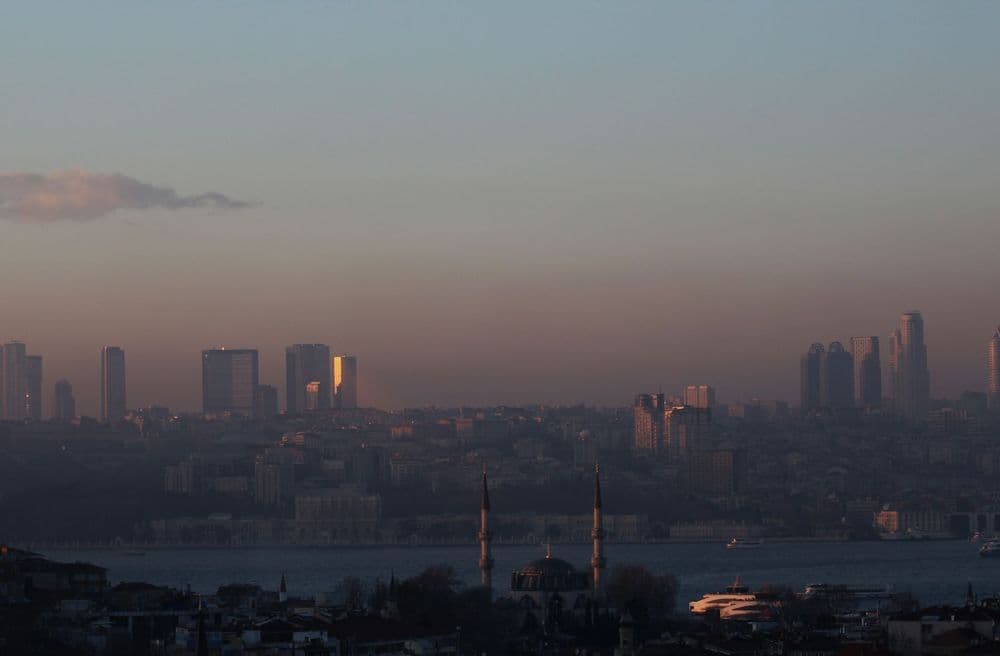
A realistic Istanbul guide organized by walkable districts: Historic Peninsula, Galata, Karakoy, Kadikoy, Uskudar and the Bosphorus, with related 4K walking videos.
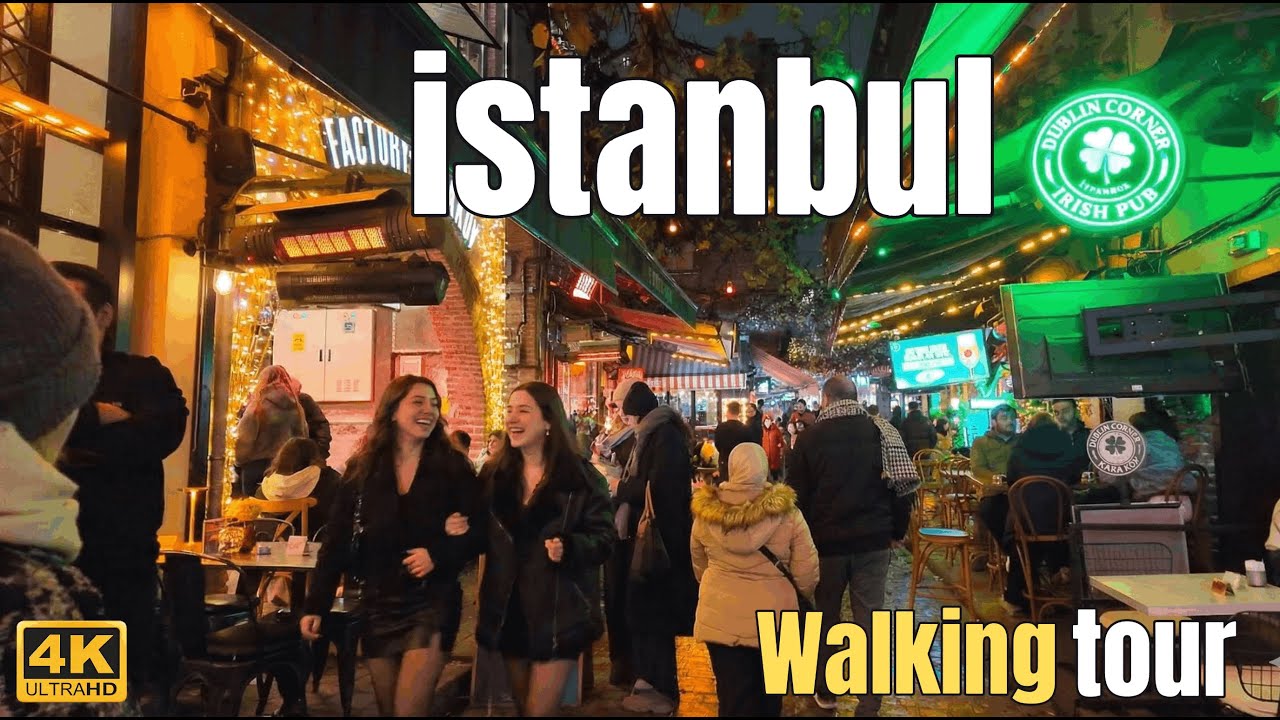
Walk this route
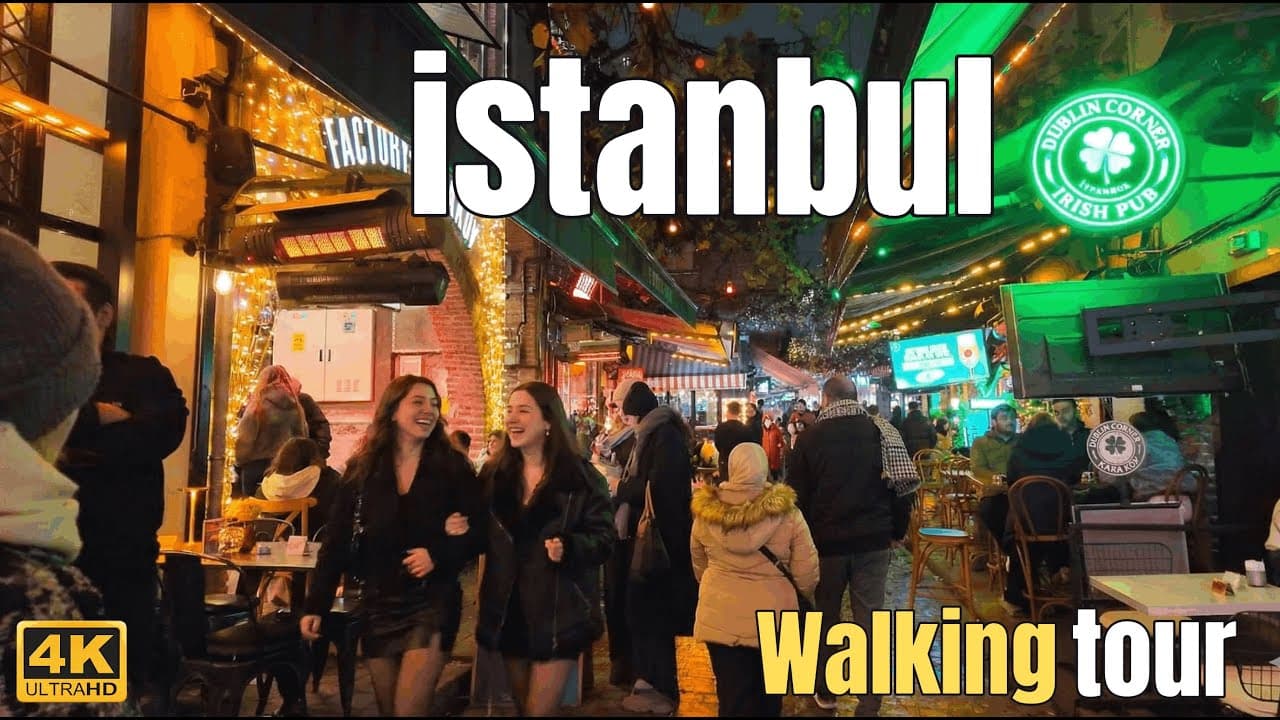
Istanbul Walking Tour 4K - Beautifully Lit Streets and Shops of Karaköy & Galataport at Night
Watch the 4K walkPlaces on the map
18 pinsNumbers match the order in the article. Tap a pin for directions.
Don't Squeeze Istanbul Into One List
Trying to see Istanbul with a "top 10" list is like measuring the sea with a glass. This is a city of fifteen million people, two continents, and eight thousand years of layered history. The question is not where to go — it is how to slice the city into walkable pieces. The traveler who crams Sultanahmet, Galata, Kadıköy, Ortaköy, and Balat into one day remembers only the transit.
The right approach is district by district: one day belongs to the Historic Peninsula, one to the Galata–Beyoğlu line, one to the Asian side. Each district sets its own tempo — Sultanahmet wants you early, İstiklal lives at night, Kadıköy opens in the afternoon, the Bosphorus villages are calmest on weekdays. This guide cuts the city into those pieces: 18 areas and stops, day-by-day routes, district-by-district eating, season advice, and the classic traps.
We have walked every one of these districts with a camera — from the domed corridors of the Grand Bazaar to the Bebek waterfront, from the fishermen on Galata Bridge to the slopes of Cihangir. Every section below has a matching 4K walking film on this site. Watch before you go: nothing tells you the width of a lane, the density of a crowd, or the seriousness of a hill more honestly than video.
Planning Before You Go
How many days? Three is barely an introduction; five settles the main districts; seven or more lets you add the unhurried routes — the Princes' Islands, the Bosphorus villages. Istanbul does not "finish," and knowing that is the plan.
The key to transport is the İstanbulkart: one card for metro, tram, ferry, bus, funicular, and the Marmaray cross-Bosphorus rail. Buy it from the yellow machines at the airport or any major stop; one card works for several people. Traffic is this city's only real enemy, so memorize two escape routes: Marmaray (under the strait, Sirkeci to Üsküdar in four minutes) and the ferries. The ferry is not just transport — the twenty-minute Eminönü–Kadıköy crossing is the world's cheapest Bosphorus panorama, and simit with tea is the standard menu on deck.
Airports: Istanbul Airport (European side, about 40 km out — the M11 metro connects toward the center and Havaist buses run to every major district) and Sabiha Gökçen (Asian side — the M4 metro reaches Kadıköy). Which one you land at should shape where you sleep the first night; after a late arrival, do not attempt to change continents. Get an eSIM before landing so maps, ferry timetables, and ride apps work from minute one.
Museums: if Topkapı plus two or more museums are on your list, the Museum Pass Istanbul usually pays for itself — check current coverage before buying. Hagia Sophia's visitor arrangements change periodically; verify the current system from official sources. At mosques, cover shoulders and knees (headscarves are provided for women at the big ones), and note that mosques close to visitors at prayer times — especially Friday noon.
When to Come
- April–May: The best window. Walkable weather, soft light, and tulips filling Emirgan and the parks.
- June: Long days and cool Bosphorus evenings; the first half, before school holidays, is calmer.
- July–August: Humid and crowded. If you come, be on the street by 8, hide in museums and on ferries at noon, and re-emerge with the evening breeze.
- September–October: The second golden window. The sea still warm, the light ideal, the crowds thinning.
- November: Rain odds rise but the city calms down; patisserie-and-museum season.
- December–March: Grey, rainy, occasionally snowy — and when snow falls the city turns into a fable; run to the Süleymaniye courtyard. With an indoor circuit ready (the Cistern, bazaars, museums, arcades), winter Istanbul is a pleasure.
Where to Stay
- Sultanahmet: Walking distance to the monuments — practical for a first visit. Quiet early in the evening, and the restaurants cook for tourists.
- Karaköy and Galata: Our pick for balance. Five tram minutes to the Historic Peninsula, a walk to Beyoğlu, and the best coffee-hotel-gallery density in town.
- Cihangir and Beyoğlu: Café culture, antique shops, real city life. Hard on anyone who hates hills.
- Kadıköy and Moda: The local's Istanbul. Far from the monuments but closest to everyday life; ferries connect it to everywhere.
- Beşiktaş and Ortaköy: Near the Bosphorus line and the nightlife, with fair access to both shores.
- Balat: For character-seekers — painted houses, hills, a real neighborhood; expect a transfer or two on public transport.
Things to Do in Istanbul
1. Hagia Sophia and Sultanahmet Square
Standing under a dome that has held for fifteen hundred years is Istanbul in one sentence. Completed in 537, it reigned as the largest cathedral on earth for a millennium; today it serves as a mosque, and the visitor entrance system changes periodically — check the current rules. The square between it and the Blue Mosque (1616) is a different place at 8 a.m. than at noon: come early for empty space and short lines. In the Hippodrome between them, the Egyptian Obelisk and the Serpent Column survive from the chariot-racing centuries.
2. Topkapı Palace and Gülhane
Four centuries of Ottoman rule ran from these courtyards. Add the Harem ticket without hesitating — the palace's real story lives there. With the treasury, the holy relics, and the sea-facing terraces, plan half a day. Exit downhill through Gülhane Park; the tea garden at its lower end faces the Bosphorus and is the classic recovery stop. Pick a weekday morning.
3. The Basilica Cistern
Under the square: a Byzantine reservoir (532) on 336 columns. Walking the dim walkways doubles as the best air-conditioned break of a summer afternoon. Find the two Medusa heads — one upside down, one sideways; scholars still argue why. The line grows toward midday; go at opening or late afternoon.
4. The Grand Bazaar and Beyazıt
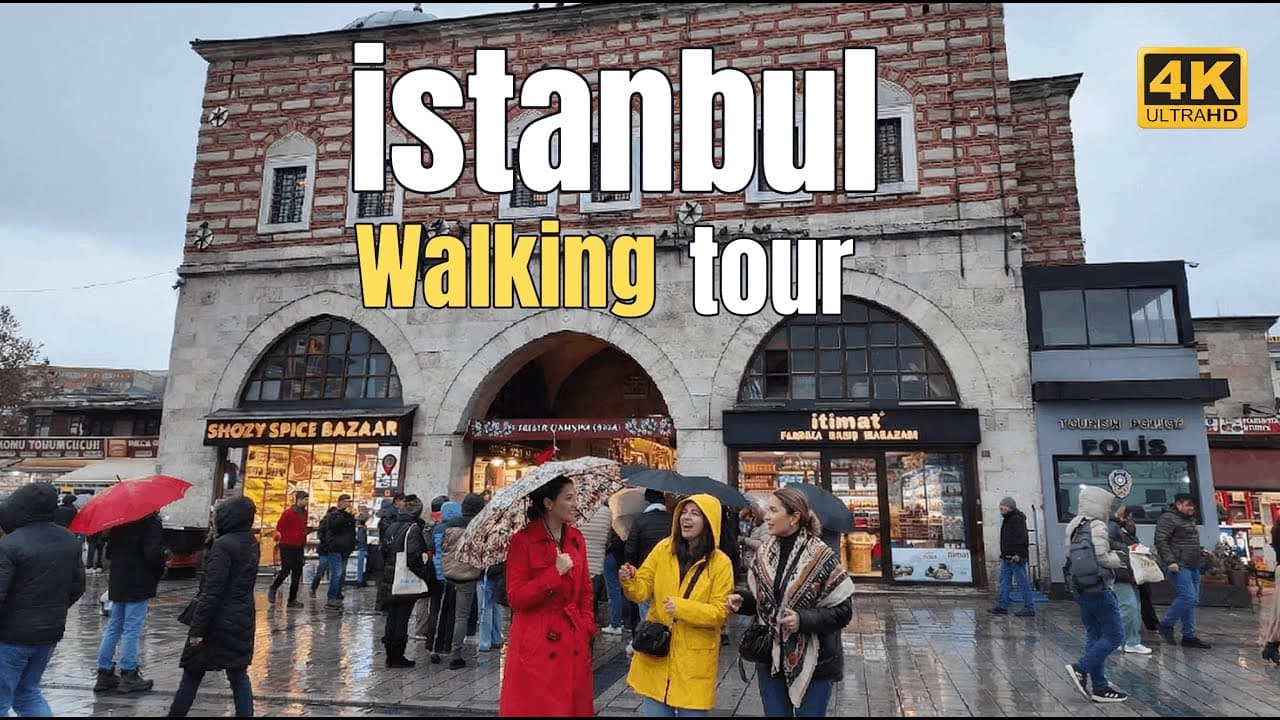
One of the oldest and largest covered markets on earth (1461): sixty streets, close to four thousand shops. Shopping is the excuse; getting lost under the painted vaults is the point. Bargaining is expected etiquette — the first price is never the last. Slip into the inner courtyards (hans) like Zincirli Han. Exit to Beyazıt Square, the secondhand book bazaar, and the uphill lane to Süleymaniye — one continuous walk. Our Grand Bazaar–Beyazıt 4K film shows the labyrinth before you enter. The bazaar closes on Sundays.
5. Süleymaniye Mosque
The complex the great architect Sinan called his "journeyman work" (1557), on the hill above the Golden Horn. It is the refuge from Hagia Sophia's crowds: a wide courtyard, Sinan's modest tomb at the corner, and a terrace with one of the best Golden Horn views in the city. Afternoon light is ideal for photographs; the historic bean restaurants at the courtyard exit are the classic lunch.
6. Eminönü, the Spice Bazaar and Rüstem Paşa
Eminönü is the city's pulse: ferry horns, spice air, pigeons, fish-sandwich boats. In the Spice Bazaar (1664) buy lokum and spices; directly above the market hides the Rüstem Paşa Mosque, Sinan's jewel box tiled floor-to-ceiling in the finest İznik work — its stair entrance is easy to miss, so look for it. Behind the market, Hasırcılar street is where tradesman's Istanbul still lives.
7. Galata Bridge
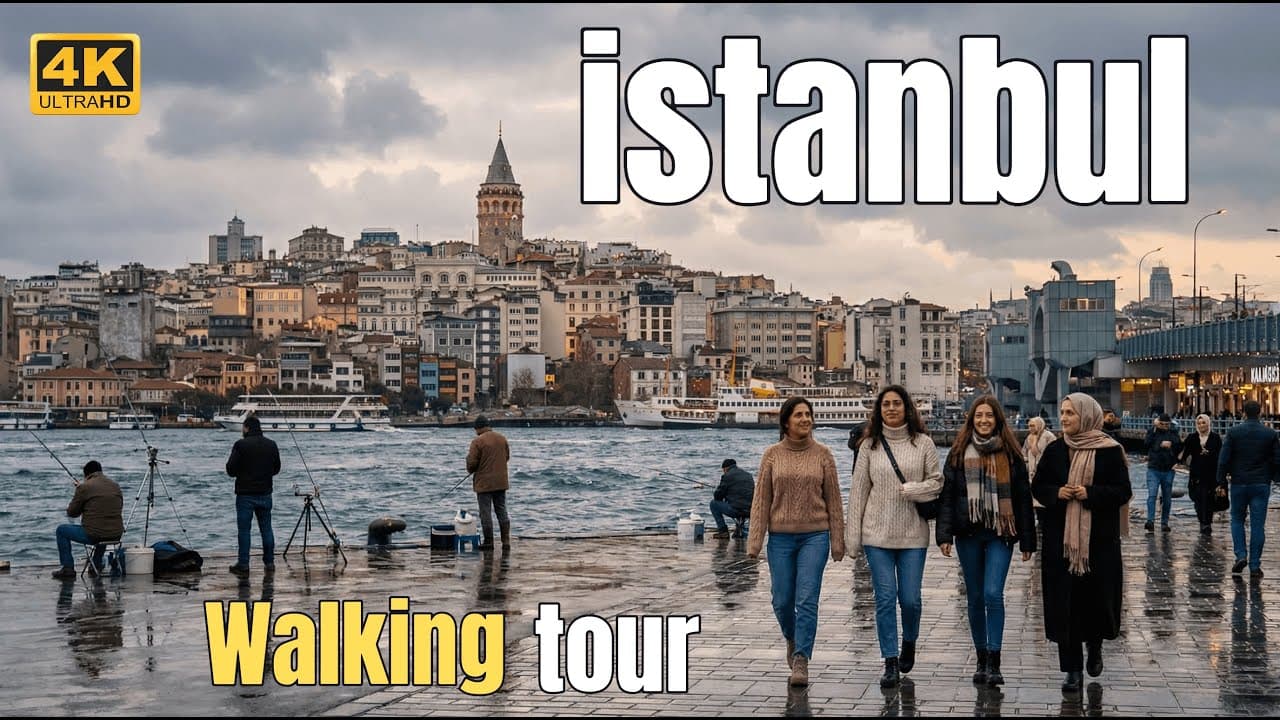
Cross it on foot, always: hundreds of fishermen above, fish restaurants below, the Galata Tower ahead. At sunset, from mid-bridge, Süleymaniye and the tower share the same light. Our Eminönü and Galata Bridge walking films carry the exact tempo of this crossing.
8. Galata, Karaköy and Cihangir
Start at the tower square but do not stop there; the real reward is Serdar-ı Ekrem street's boutiques, Karaköy's third-wave coffee, and Cihangir's steep, characterful slopes. In Karaköy walk the French Passage; in Cihangir take a table around Firuzağa and watch the neighborhood live. This triangle is Istanbul's contemporary face — galleries, cafés, design. Our Galata–Karaköy–Cihangir 4K walk is honest about both the texture and the gradient.
9. İstiklal Avenue and Beyoğlu
Three kilometers of walking spine from Taksim to Tünel: the nostalgic tram, the arcades (Çiçek Passage, Hazzopulo, Suriye), Galatasaray High School, and the meyhane alley of Nevizade one street over. Finish by riding the 1875 Tünel — the world's second-oldest underground — down to Karaköy. Crowded at every hour; keep your bag in front of you. The Pera Museum (home of The Tortoise Trainer) and the Pera Palace hotel are the avenue's cultural pauses.
10. Dolmabahçe Palace
The palace of the empire's final century (1856): a 600-meter marble front on the Bosphorus, a ceremonial hall crowned by one of the world's largest chandeliers, and the room where Atatürk died — its clock stopped at 9:05. Seen after Topkapı's courtyard world, this single building explains how the empire turned toward Europe in its last hundred years. It is a short walk from the Beşiktaş ferry pier and chains onto the Bosphorus-line day. Closed Mondays; check current arrangements.
11. Balat and Fener
The Golden Horn's hillside quarters of painted houses, cobbles, and coffee. The Greek Orthodox Patriarchate, the cast-iron St. Stephen church, and the much-photographed Kiremit street are all here; antique shops and cafés line Vodina street. Weekends get overwhelmed — the calm Balat is a weekday morning. A long Turkish breakfast at a neighborhood table teaches more than three more monuments would.
12. Chora (Kariye) and the Land Walls
Uphill from Balat at Edirnekapı, the Chora holds the finest surviving Byzantine mosaics and frescoes anywhere — smaller than Hagia Sophia, denser, and far calmer. Afterwards walk to the Edirnekapı stretch of the Theodosian Land Walls: sixteen centuries of the city's defenses in one shadowed rampart. It pairs perfectly with a Balat–Fener morning.
13. Kadıköy and Moda
Taking the ferry to the Asian side is not changing cities — it is changing the city's mood. Kadıköy market first: fishmongers, pickle shops, and the long-established lokantas that amount to a university of Anatolian cooking. Then the Moda shoreline for sunset — seagulls, tea gardens, lawns facing the water. From the Bull statue down to the Moda pier is one of our favorite late-afternoon walks. Do not hunt for "sights" here; the place itself is the sight.
14. Üsküdar and the Maiden's Tower
The Üsküdar waterfront faces the Maiden's Tower and the old city's skyline; at sunset the sun drops behind the minarets — the city's classic postcard, free of charge. The Mihrimah Sultan and Şemsi Paşa mosques are Sinan at his most elegant, and the shore walk toward Kuzguncuk surprises with painted wooden houses. The true Üsküdar experience is tea at the railing.
15. The Bosphorus Line: Ortaköy to Emirgan
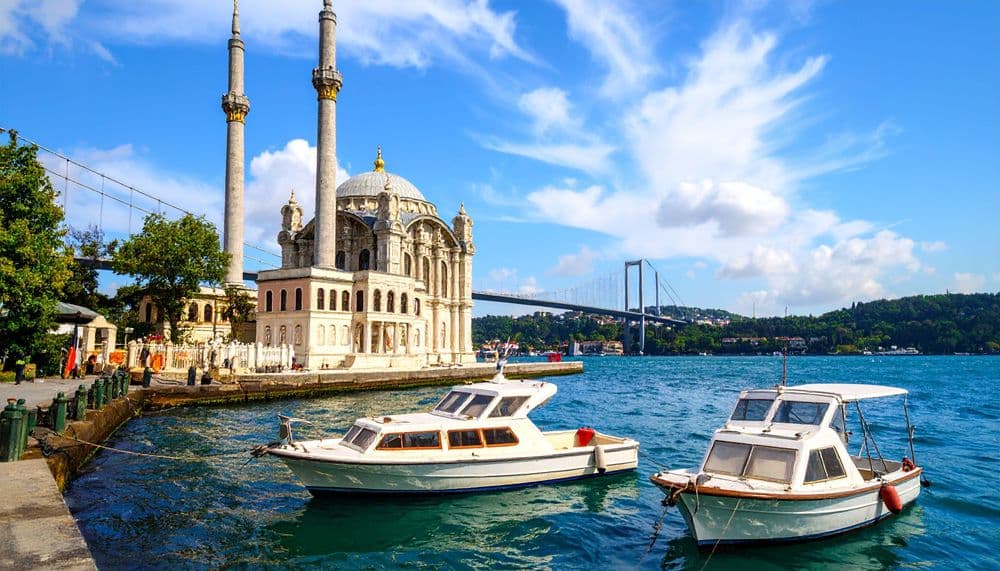
Ortaköy's mosque framed against the bridge, the baked-potato stands, then the shore walk north: Arnavutköy's wooden mansions, Bebek's waterfront park, the towers of Rumeli Fortress (raised in four months in 1452) at the strait's narrowest point, and Emirgan Grove — tulip headquarters every April. This is Istanbul's best shoreline walk, and our 7.5 km Bosphorus 4K film (Kuruçeşme–Bebek–Rumeli Fortress–Emirgan) covers the entire route. Weekend traffic on the coast road is brutal; go on a weekday.
16. A Bosphorus Ferry Cruise
Take the public Şehir Hatları ferries — the long cruise to Anadolu Kavağı with a lunch stop, or the short loop tours. Mansions, fortresses, and bridges read completely differently from the water; at Anadolu Kavağı, climb to Yoros Castle for the view over the mouth of the Black Sea. Choose the public ferries over tourist boats: same view, far saner price. Our "public ferry or private boat" guide on this site compares every option.
17. The Princes' Islands (Büyükada)
An hour by ferry: no cars, pine forest, Ottoman-era mansions, sea air. On Büyükada rent a bicycle or use the electric shuttles (the horse carriages are gone). The walk up to Aya Yorgi chapel is the island classic — panorama at the top, mansion-lined Çankaya street on the way down. Summer weekends overload the ferries; go on a weekday. Off season the islands turn beautifully silent.
18. The Archaeology Museums and Pierre Loti
Two rewards for whoever has time left. The Istanbul Archaeology Museums beside Gülhane hold a world-class collection — the Alexander Sarcophagus and the Treaty of Kadesh, history's first known peace treaty — and share the hill with Topkapı. And above the Golden Horn at Eyüp, the Pierre Loti hilltop café (reached by cable car) looks down the entire Horn; combined with the Eyüp Sultan Mosque below, it shows the city's spiritual face too.
Suggested Routes
3-day skeleton:
- Day 1: Hagia Sophia and the Blue Mosque at opening, Basilica Cistern at noon, Topkapı and Gülhane in the afternoon, evening around Sultanahmet.
- Day 2: Grand Bazaar and Süleymaniye in the morning, fish sandwich and Rüstem Paşa at Eminönü, cross Galata Bridge on foot, Galata–Karaköy at golden hour, İstiklal and Nevizade at night.
- Day 3: Morning ferry to Kadıköy, market and lunch, Moda in the afternoon, sunset from Üsküdar on the way back.
5-day additions:
- Day 4: Balat–Fener morning, Chora and the Land Walls at noon, Pierre Loti in the afternoon, Karaköy evening.
- Day 5: Dolmabahçe in the morning, kumpir at Ortaköy, shore walk to Bebek and Rumeli Fortress, return by Bosphorus loop ferry.
7 days or more: give one day to Büyükada, one morning to the Archaeology Museums, and — in April — an afternoon to Emirgan's tulips. Spend the rest returning to the district you liked most. In Istanbul, going back is a better strategy than ticking new boxes.
Eating, District by District
- Eminönü and the Historic Peninsula: fish sandwiches and pickle juice at the pier; the historic bean restaurants below Süleymaniye; boza at Vefa, poured since 1876. Around Sultanahmet, restaurants with photo menus are tourist average — walk two lanes deeper and find a lokanta.
- Karaköy and Galata: Karaköy Güllüoğlu for benchmark baklava; third-wave coffee everywhere; fish under the bridge.
- Beyoğlu: the meyhane evening — rakı, a table of meze, grilled fish — is Istanbul's social ritual; Nevizade and Asmalımescit are the classic addresses. Stuffed mussels and the midnight "wet burger" at Taksim belong to the night culture.
- Kadıköy: the market's long-established lokantas for Anatolian cooking; the fishmongers' row; ice cream in Moda and tea on the shore.
- The Bosphorus line: kumpir at Ortaköy, breakfast in Bebek, fish in Arnavutköy, tea stops at Emirgan and Kanlıca (across the water, famous for its yogurt).
- On the ferry: simit and tea. It looks like nothing, and it may be the best restaurant in Istanbul.
Honest Warnings
- Taxis: insist on the meter or use a ride app. If a driver quotes a "tourist price" for a short hop, wave him off — there is always another taxi.
- The dropped shoe-brush trick and the "I know a great bar" new friend are the two classic scams. Smile and keep walking, twice. That "bar" bill arrives with four digits.
- Around Sultanahmet, an invitation into a carpet or leather shop "just for tea" is the opening scene of a sales session. Decline politely unless you genuinely want the show.
- In the İstiklal and tram crush, keep phones and wallets in front pockets.
- Entrance systems at major monuments (Hagia Sophia included) change often; check official current info. Whatever the system, the cure for lines is the same: first hour of the morning.
- Never plan to cross the Bosphorus by road at evening rush; Marmaray and the ferry always win.
- The big mosques close to visitors at Friday noon prayers; plan around it.
- Keep a rain plan: the Cistern, the museums, the arcades, and the bazaars are Istanbul's indoor circuit.
The District-by-District Discovery List
For whoever finishes the main route — a verified second layer, every entry real and in its correct district:
- The Aqueduct of Valens (Fatih): a 4th-century aqueduct striding across a modern boulevard at Saraçhane — one of the city's most surreal frames.
- Haseki Hürrem Sultan Hamam (Fatih): Sinan's double bathhouse for Roxelana, standing exactly between Hagia Sophia and the Blue Mosque — and still operating as a hamam.
- The Column of the Goths (Fatih): inside Gülhane Park, one of the oldest monuments still standing in the city; most visitors walk past without noticing.
- The Kamondo Stairs (Beyoğlu): the art nouveau double-helix curling from Karaköy up toward Galata, a gift of the Camondo banking family and a photographers' classic.
- Kılıç Ali Paşa Mosque (Beyoğlu): Sinan's complex for the admiral in Karaköy; its elegantly restored hamam still steams.
- Yıldız Palace and the Malta Pavilion (Beşiktaş): late-Ottoman pavilions in the wooded park above Ortaköy; the Malta terrace is a calm tea stop over the Bosphorus.
- Atatürk Arboretum (Sarıyer): a botanical collection on the edge of the Belgrad Forest, famous for its autumn colors — Istanbul's most photogenic fall address.
- Perili Köşk, the "Haunted Mansion" (Sarıyer): the legend-wrapped brick tower beside Rumeli Fortress; an office today, but the landmark of the shore walk.
- Garipçe Castle (Sarıyer): a small Ottoman battery above a fishing village at the Bosphorus's Black Sea mouth; the weekday breakfast-plus-fort combination is a quiet joy.
- Çamlıca Hill and Tower (Üsküdar): the classic aerial view of the city; on a clear day the TV tower's observation deck reaches the Princes' Islands.
- Yeni Valide Mosque (Üsküdar): early-18th-century grace beside the ferry square, the natural stop of the Üsküdar shore walk.
- Eyüp Hill and Pierre Loti (Eyüpsultan): the cable-car café over the whole Golden Horn, with the courtyard of the Eyüp Sultan Mosque below showing the city's spiritual face.
- The Trotsky House (Princes' Islands): the trace of his exile years on Büyükada; the garden is closed, but it is the storied stop of a Çankaya street mansion tour.
Frequently Asked Questions
- How many days are enough? Three minimum, five to seven ideal. The city does not finish; plan to live the right pieces, not to complete it.
- Where should a first-timer stay? Monument-focused: Sultanahmet. Best balance: Karaköy–Galata. Local life: Kadıköy.
- How do I cross between the two sides? The ferry (Eminönü/Karaköy–Kadıköy) is the joy; Marmaray rail is the speed. Avoid the road bridges at rush hour.
- Which Bosphorus cruise should I take? The public Şehir Hatları ferries — scheduled, calm, cheap. On private "leaving now" boats, settle the price before boarding.
- Is the Museum Pass worth it? With Topkapı plus two or more museums, usually yes — check current coverage first.
- What is the best season? April–May and September–October. Summer visitors should run a morning-and-evening schedule; winter visitors should keep the indoor circuit ready.
- Where do I watch the walking films? The Istanbul city page and the walking-tours archive collect all the 4K walks — the Bosphorus shore, Galata–Karaköy–Cihangir, Grand Bazaar–Beyazıt, Eminönü, İstiklal, and Galata Bridge — with a new route landing on the channel weekly.
Plan Istanbul by District, Not by Checklist
Istanbul works best when you divide it into walkable districts. The historic peninsula, Galata-Karakoy, the Bosphorus line and Kadikoy-Moda all feel like different cities. Trying to cover everything in one day usually creates more fatigue than discovery. Choose one main area per day, then use ferries and rail lines to connect the route.
A Practical 3-Day Istanbul Plan
- Day 1: Sultanahmet, Hagia Sophia area, Gulhane, Sirkeci, Eminonu and Galata Bridge.
- Day 2: Galata Tower area, Karakoy, Tophane, Cihangir, Istiklal Street and Taksim.
- Day 3: Kadikoy market, Moda coast, ferry crossing and a Bosphorus sunset.
This plan keeps walking distances realistic and avoids unnecessary car travel. For most visitors, renting a car in Istanbul is not useful. Tram, metro, Marmaray, ferries and short walks are much more efficient.
Best Time to Visit
April, May, September and October are the most balanced months. Summer brings heavier crowds around the historic sights. Winter can still be atmospheric, but rain may affect walking plans. For filming, photography and calmer streets, start early in the morning.
How to Use the Related Videos
The walking videos help you understand Istanbul before you arrive. They show crowds, hills, street width, ferry flow, traffic noise and the real pace of each district. Watch Galata, Istiklal, Eminonu and Kadikoy videos before choosing your hotel area or daily route.
Who Is Istanbul Best For?
Istanbul is ideal for travelers interested in history, food, street life, architecture, ferry rides and photography. It can feel overwhelming if rushed, so the strongest plan is slow: one main district, one walking route, one good meal break and one video preview before you go.
Planning questions
What does this İstanbul guide cover?
A realistic Istanbul guide organized by walkable districts: Historic Peninsula, Galata, Karakoy, Kadikoy, Uskudar and the Bosphorus, with related 4K walking videos.
Can I watch a 4K walking tour of İstanbul?
Yes. The page links to Travel Walk Tours films so you can preview the İstanbul route on a big screen before you go.
How should I use this page to plan?
Read the quick answer first, skim the route notes, then compare street texture, timing, and nearby guides through the linked city page and walking films.