Plan Sultanahmet around Hagia Sophia, the Blue Mosque, Topkapi, the Basilica Cistern and the Hippodrome, at a realistic pace and with mosque etiquette.
Walk this route
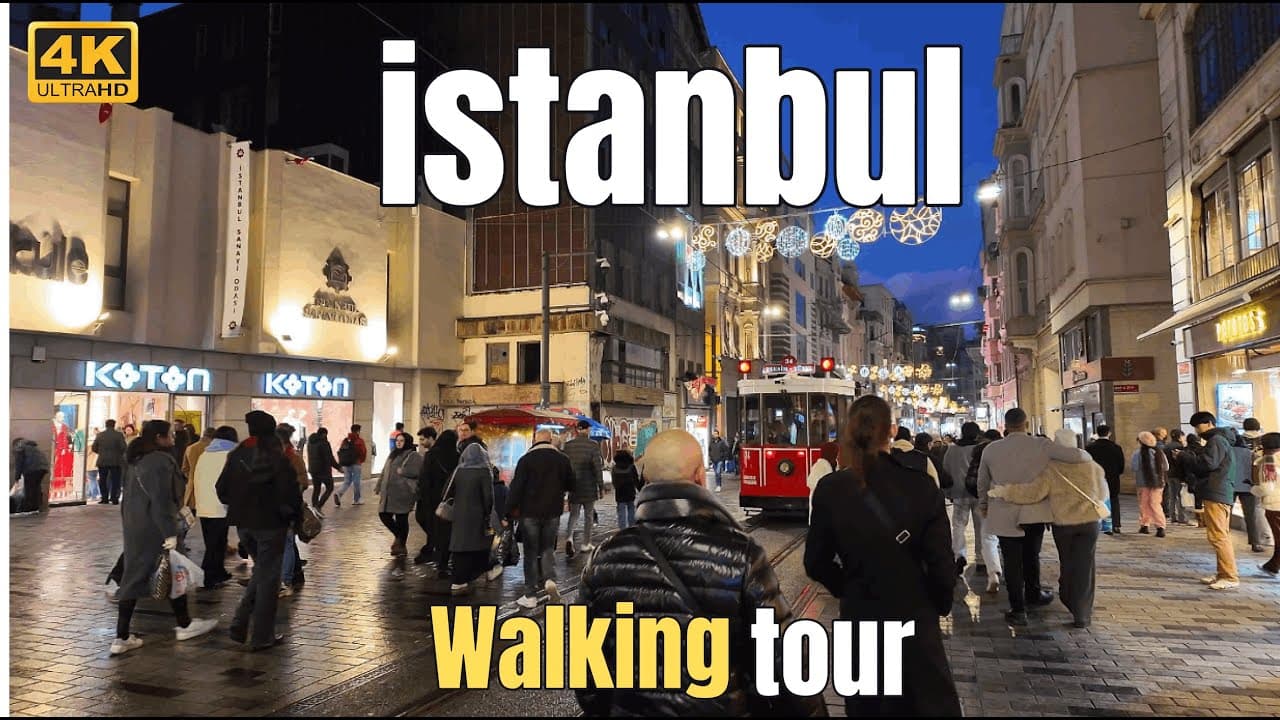
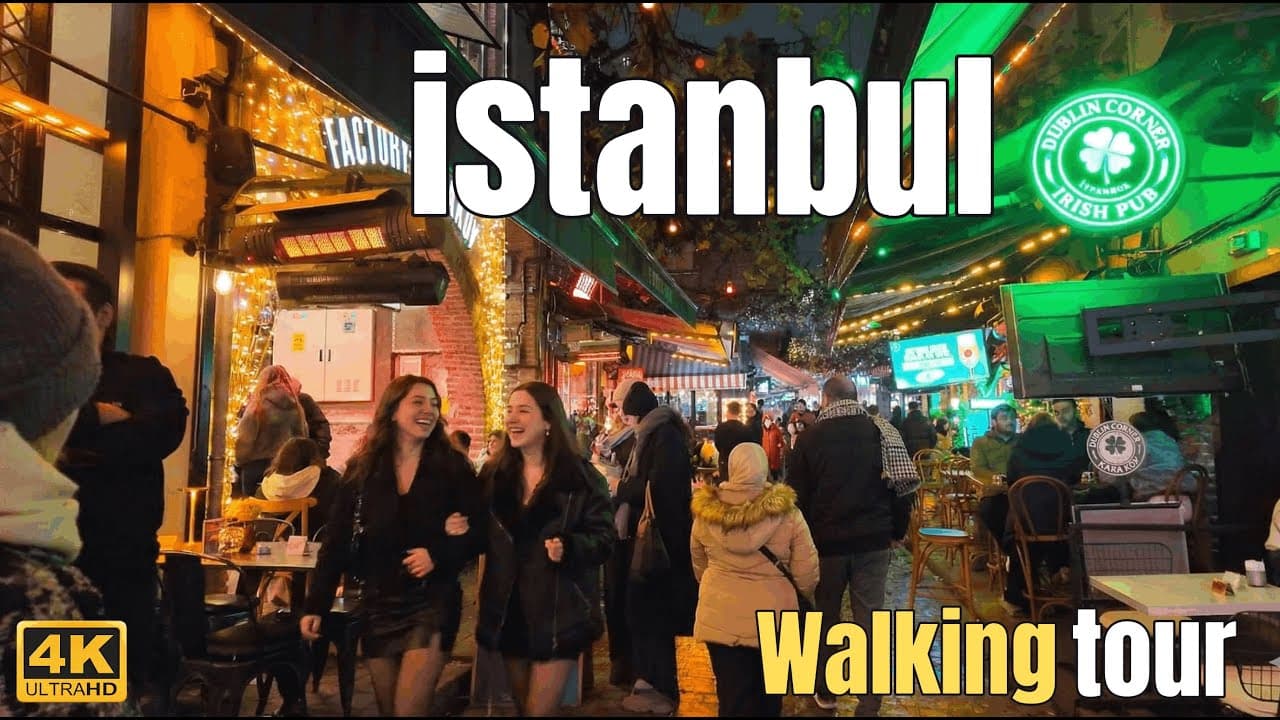
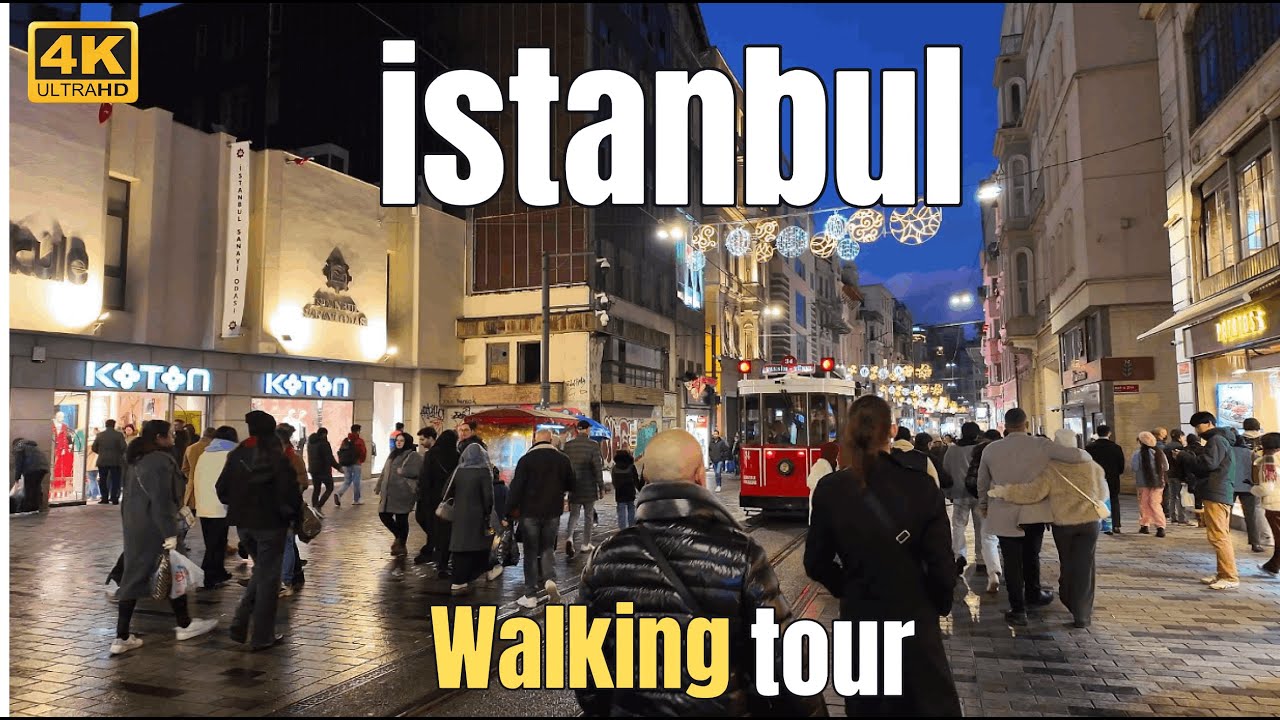
Istanbul Walking Tour 4K - Evening Walk on Istiklal Street & Taksim Square
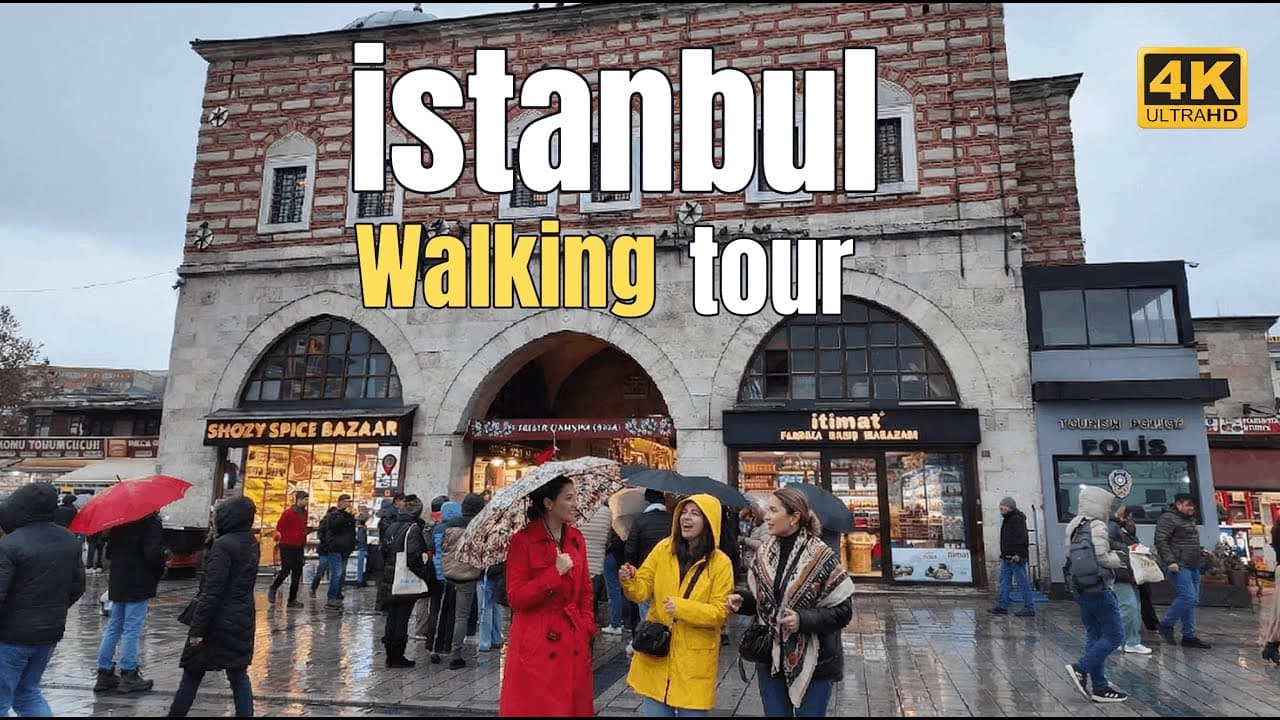
Watch the 4K walkPlaces on the map
14 pinsNumbers match the order in the article. Tap a pin for directions.
What Sultanahmet is
Sultanahmet sits inside the Fatih district, at the tip of the old city peninsula, and holds the densest cluster of monuments in Istanbul. Hagia Sophia, the Blue Mosque and Topkapi Palace are a few minutes' walk from one another, arranged around the open square that was once the Byzantine hippodrome. Roman, Byzantine and Ottoman layers pile up in the same streets here: a 6th-century cistern on one corner, an 18th-century fountain two steps away.
The neighbourhood is made for walking, but it is also crowded. In summer the lines outside Hagia Sophia and the Basilica Cistern grow long, and carpet sellers and tour touts work the square. Sultanahmet suits visitors who care about history, architecture and museums and who like to walk slowly. It does not reward a rush.
The most common mistake is cramming the big three into a single morning and never seeing the quieter second ring. Little Hagia Sophia, Sogukcesme Street, the Great Palace mosaics and the sea walls rarely make it onto anyone's plan, yet they are where the calm side of Sultanahmet lives. The 14 stops below follow the order on the map and join both rings into one route.
Quick answer
Plan a full day for the main monuments and two days if you want all 14 stops.
- Reach Hagia Sophia and Topkapi as the gates open; lines multiply after midday.
- Visit the mosques outside prayer times, in clothing that covers shoulders and knees.
- Confirm museum hours and tickets through official sources before you go.
14 places to see in Sultanahmet
1. Hagia Sophia
Commissioned by Emperor Justinian in the 6th century, Hagia Sophia was the largest domed building on earth for close to a thousand years. It became a mosque in 1453, a museum in 1935 and a working mosque again in 2020, and all of that history is still readable inside: Byzantine mosaics, huge calligraphic roundels and a dome rising more than 55 metres share one room.
Because it is an active mosque, the entry system changes often; in recent years tourist visits have been routed through the upper gallery with a ticket, while the ground floor is kept for worship. Visits are limited or paused at prayer times. Women need a headscarf, and shoulders and knees must be covered. Come in the first hour of the morning, since the wait at the door grows sharply in the afternoon, and check the current entry rules through an official source before you go.
2. The Blue Mosque
Sultan Ahmed I had this mosque built between 1609 and 1617 by the architect Sedefkar Mehmed Aga. It is known for its six minarets and the tens of thousands of Iznik tiles on its inner walls, whose blue tones gave the building its English name. It faces Hagia Sophia directly, and seeing the two from the middle of the square is the strongest single view in the neighbourhood. After a restoration that ran for years, the whole interior can be visited again.
This is a working mosque and entry is free. Visitor access stops during the five daily prayers and above all during the Friday midday prayer, and the door may close some time before each one. Inside you remove your shoes and carry them in a bag; women cover their hair. Read the schedule board at the door, and know that shorts and tank tops will get you turned away. Follow the signs to the separate visitor entrance.
3. Sultanahmet Square (the Hippodrome)
The long square between Hagia Sophia and the mosque sits on top of the Byzantine hippodrome, the chariot-racing track that was the political heart of the city, with room for a crowd approaching a hundred thousand. Riots and triumphs both played out here. Three monuments still line the old axis of the track: the Egyptian Obelisk, its carvings still sharp, the Serpent Column brought from Delphi, and the Walled Obelisk, stripped of its cladding centuries ago. The German Fountain at the north end was Kaiser Wilhelm II's gift after his 1898 visit.
The square is free and open at all hours, which is exactly why the touts and sellers concentrate here. A polite but firm "no, thank you" does the job. See the monuments early, before the tour groups arrive; in the evening light the square calms down again.
4. The Museum of Turkish and Islamic Arts
The long stone building on the western edge of the square is the 16th-century palace of Ibrahim Pasha, grand vizier to Suleyman the Magnificent, and it now houses the Museum of Turkish and Islamic Arts. The collection includes one of the richest series of historical carpets anywhere, manuscript Qurans, calligraphy, Seljuk woodwork and Ottoman metalwork. An ethnography section downstairs traces daily life from the nomad tent to the city house.
Compared with the mosque and Hagia Sophia next door, this place is noticeably calm, and it has a terrace looking down on the monuments of the Hippodrome. One to two hours is enough. Confirm hours and tickets through the official source. Hundreds of people walk past this palace without noticing it; stepping inside is the easiest quiet break the neighbourhood offers.
5. Topkapi Palace
Home and seat of government for Ottoman sultans across roughly four centuries, Topkapi is not one building but a sequence of courtyards and pavilions. The kitchens, the arms collection, the treasury and the sacred relics occupy separate sections, and the Harem is its own world behind a separate ticket. Because the palace sits above Seraglio Point, its courtyards look out over the Golden Horn, the Bosphorus and the Marmara at once.
The site is large and it takes hours; racing through every room achieves nothing but tired feet. A better plan is to pick two of the treasury, the sacred relics and the Harem and give the rest of your time to the courtyards and the views. Allow at least half a day, budget for ticket and Harem lines, and check which sections are open beforehand, since rooms close in rotation for maintenance.
6. The Basilica Cistern
Down a staircase across the corner from Hagia Sophia, the Basilica Cistern is a vast underground water store from Justinian's era. More than three hundred columns rise out of the dim water, and at the base of two of them sit the Medusa heads, one upside down, one on its side. After a long restoration the space reopened with new lighting and contemporary art installations, and on a hot day the cool air alone is worth the descent.
Entry is by timed ticket, and hunting for one at the door on a busy day means waiting; buying ahead on the official site is the clean way to do it. The walkways run above the water and the floor is damp and slippery in places, so wear sensible shoes. Most people spend 30 to 45 minutes inside. Evening slots are quieter and few visitors think of them.
7. The Ahmed III fountain and Sogukcesme Street
Behind Hagia Sophia, in front of Topkapi's Imperial Gate, the fountain of Ahmed III dates from 1728: a Tulip Era building with deep eaves, tilework and carved marble, generally counted as the most ornate of all Ottoman public fountains. It has been the first thing to greet anyone entering the palace for three centuries. Seeing it costs no money and no queue, yet most visitors walk past without looking up.
Sogukcesme Street begins right beside it: a narrow cobbled lane with Hagia Sophia on one side and the palace wall on the other, lined with wooden Ottoman houses restored in the 1980s, some of them now run as hotels. It is a five-minute detour, nearly empty in the early morning, and one of the best photography lanes in the area. It also makes a natural downhill link toward Gulhane.
8. The Istanbul Archaeology Museums
The ramp climbing up from the Gulhane Park entrance leads to a complex of three museums: the main Archaeology Museum, the Museum of the Ancient Orient and the Tiled Kiosk of 1472. The star of the collection is the Alexander Sarcophagus, excavated from the royal necropolis at Sidon; the Sarcophagus of the Mourning Women, the tablet of the Treaty of Kadesh and thousands of ancient sculptures are here too.
Although it is two steps from the crowds at the mosque and the palace, this complex is usually calm. Anyone who loves antiquity will happily give it half a day; a hurried visitor can see the main halls in an hour. The building has been going through a long, section-by-section renovation, so check which halls are open before you go. Since it lies in the same direction as Topkapi, pairing the two in one half day makes sense on foot.
9. Gulhane Park
Covering the lower slope beneath Topkapi, Gulhane was once the palace's outer garden and is now the largest green space in the old city. The plane-tree avenue, the tulip beds that flower in April, shaded benches and the tea garden at the far end overlooking the Bosphorus give real relief in the middle of a monument-heavy day. At the north end, among the trees, is the Roman-era Column of the Goths.
Entry is free and the park belongs more to locals than to tourists: picnicking families, runners and people feeding cats are the usual crowd. The Gulhane stop on the T1 tram is right outside the gate. Most itineraries skip this park entirely, yet for families with children and for tired feet it is the most useful stop in the neighbourhood; even a half-hour pause rescues the day.
10. Sarayburnu
Walk down from the lower end of Gulhane to the shore and you reach the nose of the old peninsula, where the Golden Horn, the Bosphorus and the Marmara meet. The view is wide: Uskudar and the Maiden's Tower across the water, the Galata skyline and the bridges to the left, ship traffic heading up the strait to the right. There is no building to visit here; the point is the water, the wind and the ferries going past.
The shoreline strip is good walking ground and full of people fishing with rod and line. Late-afternoon light shows this spot at its best. For anyone who wants to end a Sultanahmet walk with water rather than monuments, this is the natural last stop, and from here it is an easy walk toward Sirkeci for the tram or Marmaray. The wind bites even on clear days, so a light layer helps.
11. The Arasta Bazaar and the Great Palace Mosaics Museum
On the lower back side of the Blue Mosque, the Arasta Bazaar is an Ottoman market street of shops in a single row, founded with the mosque complex so that its rents would support the mosque. Today it sells carpets, tiles, textiles and souvenirs, and it is far calmer and tidier than the Grand Bazaar, though you still bargain.
The street's real surprise hides behind the row of shops: the Great Palace Mosaics Museum displays, in their original position, the floor mosaics of a courtyard belonging to the Great Palace of the Byzantine emperors. With its hunting scenes, animal fights and figures of everyday life, this floor is the liveliest surviving fragment of a palace that has otherwise vanished. The museum is small, half an hour covers it, and most visitors walk past without knowing it exists. Confirm its hours through the official source.
12. The Haseki Hurrem Sultan Bath
On the axis between Hagia Sophia and the Blue Mosque, this bathhouse is a work of the architect Sinan from 1556, built in the name of Hurrem Sultan, wife of Suleyman the Magnificent. Its unusual plan places the men's and women's sections end to end along one line, a departure from the classic hamam layout. After decades of use as a carpet showroom, the building was restored and operates as a bath again.
Today it runs as a high-end hamam working by reservation; seeing the inside means booking a treatment, and prices match that positioning. Check current packages and hours on the bath's own website. If the budget does not fit, the building rewards a look from outside all the same, one of the most elegant silhouettes between the two great monuments. The neighbourhood also has historic baths at lower prices.
13. Little Hagia Sophia
At the bottom of the slope running from the square down toward the Marmara, Little Hagia Sophia is the 6th-century church of Sergius and Bacchus, built under Justinian. Completed before the great Hagia Sophia, it reads like a small rehearsal for it, and its dome and octagonal interior survive. The building became a mosque in the early 1500s and lives on today as the working mosque of its quarter.
Entry is free; you visit outside prayer times, shoes off, headscarf on. After the crowds of the main square the silence here is startling: at most hours there are fewer visitors inside than fingers on one hand. The old medrese cells in the courtyard now hold small workshops and a tea stall. This is the most rewarding stop of the second ring, and it connects on foot to the Arasta and Cankurtaran.
14. Cankurtaran and the sea walls
Cankurtaran, the lower quarter of Sultanahmet facing the Marmara, is a real neighbourhood in the shadow of the monuments: narrow streets, wooden houses, corner grocers and laundry hanging from bay windows. Everyday life carries on a few streets below the tourist economy of the square. Down at the shore, the remains of the Byzantine sea walls run along Kennedy Avenue, with the Ahirkapi lighthouse on the same line.
Traffic on the coastal road is heavy, so cross only at marked crossings. Walking beneath the walls with the Marmara beside you is the least touristic experience the neighbourhood offers, with the big ships anchored offshore as a fixed backdrop. From here you can end the day by following the shore toward Sarayburnu or climbing back up the hill to the tram. The light is best from mid-afternoon on.
How long to allow
The main monuments fit into one day, but tightly: Hagia Sophia and the Blue Mosque in the morning, the cistern at midday, Topkapi in the afternoon makes a fast-paced day. On that plan, half of the 14 stops stay unseen.
With two days the route breathes. Day one takes the big three and the cistern; day two takes the Museum of Turkish and Islamic Arts, the Archaeology Museums, Gulhane and Sarayburnu, then the second ring: the Arasta, the mosaics museum, Little Hagia Sophia and Cankurtaran. Museum fatigue is real, so build a park or waterfront pause into each day.
If your time is short, know this: Topkapi alone is half a day. On a half-day visit, choosing between the palace and everything else beats doing both badly.
Getting there
Public transport serves the neighbourhood well, and a car is useless here: parking is scarce, the streets are narrow and much of the area is pedestrianised. The T1 tram's Sultanahmet stop puts you on the square and its Gulhane stop at the park gate; the two stops are within walking distance of each other. From Kabatas, Karakoy and Eminonu the same line brings you in without a transfer.
If you use the Marmaray, get off at Sirkeci station; the square is a 10 to 15 minute uphill walk. Coming from the Asian side, the Marmaray is usually the fastest route. From the airports, check the current metro and tram connections on an up-to-date network map before you travel. Within the neighbourhood the only vehicle that matters is a comfortable pair of shoes; the stone paving and the slopes make themselves felt by the end of the day.
Visiting etiquette
Hagia Sophia, the Blue Mosque and Little Hagia Sophia are working places of worship. Visits stop at prayer times and for the Friday midday prayer, and doors may close some time before each one, so read the current board at the entrance. Clothing must cover shoulders and knees; women cover their hair, and a wrap may be provided at the door. Shoes come off and go into the bag you are given.
Inside, keep your voice low, do not walk in front of people praying and do not photograph them; no flash. On the square, a polite "no" is all the carpet and tour sellers need; do not get drawn into a conversation. In the museums, respect the queue systems and leave large bags at the cloakroom. In the back streets, especially in Cankurtaran, not photographing people's homes and doorsteps without asking is basic courtesy.
Frequently asked questions
How many days does Sultanahmet need?
One full day for the main monuments, two days for all 14 stops in this guide. Because Topkapi alone demands half a day, single-day plans always end up squeezed.
Do the mosques charge admission?
The Blue Mosque and Little Hagia Sophia are free to enter. Hagia Sophia has a separate arrangement and ticket for tourist visits; confirm the current rules through an official source. All three pause visits at prayer times.
Where do I get a Basilica Cistern ticket?
Entry is by timed ticket. In busy periods, looking for a ticket at the door means a long wait, so the safest route is buying ahead on the official site. Evening slots are usually quieter.
Is the Great Palace Mosaics Museum worth it?
Yes, and it asks little of you: half an hour covers it. This small museum behind the Arasta Bazaar shows the surviving courtyard floor of the Byzantine Great Palace in its original spot, and it is almost never crowded.
Do I need a car?
No. A car is a burden in Sultanahmet; parking is scarce and most streets are given over to pedestrians. The T1 tram and the Marmaray's Sirkeci station put every point in the neighbourhood within walking reach.
Planning questions
What does this İstanbul guide cover?
Plan Sultanahmet around Hagia Sophia, the Blue Mosque, Topkapi, the Basilica Cistern and the Hippodrome, at a realistic pace and with mosque etiquette.
Can I watch a 4K walking tour of İstanbul?
Yes. The page links to Travel Walk Tours films so you can preview the İstanbul route on a big screen before you go.
How should I use this page to plan?
Read the quick answer first, skim the route notes, then compare street texture, timing, and nearby guides through the linked city page and walking films.