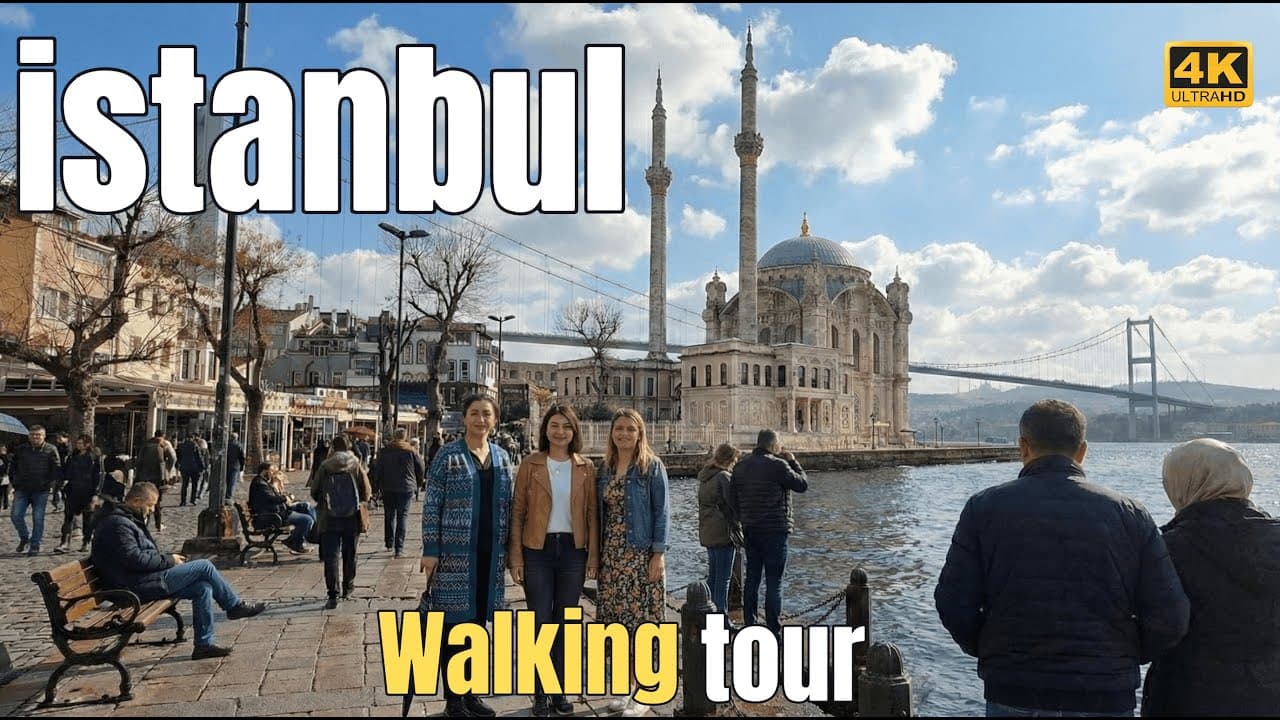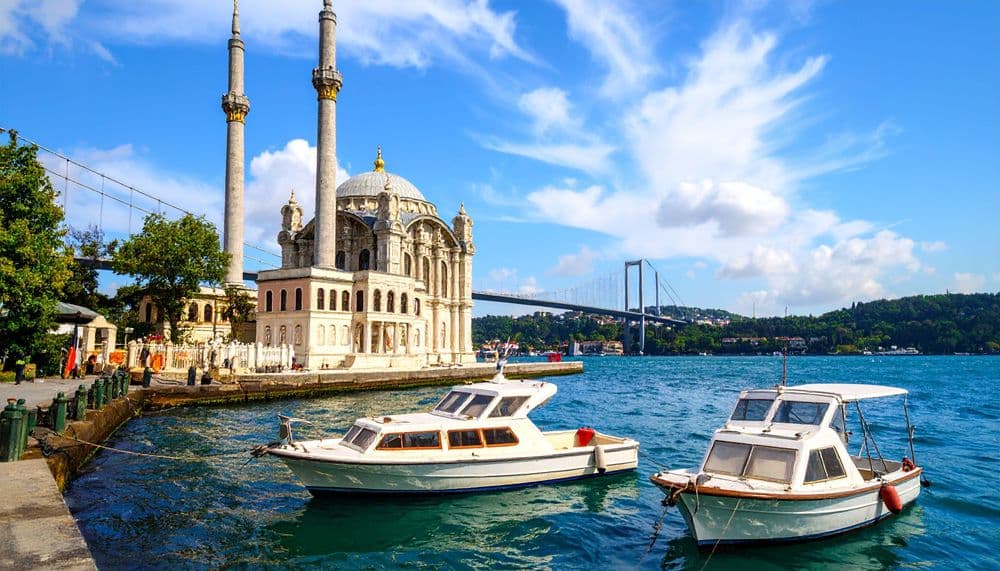
Explore Arnavutkoy around its wooden yali mansions, seaside fish restaurants, old market and the shore walk to Bebek.
Walk this route
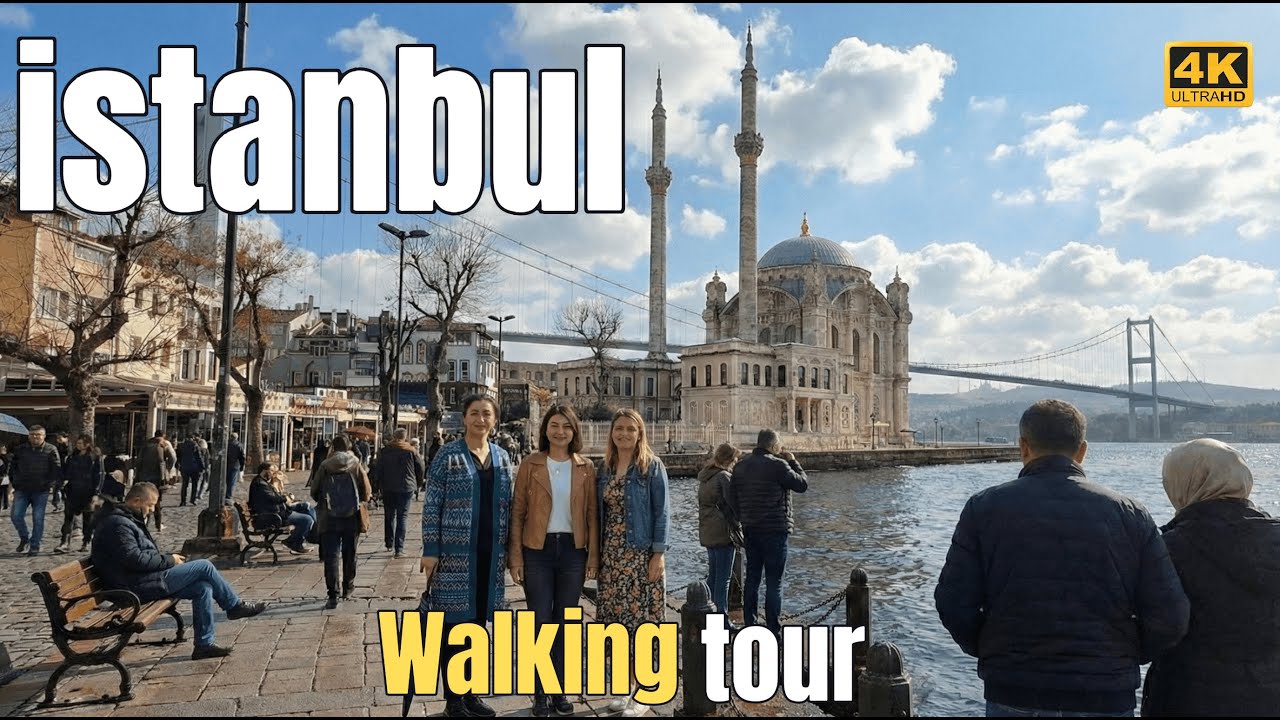
Istanbul Walking Tour 4K – From Beşiktaş to Ortaköy Along the Bosphorus Waterfront
Watch the 4K walkPlaces on the map
8 pinsNumbers match the order in the article. Tap a pin for directions.
Arnavutkoy: a village that kept its scale between two busier neighbours
Arnavutkoy is a small Bosphorus neighbourhood in the Besiktas district, wedged between Kurucesme and Bebek. Both neighbours are louder than it is: Ortakoy draws the weekend crowds, Bebek the coffee queues. Arnavutkoy sits between them and has kept the scale of a village. Wooden mansions on the waterfront, fish restaurants one street back, narrow steep lanes climbing the hill, all inside an area you can cover on foot in twenty minutes.
The history is layered. For centuries this was a village with a largely Greek and Jewish population, known for its strawberry gardens. Most of that population is gone, but the church, the wooden houses and the street pattern remain.
The most common mistake is simple: seeing Arnavutkoy through a bus window on the shore road between Ortakoy and Bebek and never getting off. The bus rolls past and you get three seconds of mansions. Get off. The whole point of the place is the slow walk.
Quick answer
Arnavutkoy takes between half a day and an evening. The best plan: arrive in the afternoon, walk the hill streets and the shore, then either sit down to a fish dinner or walk on to Bebek.
- The mansions are private homes, seen from outside only.
- Fish restaurants need a reservation on weekend evenings.
- The Taksiarhis church does not keep regular hours; you go in if you happen to find it open.
- A short, flat shore walk connects the neighbourhood to Bebek.
1. The Arnavutkoy waterfront mansions
The Arnavutkoy shore carries one of the finest rows of wooden yali mansions on the strait. These are 19th-century houses: tall bay windows, fine carved timber, facades that drop straight to the water. Some are freshly painted and cared for, others faded and tired, but seen as a row they explain classic Bosphorus architecture at a glance. There are yalis all along the strait, but few stretches this continuous that you can walk this close to.
Every one is a private home. You do not go inside, look through a garden gate or ring a bell. The best view is from the shore road, walking on the water side, where you can see how each house meets the sea: boathouses, steps down to the water, windows facing the waves directly.
When you photograph them, do not zoom in on windows and balconies; people live behind them. The facades are enough. Morning light comes off the water and lifts the colour of the wood, and the crowds are thin at that hour.
2. The fish restaurant street
The fish restaurants are the best-known face of Arnavutkoy. They line the waterfront and the street just behind it; in the evening the tables spill onto the pavement and the street becomes one long dinner table. The formula is the classic one of meze, seasonal fish and raki. Istanbullus eat here too, not just visitors, which is part of what keeps the standard up.
What you need to know: on weekend evenings a table without a reservation is hard to find, so call ahead for Friday and Saturday. Fish is usually priced by weight or portion; ask which fish, how much and what the total will come to before you sit down. Meze and drinks build a bill quickly.
Location and view are reflected in the price, so these places are not cheap. On a tight budget, come at lunchtime or keep it to a couple of mezes. The plan that works best is a shore walk first, then dinner.
3. The Taksiarhis Greek church
Among the lanes climbing the hill stands the Taksiarhis Greek Orthodox church. The present building dates from the 19th century, but the tradition of a church on this spot goes back much further. It is the most tangible remnant of the era when Arnavutkoy was a Greek village; the old population largely left, the church stayed, and it still serves a small congregation.
To be honest about it: the church does not keep regular visiting hours. The door is shut most days; you may find it open on liturgy days and some mornings, but do not build your plan around that. Even closed, the courtyard wall and the facade are worth a look.
If you do find it open, enter quietly; this is a working place of worship, not a museum. Ask before taking photos and never shoot during a service. Treat the church as part of the hill-street walk rather than a separate stop; you pass it on the way anyway.
4. The hill streets and wooden houses
Turn inland from the shore and the streets steepen fast. This is Arnavutkoy's second face: narrow hill lanes lined with wooden houses and jutting bay windows. Less grand than the mansions, but far more numerous, and it is these houses that carry the old village fabric. Some are restored, some are peeling; that mix is what keeps the streets a neighbourhood rather than a museum.
There is no set route worth prescribing: pick any lane leading uphill from the shore, climb it, come down a parallel one. Twenty or thirty minutes of wandering is enough. The slopes are short but steep, so comfortable shoes help.
One thing matters here. These streets are lived-in. You will see neighbours on doorsteps, laundry in windows, cats on steps. Photograph the street, not people or the insides of homes, and keep your voice down in the quiet hours. This is somewhere people live, not a film set.
5. Akintiburnu (the current point)
Akintiburnu is the point where Arnavutkoy juts into the Bosphorus, and the name, which means current point, is earned: the strait's current runs strongest here. The water visibly speeds up, with eddies, counterflows and a clear pull on the surface. It was a hard corner for sailing ships in the old days, and watching the current from the shore is still a show in itself.
It is also a fishermen's point. In the morning and late afternoon you will find dozens of rod fishermen along the edge; the current brings the fish, and the fish bring the fishermen. Watch out for the lines as you pass and they will leave you room in turn.
It makes a good stop for sitting and watching the water and the opposite shore. On windy days the point is exposed and cool, so an extra layer helps. Turn south from here and the Bebek walk begins; the point is the natural threshold between the two neighbourhoods.
6. Robert College
On the ridge above Arnavutkoy rises the historic campus of Robert College. Founded in 1863, it is one of the oldest American schools established outside the United States, and its stone buildings look down on the Bosphorus through the trees. Its weight in Turkey's educational history is considerable; the alumni list runs from prime ministers to novelists.
Let us be clear: this is a working school, and tourists do not enter the campus. You see Robert College from outside, and that is enough. Walking up through the hill streets you catch its walls and the roofs of some buildings; the best view is actually from the water side, from a ferry or looking up from the shore, when the stone masses show through the trees.
The school has shaped the neighbourhood too: the students and teachers are part of what sustains Arnavutkoy's cafe culture and daily rhythm. Climbing to the gate and back is a steep but short walk; do it for the view if you like, knowing you will not go in.
7. The shore walk toward Bebek
From Akintiburnu a flat shore walk runs south toward Bebek bay. No climb, short distance; taken slowly it lasts about twenty minutes. On your left the mansions and the neighbourhood, on your right the water, and across the strait the Asian shore and the slopes of Kandilli. It is one of the best short walks in Istanbul that costs nothing and suits almost anyone.
There are places to sit along the way, and pausing to watch the fishermen, the tankers and the ferries is part of the walk. Late afternoon is the best hour: as the sun drops, the opposite shore turns orange and the wood of the mansions softens.
At Bebek you arrive to cafes along the bay, a park and a livelier waterfront; finishing with a coffee there is a natural close. The walk works just as well in reverse: start in Bebek and end with dinner in Arnavutkoy.
8. The coffee and bakery row
The fish restaurants are Arnavutkoy by night; the cafes and bakeries are Arnavutkoy by day. Small coffee places, bakeries and pastry shops line the waterfront and the inner streets, and the student and teacher population of Robert College keeps this row going year round. Compared with Bebek's famous queues, it stays calmer and more local.
The plan is simple: take a coffee in the morning or afternoon, eat something fresh from the oven and watch the shore traffic from a window seat. Most places are small, and at weekend lunchtimes you may wait for a table to turn; weekdays are much easier.
Treat the cafes as the pause in the walk, not the walk itself. Sit down before climbing the hill streets or after coming back from Bebek. Chains are rare here and small businesses common; the bill is noticeably lighter than at the waterfront restaurants, and this is the easiest way to see Arnavutkoy in daylight.
Getting there
The easiest way in is by bus along the shore road: lines coming from the Besiktas and Kabatas direction stop in front of the neighbourhood. From Besiktas the ride takes around fifteen minutes depending on traffic. Coming from the historic peninsula, the practical route is tram or funicular to Kabatas, then a bus transfer.
If you use the metro, get off at Gayrettepe or Levent and connect down to the shore by bus. The most enjoyable arrival is on foot: a straight line from Bebek over Akintiburnu, about twenty minutes.
If you are thinking of driving, a warning: parking is a real problem. The shore road is narrow, spaces are few and the inland streets are steep and tight; evening restaurant traffic makes it worse. Public transport plus walking is both easier and the right way to see the place.
When to go
The best seasons are spring and autumn: the weather suits walking and the shore is cool without being cold. Summer evenings are pleasant but the restaurants fill up; do not arrive without a reservation. Winter days are quiet and empty, and the mansions look more striking on a bare shore, but the wind blows hard at Akintiburnu, so dress for it.
Time of day depends on your plan. Early morning is best for photographs and quiet: the light comes off the water and the streets are empty. Afternoon suits the cafes and the hill streets. Late afternoon is the hour for the Bebek walk, evening for the fish table. At midday the shore has no shade; in high summer spend those hours in a cafe.
Weekdays make everything easier: quiet streets, tables without a wait. Weekends are lively but the crowds never reach Ortakoy or Bebek levels; even on its busiest day, Arnavutkoy keeps its village scale.
Eating and drinking
The table life of Arnavutkoy divides in two: fish restaurants in the evening, the coffee and bakery row by day. They suit different budgets and different hours, and fitting both into one day is entirely possible.
On the fish side the classic order applies: cold mezes, hot starters, seasonal fish. What is on offer changes with the season; autumn and winter bring more variety. The price question is the critical one: fish is priced by weight or portion, so settle the total before ordering. Weekend evenings require a reservation; weekdays are more flexible.
The daytime side is about baked goods, pastries and coffee, with lighter bills. If you have a serious allergy, explain it clearly to the kitchen on either side. For anyone watching the budget, the best combination is coffee and bakery by day, then a short dinner of a couple of mezes in the evening.
Frequently asked questions
What is Arnavutkoy known for?
For one of the finest rows of wooden yali mansions on the strait, its fish restaurants and Akintiburnu. Historically it was a village with a Greek and Jewish population, known for its strawberry gardens; the Taksiarhis church is a remnant of that era.
Is this the same Arnavutkoy as the airport?
No. Istanbul Airport sits in the Arnavutkoy district in the far northwest of the city. The Arnavutkoy in this guide is the Bosphorus neighbourhood in Besiktas, between Bebek and Kurucesme. The two are a long way apart; be careful which one you type into navigation.
Can you go inside the yali mansions?
No. All of the mansions are private homes; you cannot enter them or their gardens. You see them from the shore road, from outside. The Robert College campus is likewise viewed from outside only.
Do the fish restaurants need a reservation?
On weekend evenings, yes; call ahead for Friday and Saturday. On weekdays you will usually find a table. Either way, asking the price of the fish and the total before ordering avoids surprises.
Planning questions
What does this İstanbul guide cover?
Explore Arnavutkoy around its wooden yali mansions, seaside fish restaurants, old market and the shore walk to Bebek.
Can I watch a 4K walking tour of İstanbul?
Yes. The page links to Travel Walk Tours films so you can preview the İstanbul route on a big screen before you go.
How should I use this page to plan?
Read the quick answer first, skim the route notes, then compare street texture, timing, and nearby guides through the linked city page and walking films.