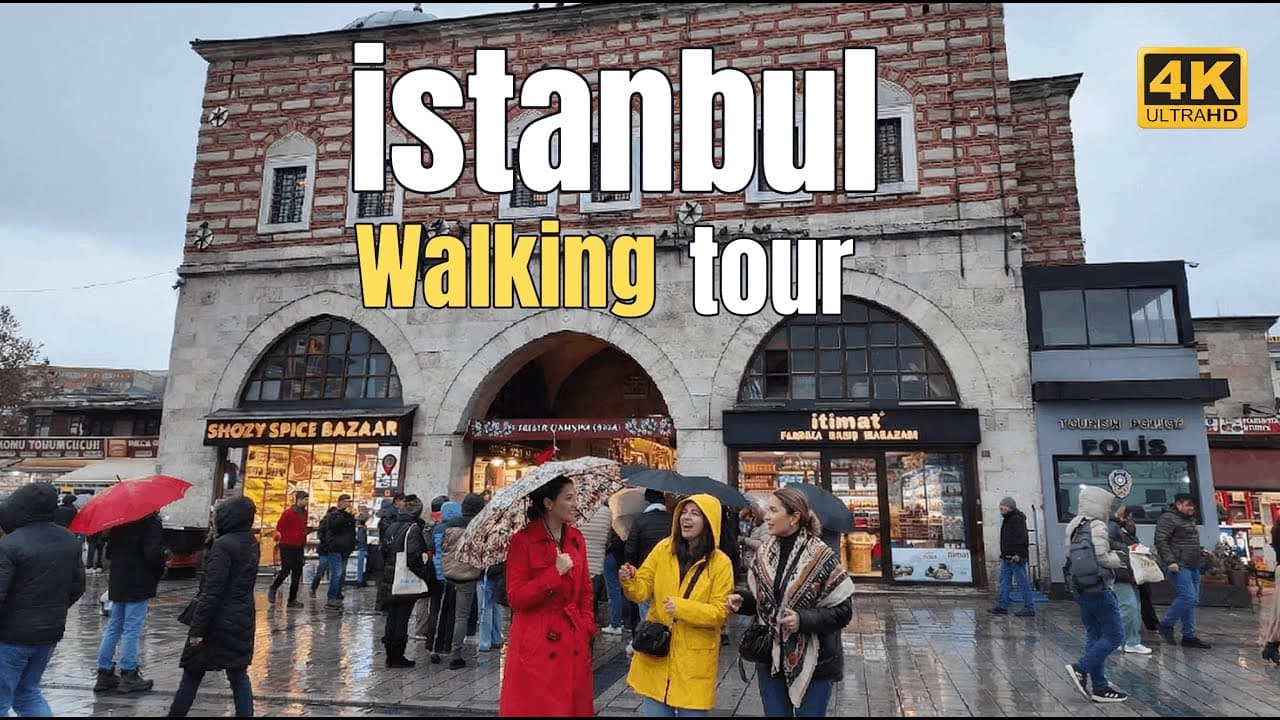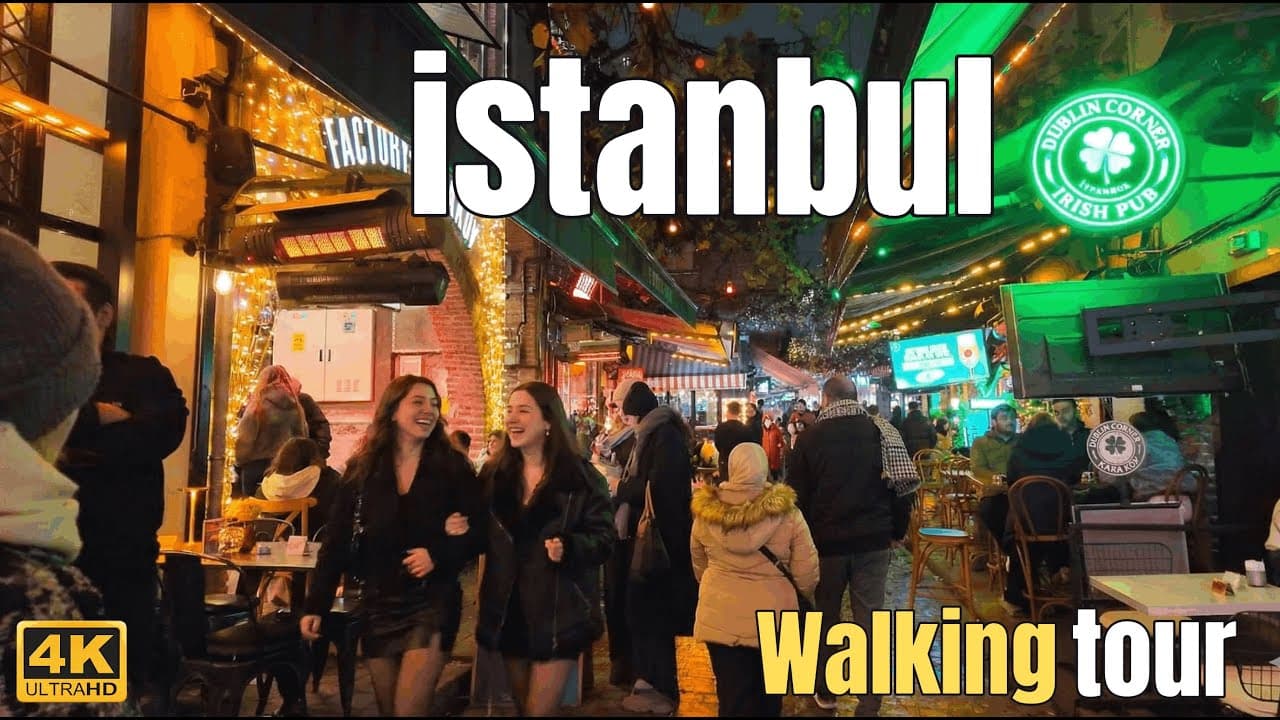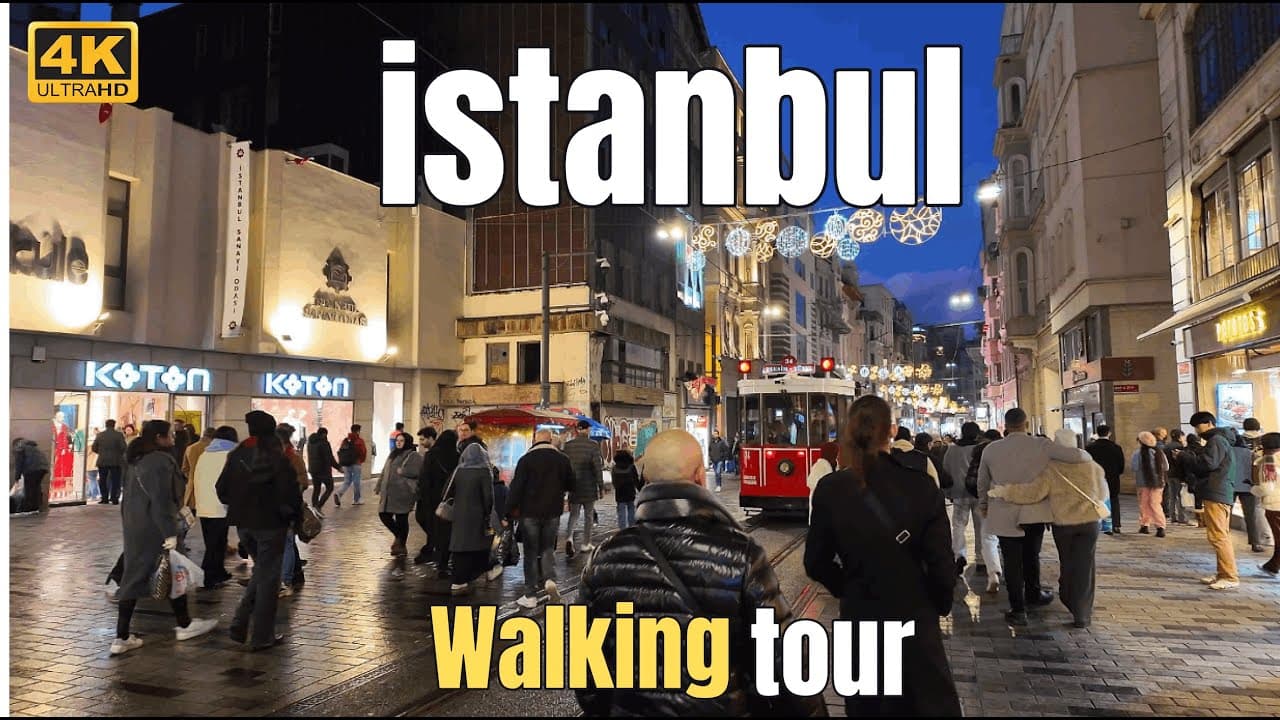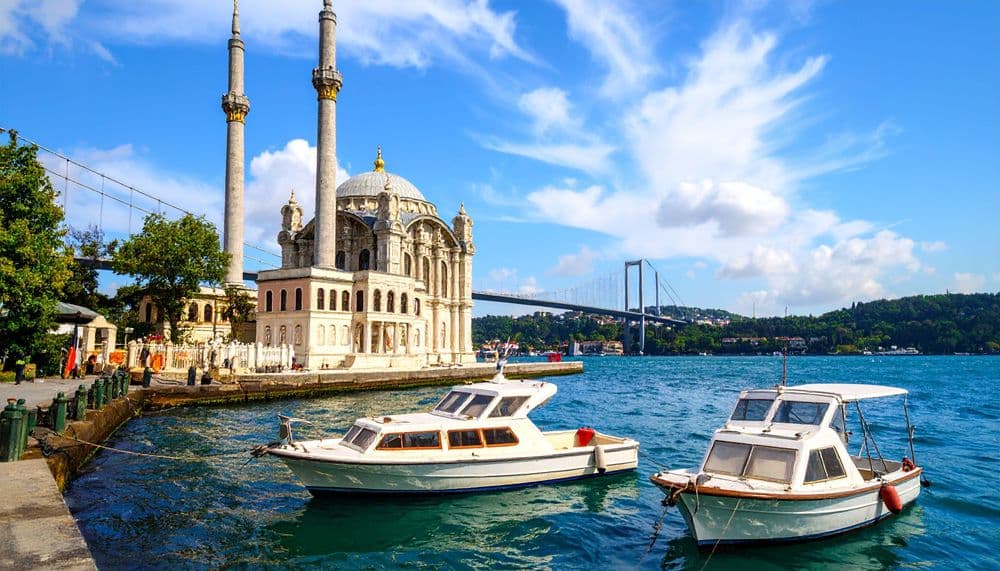
Explore Galata around the Galata Tower, the Camondo Stairs, the Kuledibi streets and the historic Tunel funicular.
Walk this route
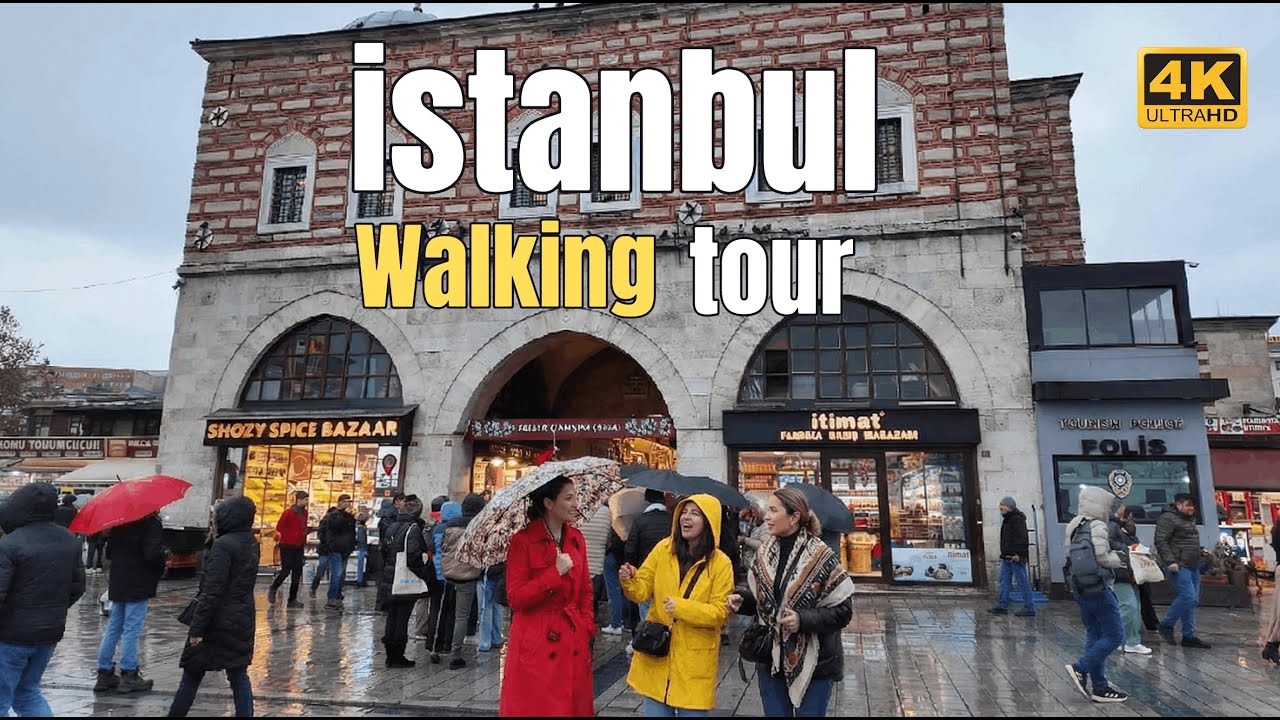
Istanbul Walking Tour 4K – Historic Streets, Crowded Bazaars & Timeless Atmosphere
Watch the 4K walkPlaces on the map
10 pinsNumbers match the order in the article. Tap a pin for directions.
Why Galata rewards a slow walk
Galata is the medieval quarter that the Genoese built across the Golden Horn from old Constantinople, and its tower still marks the skyline the way it did six centuries ago. The streets below it kept their steep, tangled medieval plan: banking palaces from the Ottoman Empire's last decades, a dervish lodge, a mosque that began life as a Dominican church, and a hardware bazaar that still smells of machine oil.
Most visitors climb the tower, take the photo and leave. That is the common mistake here. The tower is the least Galata thing about Galata; the quarter's real substance is on the slopes, and you can walk all of it in half a day without ever standing in a queue.
This guide covers ten places, from the tower square down to the Perşembe Pazarı waterfront, in an order you can walk.
Quick answer
Galata is Istanbul's old Genoese tower quarter between İstiklal Avenue and the Golden Horn, best done as a half-day downhill walk.
- Climb the tower early in the morning if you want the view without the queue, or skip it and drink coffee under it instead.
- The real quarter is the slopes: Galip Dede's music shops, Serdar-ı Ekrem's boutiques, the Kamondo Stairs and Bankalar Street.
- Arrive on the historic Tünel funicular from Karaköy, walk everything downhill, and leave along the water.
1. The Galata Tower
The Genoese finished the present tower in 1348 as the high point of their walled colony, and it has survived fires, earthquakes and several changes of role: watchtower, fire lookout, now a museum with an observation deck. The view is the classic one, the historic peninsula's domes and minarets lined up across the Golden Horn with the Bosphorus opening to the left. The balcony is narrow and the crowd is real: queues build from mid-morning and sunset is the worst of it. Go at opening time or accept the wait. Tickets are on the national museum system, so verify prices and hours officially before you plan around it. If the queue is long, remember that the streets around the base give you Galata's atmosphere for free, and the rooftops of nearby cafes sell a similar view with a coffee attached.
2. The tower square and Galip Dede Street
The small square around the tower fills with cafe tables and wedding photographers, and it works better as a place to sit than to rush through. From its upper corner, Galip Dede Street climbs toward Tünel: this is Istanbul's music row, a slope of shops selling saz and cymbals, student guitars and professional drum kits, stacked floor to ceiling. Even with no instrument to buy it is a good walk, and the shopkeepers are used to browsers. The street gets busy by noon because it is the main pedestrian link between the tower and İstiklal. Side alleys hold small galleries and souvenir shops of varying honesty; check prices in two or three places before buying anything. Early morning, before the shutters go up, the street shows its older face of worn stone thresholds and hand-painted signs.
3. The Galata Mevlevi Lodge
At the top of Galip Dede Street, behind a quiet courtyard wall, sits the oldest Mevlevi lodge in Istanbul, founded in the 15th century for the followers of Rumi's order. It is now a museum: the octagonal semahane where dervishes whirled, cells around the courtyard, a small cemetery of carved turban headstones, and displays of instruments and calligraphy. The courtyard alone justifies the stop, a genuinely calm pocket a minute from the tourist stream. Sema ceremonies are still staged here on a limited schedule; the programme changes, so verify dates and tickets officially rather than trusting street flyers, which often sell different shows elsewhere. Allow forty five minutes to an hour. It closes on standard museum days, so check before building your morning around it.
4. Serdar-i Ekrem Street
Serdar-ı Ekrem runs from near the tower toward Şişhane through a canyon of tall, ornate late-Ottoman apartment buildings, and in the last two decades it has become the quarter's fashion street: independent designers, vintage shops, a bookshop or two and cafes with tables against the stone facades. The Doğan Apartment, a huge courtyard block from the 1890s, is the street's landmark; you can admire the gate but the courtyard is private housing, so do not wander in. The street is short and calm, more browsing than sightseeing, and prices in the boutiques are what you would expect from designers with a view. Photographers love the light here in late afternoon. It connects naturally with the Crimean Memorial Church lane and makes the best route between the tower and Şişhane metro.
5. The Kamondo Stairs
The Kamondos, a Jewish banking family who financed much of 19th-century Galata, paid for this curved double staircase in the 1870s so their clerks could climb from Bankalar Street to the family houses above. The result is an art nouveau ribbon of stone switchbacks that became one of the city's most photographed staircases, helped by a famous Cartier-Bresson frame. It is free, always open and takes two minutes to climb, which is exactly why you should not treat it as a destination: fold it into the walk between the tower and the waterfront. Expect a short wait if you want a photo without strangers in it; weekday mornings are quietest. The steps are shallow but worn smooth, so mind your footing when they are wet.
6. Bankalar Street and SALT Galata
Bankalar Caddesi was the Wall Street of the late Ottoman Empire, a parade of stone bank headquarters built in the 1890s when Galata held the empire's money. The grandest of them, the old Imperial Ottoman Bank, is now SALT Galata: a free cultural centre with exhibitions, a research library under a glass roof, a good cafe and the Ottoman Bank Museum in the vaults, where ledgers and banknotes tell the empire's financial story. Entry is free and the building alone is worth the visit; check current exhibition programmes officially. The street outside is busy with traffic, so it reads better from the pavement on the upper side. Combine it with the Kamondo Stairs, which start almost opposite SALT's door.
7. The Arap Mosque
A few lanes inland from the water stands the strangest mosque silhouette in Istanbul: a tall square Gothic belltower turned minaret. The building began in the early 14th century as the Dominican church of St Paul, the biggest church of Genoese Galata, and was converted after the conquest, taking its name from Andalusian Muslim refugees settled in the parish. Inside, the wide timber-roofed hall still reads as a Latin church wearing a mosque's furnishings, and fragments of Genoese tombstones survive. It is an active neighbourhood mosque, not a museum: dress modestly, avoid prayer times, and step quietly. Entry is free. It is a two-minute detour from Bankalar Street and pairs naturally with Perşembe Pazarı, whose hardware stalls surround it on all sides.
8. The Persembe Pazari hardware quarter
Between Bankalar Street and the Golden Horn lies Perşembe Pazarı, the ship-chandlers' and hardware bazaar that has served the port since Ottoman times. Every shop sells something specific: valves, chain, paint, bearings, generators. It is a working wholesale quarter, not a tourist set, which is exactly its value; the streets hide crumbling Genoese and Ottoman han courtyards, and men wheel impossible loads past 500-year-old doorways. Go on a weekday morning when it is fully alive, watch for handcarts, and ask before photographing people at work. There is nothing to buy unless you need a propeller, but a slow loop through it, ending at the waterfront with the tower behind you, shows a Galata most visitors never see. On Sundays it is shuttered and empty.
9. The Tunel funicular
Tünel opened in 1875 to haul bankers from the Karaköy waterfront up to Pera without the sweat, which makes it one of the world's oldest underground railways still running. The ride is 573 metres and about ninety seconds, a single station at each end, and it uses the standard Istanbulkart fare. As transport it saves you a steep ten-minute climb; as an experience it is a small, charming piece of living infrastructure rather than a museum piece, rebuilt and electrified over the years. Ride it uphill, since walking down through Galata is the pleasure you would otherwise lose. The upper station opens onto Tünel Square, where the nostalgic tram departs along İstiklal, so the funicular stitches the waterfront, Galata and Beyoğlu into one continuous route.
10. The Crimean Memorial Church
Hidden in the lanes off Serdar-ı Ekrem stands Christ Church, the Crimean Memorial Church, a full neo-gothic English parish church finished in 1868 to honour the British dead of the Crimean War, designed by G. E. Street of London's Royal Courts of Justice. Its grey stone tower appearing above Istanbul rooftops is a genuinely odd sight. The church remains an active Anglican parish; visiting hours are irregular and depend on volunteers, so treat any open gate as luck and verify service times officially if you want to see the interior. The garden and facade can be seen from the lane at any time. It is a two-minute detour from Serdar-ı Ekrem and closes the loop back toward the tower square.
Getting there
Galata sits between Karaköy and İstiklal, so you have three easy approaches. From Karaköy (T1 tram, ferries from Kadıköy and Üsküdar), ride the Tünel funicular up and walk back down through the quarter. From Taksim, take the M2 metro one stop to Şişhane, which exits near Serdar-ı Ekrem. Or simply walk down İstiklal to Tünel Square and start there. Everything in this guide is within a fifteen-minute walk of everything else; the only real effort is the slope, so plan downhill, tower to waterfront.
When to go
Weekday mornings are best: the tower queue is short, Perşembe Pazarı is working and the cafes have space. Saturdays bring heavy crowds around the tower and Galip Dede. Sundays quiet the hardware quarter and some shops but leave the streets pleasantly calm. Late afternoon light is beautiful on Serdar-ı Ekrem and from the rooftops, but sunset at the tower means the day's longest queue. In rain the stone stairs and slopes get slippery; wear proper soles.
Frequently asked questions
Is the Galata Tower worth the queue?
The view is genuinely good, but it is not the only way to see it. If the line is long, a rooftop cafe nearby gives a similar panorama for the price of a coffee. If the tower matters to you, come at opening time and verify hours and tickets officially.
How long does Galata take?
Half a day covers all ten places at a relaxed pace, including the tower and the Mevlevi lodge. Without interiors, the walk itself is about two hours.
Is Galata walkable with limited mobility?
The quarter is steep and cobbled, and the Kamondo Stairs and Galip Dede are hard work. The Tünel funicular removes the worst climb; plan routes along Serdar-ı Ekrem and Bankalar Street, which are gentler.
Where does Galata end and Karakoy begin?
There is no sign, but roughly: above Bankalar Street is Galata, the waterfront strip below it is Karaköy. The two make one continuous walk, and Karaköy's quay, baths and museums have their own guide.
Planning questions
What does this İstanbul guide cover?
Explore Galata around the Galata Tower, the Camondo Stairs, the Kuledibi streets and the historic Tunel funicular.
Can I watch a 4K walking tour of İstanbul?
Yes. The page links to Travel Walk Tours films so you can preview the İstanbul route on a big screen before you go.
How should I use this page to plan?
Read the quick answer first, skim the route notes, then compare street texture, timing, and nearby guides through the linked city page and walking films.