Plan Beyoglu area by area: Taksim-Istiklal, Galata, Karakoy and Cihangir-Tophane, with days, transport and a map.
Walk this route
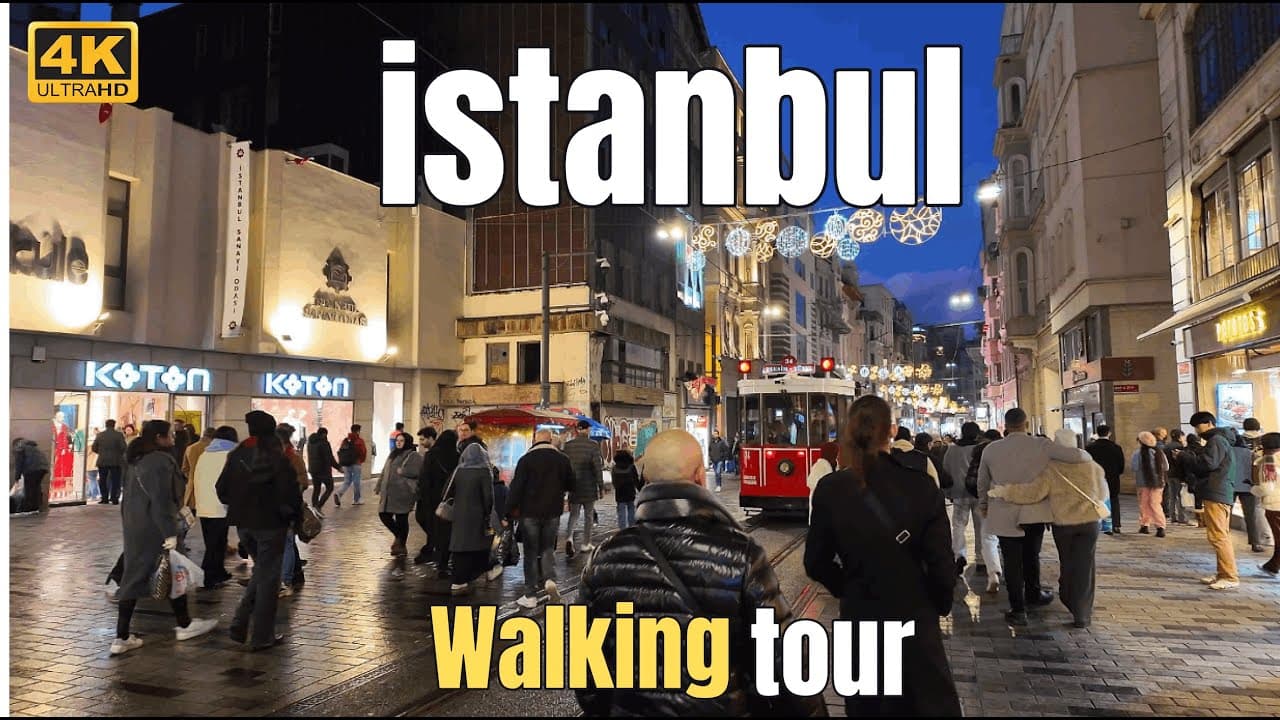
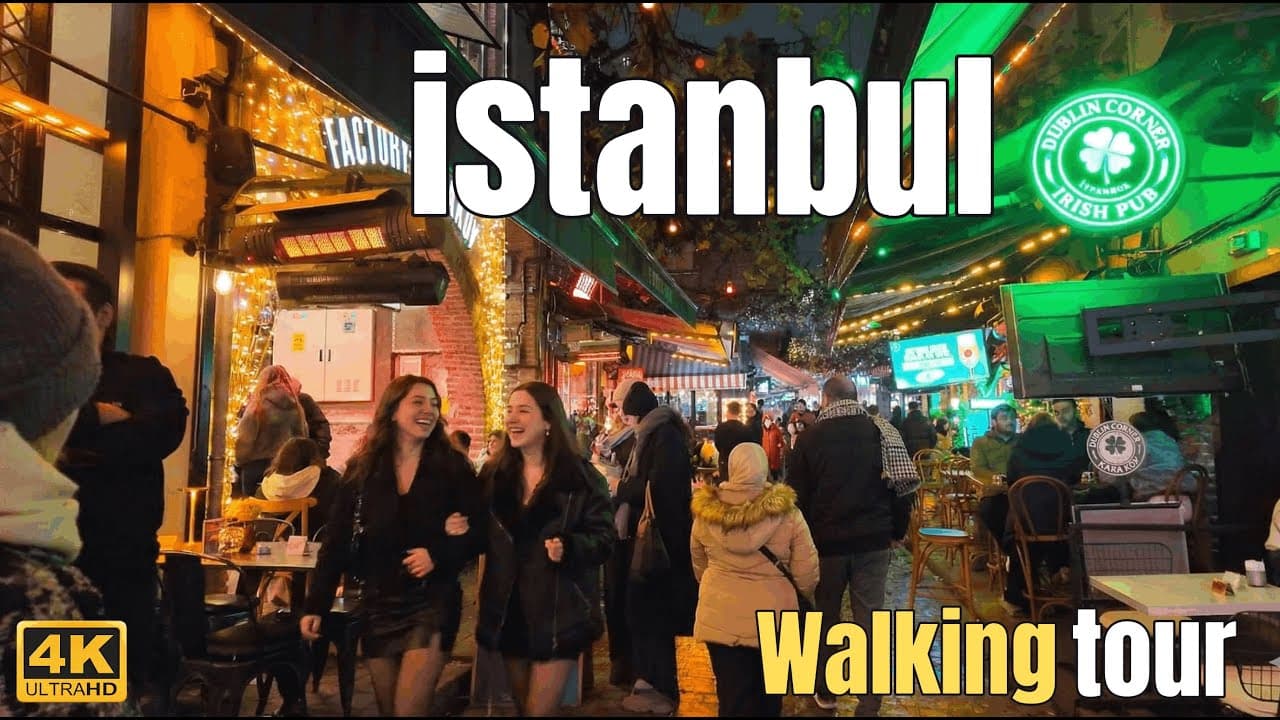
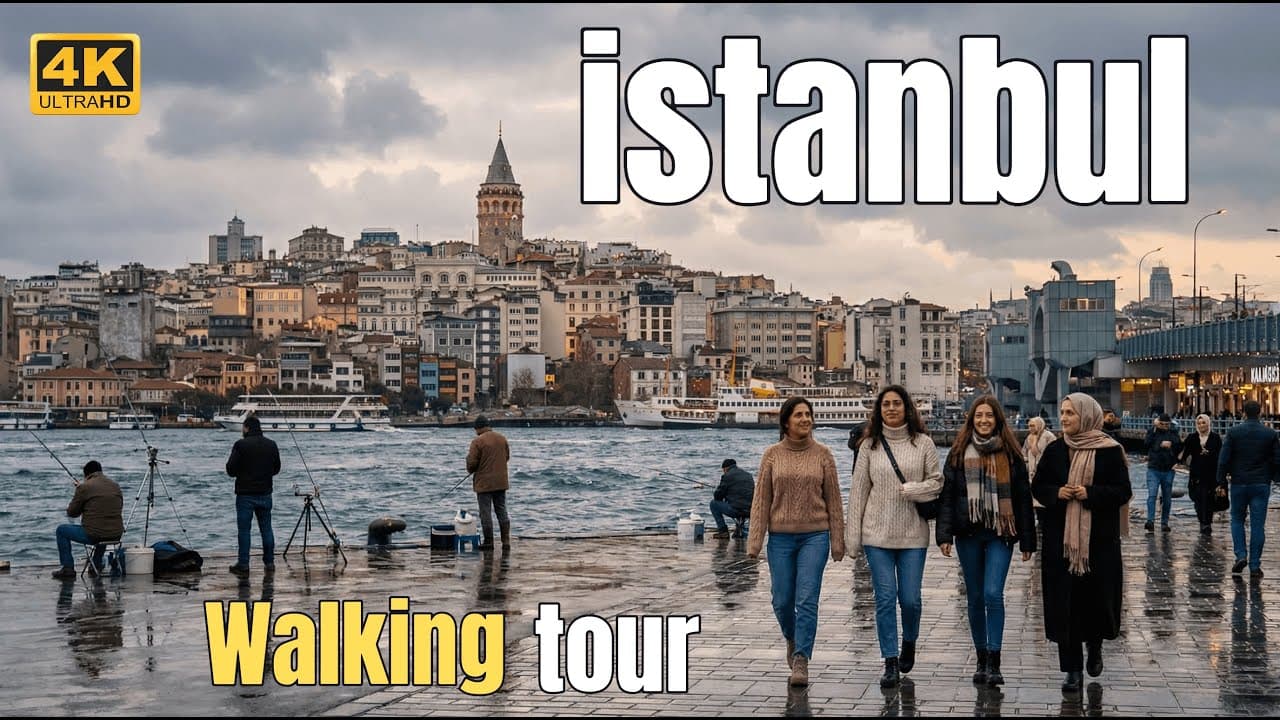
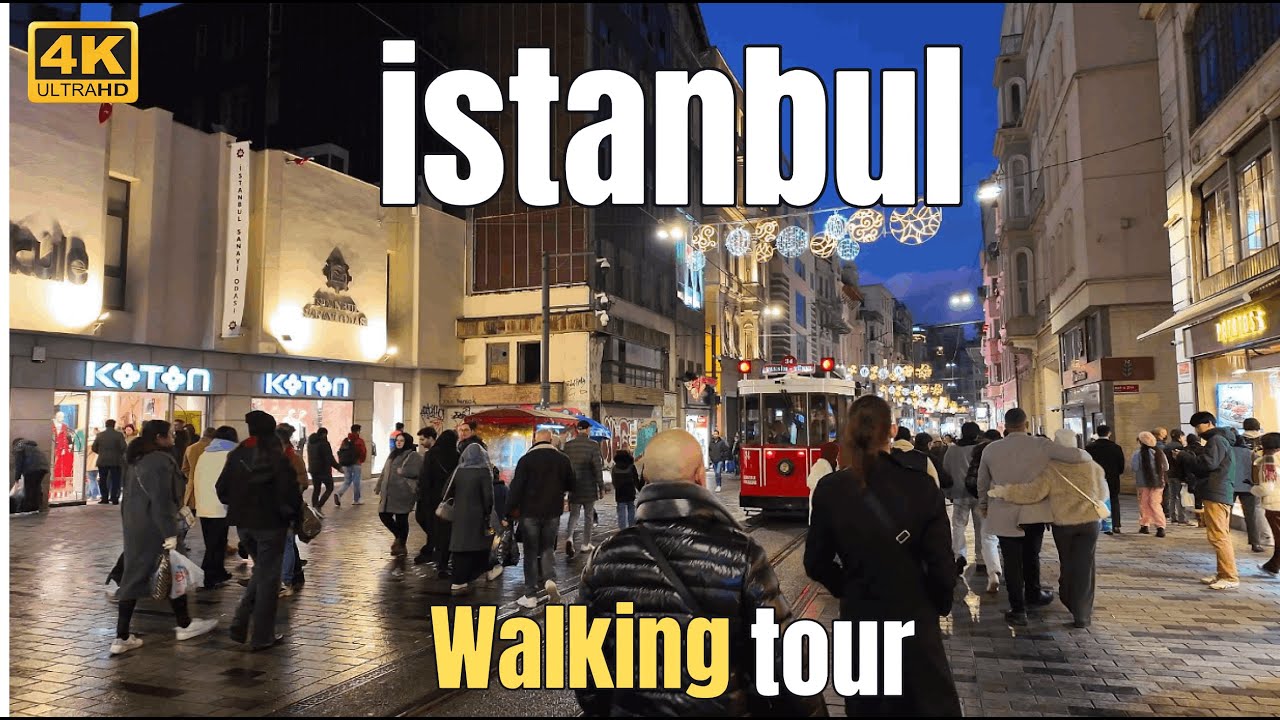
Istanbul Walking Tour 4K - Evening Walk on Istiklal Street & Taksim Square
Watch the 4K walkPlaces on the map
20 pinsNumbers match the order in the article. Tap a pin for directions.
Beyoglu guide: Pera's legacy, today's crowds, 20 stops
In the 19th century this hill was called Pera, and it was Istanbul's window onto Europe. The embassies of the great powers built their palaces here, Levantine bankers ran their offices on Bankalar Caddesi, and glass-roofed shopping arcades opened along the Grande Rue de Pera, today's Istiklal Avenue. The city's first tram ran along that street, and in 1875 the Tunel funicular, one of the oldest underground lines in the world, began hauling passengers up the slope from Karakoy. Most of the buildings from that era are still standing, and they are what give the district its character.
Today's Beyoglu is a place with two faces. On one side, the shoulder-to-shoulder crowds of Istiklal, the chain stores and the steady flow of tourists. On the other, museums, century-old churches, meyhane lanes, antique dealers and the old shipyards along the Golden Horn coming back to life. The district runs from Taksim down the Galata slope to the Karakoy waterfront, east to the Cihangir and Cukurcuma hillsides, and northwest along the shore as far as Haskoy.
This guide is written for first-time visitors, and also for anyone who thinks Beyoglu is nothing more than Istiklal. The most common mistake is exactly that: walking the avenue from one end to the other and leaving. The real Beyoglu is in the side streets, the arcades, the lanes below the slope and the waterfront. The 20 stops below match the numbers on the map and follow a natural walking order.
Quick answer
Treat Beyoglu as five areas rather than one street: Taksim-Istiklal, Galata, Karakoy-Tophane, Cihangir-Cukurcuma and the Haskoy-Tersane stretch on the Golden Horn.
- Two days is a comfortable pace; with one day, pick two or three areas.
- Early weekday mornings are the calmest time; save Nevizade for a meyhane evening.
- The district is walkable but steep; plan downhill, from Taksim toward Karakoy, and your knees will thank you.
- Keep bags and phones in front of you; Istiklal is a known pickpocket route.
Around Taksim and Istiklal
The first nine stops sit on the district's main spine. We have a separate, more detailed Taksim-Istiklal guide; this is the outline.
1. Taksim Square and the Republic Monument
Taksim takes its name from the 18th-century practice of dividing the city's water supply here; the stone maksem, the old distribution building, still sits at the entrance to Istiklal. The Republic Monument in the centre of the square was unveiled in 1928. The work of the Italian sculptor Pietro Canonica, it shows the years of the War of Independence on one face and the founders of the young Republic on the other. The square is not an architectural showpiece; its real role is as the city's meeting point and transport hub. The M2 metro, the F1 funicular from Kabatas and dozens of bus routes all converge here. The natural move is a few minutes at the monument, a glance at Taksim Mosque and the Ataturk Cultural Centre, then straight onto Istiklal. Early mornings the square is surprisingly quiet; by mid-afternoon the density builds fast.
2. Gezi Park
Gezi Park, at the north end of the square, is just about the only green space in central Beyoglu. The Taksim Artillery Barracks, built in the 18th century, stood here until 1940, when it was demolished and the park laid out as part of the era's city planning. In 2013 the park made headlines worldwide when protests began against a plan to build over it, and it has been one of the symbolic places of Istanbul's recent history ever since. Set your expectations correctly: this is not a grand city park but a neighbourhood one, with shaded trees, benches and corners for tea. Even so, it is the only option in the centre for a fifteen-minute breather after the Istiklal crowds. Retirees and joggers come in the morning, office workers at lunch. Watching the square from the steps above it is a small but pleasant detail.
3. Istiklal Avenue
Istiklal runs about 1.4 kilometres downhill from Taksim to Tunel. In the 19th century, as the Grande Rue de Pera, it was the smartest street in the city, and most of the apartment blocks lining it date from that era; walk with your eyes on the upper facades and the avenue looks like a different street. It was pedestrianised in 1990, and the red nostalgic tram has trundled along it ever since. Hundreds of thousands of people are said to pass through on a busy day, and on Saturday afternoons walking genuinely becomes hard work. An honest warning: those crowds suit pickpockets too, so keep your phone out of your back pocket and your bag in front of you. The avenue itself, full of chain stores, can disappoint; the trick is to keep turning off into the side streets and arcades. Around 9 in the morning it is nearly empty, which is the best hour for photographs.
4. Cicek Pasaji and the fish market
Cicek Pasaji opened in 1876 as the Cite de Pera, built on the site of the Naum Theatre after the great Pera fire of 1870, and it was the most ornate apartment-arcade of its day. The name, Flower Passage, is usually traced to the White Russian emigres who sold flowers here after 1917. Under its glass roof today run long rows of meyhane tables. A fair admission: the arcade now serves tourists more than locals and prices reflect the location, so look at a menu before sitting down. As a building, though, it is absolutely worth stepping into. The fish market directly behind it is still a working bazaar: fishmongers, pickle shops, fried-mussel stands and nut sellers packed together. Eating stuffed mussels or kokorec standing up in the market lanes is a more local experience than a table in the arcade.
5. Nevizade Street
Nevizade, a narrow lane off the fish market, is where Istanbul's meyhane culture runs at its most concentrated. Both sides are lined with taverns end to end; in the evening the tables spill into the street, waiters work the doorways, and live fasil music drifts from one room into the next. The routine is classic: a tray of cold mezes arrives, you point at what you like, then come hot starters and fish. Drinking raki is not compulsory, but the street's rhythm turns around it. Practical notes: finding a table on weekends is hard, so book or come early. To avoid surprises with the bill, ask the price of unpriced mezes and of the fish before ordering; nobody here considers that rude. By day the lane is nearly dead. Nevizade means evening. If the din is too much, quieter meyhanes wait in the parallel streets nearby.
6. Atlas Pasaji and the historic arcades
The real wealth of Istiklal is its arcades, and Atlas Pasaji is among the best known. Built in the 1870s as a mansion and later converted, it houses the restored Atlas Cinema and, under the same roof, the Istanbul Cinema Museum. The shops inside lean toward records, second-hand clothes and accessories. But do not stop at Atlas: within a few hundred metres you will find the Hazzopulo Pasaji, with a tea garden in its courtyard, plus the Suriye, Aznavur and Avrupa arcades. Each one is like an interior street left over from the shopping culture of 19th-century Pera. Arcade-hopping is also the best escape from the Istiklal crush; when the avenue is jammed, the courtyards stay calm. Most shops open around noon and close early in the evening, so put the arcade circuit in your daytime plan.
7. St. Anthony's Church
Halfway along Istiklal, set back from the street behind its own courtyard, St. Anthony's is the largest Catholic church in Istanbul. The present red-brick neo-gothic building was completed in 1912 by Giulio Mongeri, an architect who left his mark all over the city. It is an active place of worship, with masses held in several languages, and the doors are open to visitors outside service times. In the courtyard is a statue of Angelo Roncalli, who served as the Vatican's representative in Istanbul in the 1930s and later became Pope John XXIII. The interior, dim and lit through stained glass, is strikingly silent after the noise of Istiklal. Entry is free, with a donation box. Clothing that covers shoulders and knees, a low voice and no photographs during mass are the expected courtesies. Since it sits right on the avenue, ten minutes in passing is enough.
8. The Pera Museum
In Tepebasi, in a building put up in 1893 as the Hotel Bristol, the Pera Museum has been open since 2005. Run by the Suna and Inan Kirac Foundation, it holds three permanent collections: Orientalist painting, showing the Ottoman world through the eyes of both Western and local artists; Kutahya tiles and ceramics; and Anatolian weights and measures. The star of the collection is Osman Hamdi Bey's The Tortoise Trainer, one of the most famous paintings in Turkey, which hangs here. The upper floors are given over to temporary exhibitions, and the programme is usually strong; check the current show and opening hours through the museum's official channels before going. The building is on the small side, and one to two hours covers the collection plus an exhibition. It is the ideal indoor stop for an afternoon when you have had your fill of the Istiklal crowds.
9. The Pera Palace Hotel
The Pera Palace in Tepebasi opened in 1895 to put up travellers arriving in Istanbul on the Orient Express. Designed by Alexandre Vallaury, it is remembered as home to one of the city's first electric lifts. The guest list is a history lesson in itself: room 411, where Agatha Christie stayed, comes wrapped in legend, and room 101, used by Ataturk, is preserved as a museum room. The hotel still operates, and even non-guests can take afternoon tea in the domed Kubbeli Salon or look around the lobby. Verify the current arrangements for the museum room and for tea with the hotel itself. It is a few minutes on foot from the Pera Museum, so the two stops combine easily. For anyone who wants Beyoglu's Belle Epoque face in a single building, this is the address.
Galata
Four stops from the Tunel end of Istiklal down to the streets around the tower. Our separate Galata guide covers the quarter street by street.
10. The Galata Mevlevi Lodge
Entered through a gate at the top of Galip Dede Caddesi, near Tunel, the Galata Mevlevi Lodge was founded in 1491 and is the oldest Mevlevi dervish lodge in Istanbul. It is now visited as a museum: the wooden sema hall, the dervishes' cells and the displayed instruments and calligraphy explain the culture of the order. In the garden cemetery is the tomb of the poet Seyh Galip, who gave the street its name. Sema ceremonies are held in the hall on certain days; dates and ticketing change, so do not build a plan around one without confirming through official sources. The courtyard is remarkably quiet given the tourist flow a few steps away, and half an hour here deepens the walk from Istiklal down to the Galata Tower. Check current opening hours and closed days for the museum as well.
11. Tunel Square and the nostalgic tram
The southern end of Istiklal finishes at Tunel Square, named after the underground funicular that has linked it with Karakoy since 1875. Tunel is one of the world's oldest underground lines, generally counted second only to the London Underground, and in about 90 seconds it erases the steep Galata slope. It is still an ordinary piece of public transport, boarded with the city travel card. The square is also the terminus of the red nostalgic tram, and watching the tram turn around is a small show in itself. Cafes and small bars cluster around the square, which makes a pleasant late-afternoon pause. Practically, Tunel is the key to route planning: anyone who does not fancy the climb from Karakoy can ride up and walk Istiklal toward Taksim, or do the reverse. For anyone who likes historic transport, riding it is a small but genuine experience.
12. The Galata Tower
The tower that defines Galata was built in 1348 by the Genoese, who then held the quarter, as the chief tower of their fortifications. Over the centuries it served as a fire lookout, a prison and an observatory. Today it is run as a museum, and the viewing gallery at the top gives one of the best single panoramas of the old city, the Golden Horn and the Bosphorus. Honest warnings: the queue grows long in the afternoon and toward sunset, and because the interior is narrow the gallery gets crowded. Going at opening time in the morning is the comfortable option. Ticket prices and hours change, so confirm through the official channel. Even if you skip the climb, the Kuledibi streets around the base, with their design shops and cafes, deserve a wander, and the best photographs of the tower are taken from those streets anyway.
13. The Kamondo Stairs
Curving up from Bankalar Caddesi toward the Galata slope, the Kamondo Stairs are a gift the bankers left to the street that was the centre of Ottoman finance in the 19th century. They were commissioned in the 1870s by the Camondos, one of the most powerful Jewish banking families of the era, and their interlocking curved flights, often described as an early echo of Art Nouveau, have made them the most photographed staircase in the city. Henri Cartier-Bresson's 1964 photograph taken here carried their fame around the world. They are free and open at all hours; early morning is best for both light and empty frames. Next door, the former head office of the Ottoman Bank now operates as Salt Galata, a library and exhibition space, and the two make a natural pair. From here the Karakoy waterfront is a few minutes downhill.
Karakoy and Tophane
Three stops along the shore. Our separate Karakoy guide covers the quarter cafe by cafe and pier by pier.
14. The Karakoy quay and cafes
Karakoy is the old port quarter where Galata meets the water. Ferries for Kadikoy and the Princes' Islands leave from its pier, and walking the quay with the old city skyline across the water is one of the best short walks in Istanbul. Over the past fifteen years the district has turned from warehouse and hardware streets into a cafe zone: third-wave coffee roasters, bakeries and breakfast places line the lanes around Mumhane and Kemankes. Karakoy is also synonymous with baklava, and the quarter's long-established baklava house draws queues from the morning on. With the opening of Galataport the shoreline became one continuous promenade; weekends get seriously busy, so pick a weekday morning for a quiet coffee. Thanks to the Tunel funicular, the steep climb to Istiklal is no longer a problem, and the T1 tram runs through the quarter too.
15. Kilic Ali Pasha Mosque and Tophane
Walking from Karakoy toward Tophane you pass the Kilic Ali Pasha Mosque, a late work of Mimar Sinan on the shore. Built in 1580 for Kilic Ali Pasha, the celebrated admiral of the Ottoman fleet, its plan is a deliberate nod to Hagia Sophia, and the interior is airy and calm. The complex's hamam, dated 1583, reopened after a long restoration; men's and women's sessions run at separate hours, and you should reserve and confirm times before going. In the Tophane square nearby are the Tophane Fountain of 1732, the Nusretiye Mosque a little further on, and the Tophane-i Amire buildings, founded as the imperial cannon foundry and now used as an arts venue. For the mosque, respectful dress and avoiding prayer times are all that is needed. This stretch of shore, together with the Cihangir hillside, is covered in detail in a separate Cihangir-Tophane guide.
16. Istanbul Modern
Istanbul Modern opened in 2004 as Turkey's first museum of modern art and moved into its new Renzo Piano building in 2023. The building, on the Karakoy waterfront, is worth seeing in its own right, a light structure sitting just above the water with a reflective roof terrace. The collection traces the main line of Turkish modern and contemporary art, and the photography gallery and temporary exhibition programme are strong. The roof terrace looks over the mouth of the Bosphorus and across to the old city; it is reached with a museum ticket and ranks among the best viewpoints of the day. Practical notes: weekends are busy, and since exhibitions and ticket prices change, confirm on the official site. It is a few minutes from the T1 tram's Tophane stop and fits comfortably into the same half day as the Kilic Ali Pasha Mosque and Galataport.
Cihangir and Cukurcuma
Two hillside quarters one street behind Istiklal. Together with the Tophane shore, this area gets its own in-depth guide.
17. Cihangir and its view terraces
Cihangir, just south of Taksim, is the lived-in face of Beyoglu: the neighbourhood of artists, writers and, in recent years, foreign residents. It takes its name from the mosque Sinan built in memory of Sehzade Cihangir, son of Suleyman the Magnificent, rebuilt after successive fires; the mosque courtyard and the terraces around it are among the best free viewpoints over the mouth of the Bosphorus. The quarter's pulse is in its cafes: around Akarsu Yokusu the tables stay full from breakfast until late, and the streets belong to the best-groomed street cats in Istanbul. The right way to use Cihangir is not to hunt for monuments but to sit down and watch the neighbourhood go by. The slopes are serious; entering from the Taksim side and walking down beats climbing up from Tophane. Expect waits at the popular places around Sunday brunch time.
18. The Cukurcuma antique quarter
Cukurcuma, in the hollow between Cihangir and Galatasaray, is Istanbul's antique dealers' quarter. Along Cukur Cuma and Faik Pasa streets the shops run from old records and Ottoman engravings to midcentury furniture and chandeliers. Browsing is welcome, and bargaining, kept polite, is expected behaviour. The neighbourhood's literary fame comes from Orhan Pamuk: the Museum of Innocence, which the author conceived together with his novel of the same name, occupies a corner building in a narrow street here and displays the objects collected by the novel's hero. You can visit without having read the book, but for readers the effect is something else entirely; confirm hours and tickets through official sources. Most shops open around noon and many close on Sundays. The historic Cukurcuma Hamami completes the fabric of the quarter.
The Golden Horn edge: Haskoy and Tersane
The last two stops are away from the centre, on the Golden Horn shore. They make an extension worth half a day.
19. The Rahmi M. Koc Museum
The Rahmi M. Koc Museum in Haskoy, on the Beyoglu side of the Golden Horn, is Turkey's first major museum of industry and transport, opened in 1994. The site itself is historic: it takes in the Lengerhane, where anchors and chain were cast in the Ottoman period, and the old Haskoy shipyard. For families with children the collection is close to a guaranteed day out: a submarine you can walk through, steam locomotives, classic cars, aircraft, trams and machinery kept in working order. For adults with any interest in industrial history it will hold you for hours as well. Access is its weakest point: from the centre it means a taxi or the buses along the Golden Horn road, and the Halic ferry piers are nearby, so check the timetable. See the official site for opening days and tickets. Pairing the museum with stop 20, Tersane Istanbul, makes a sensible half day.
20. Tersane Istanbul
The historic shipyards on the Golden Horn go back to the Tersane-i Amire, founded in the reign of Mehmed the Conqueror, which built the ships of the Ottoman navy for centuries and counts among the oldest shipyard sites in the world. Closed off for decades, this vast stretch of shoreline is now reopening in stages as Tersane Istanbul: a quayside promenade among the restored slipways and workshop buildings, with cafes, restaurants, a marina and a hotel, and museum projects as part of the programme. An honest note: the site is still a work in progress, and which sections and venues are open can change, so check the current situation before making the trip. The sunset view across the water to the Fener and Balat hillsides is already reason enough. Combined with the Rahmi M. Koc Museum and a walk along the Golden Horn, it shows a side of Beyoglu that has not yet made it onto the tourist map.
Getting there
Do not even consider driving into Beyoglu; parking is scarce and traffic heavy. The M2 metro's Taksim and Sishane stations serve the two ends of the district: Taksim puts you at the top of Istiklal, Sishane brings you up at Tunel Square and Galata. The F1 funicular climbs from Kabatas to Taksim, and the historic Tunel funicular of 1875 climbs from Karakoy to Tunel Square; both take the Istanbulkart and both erase the steep slopes. The T1 tram links the shore to the historic peninsula with its Karakoy and Tophane stops. Ferries run to the Karakoy pier from Kadikoy, and arriving by water is both fast and scenic. For the Haskoy side you will need a bus, a taxi or the Golden Horn ferry. The general rule: enter at the top, at Taksim, and work downhill toward Karakoy, so the slopes are always in your favour.
When to go
Beyoglu works in every season, but the hour of the day matters more than the month. On weekday mornings Istiklal and the arcades are at their calmest, and walking into museums at opening time skips the queues. Friday and Saturday evenings are the district at its fullest and liveliest; that is exactly the right time for a meyhane night, and exactly the time to avoid if you want a quiet walk. At ticketed places like the Galata Tower and Istanbul Modern, the pressure builds toward sunset. Season-wise, spring and autumn are ideal for walking; in summer the midday heat makes the Cihangir slopes hard work, while in winter the arcades and museums are the natural shelter from rain. On Sunday mornings the district wakes late; arriving before 10 gets you into the breakfast places ahead of the rush.
Eating and drinking
Beyoglu's table culture draws on three separate veins. First, the meyhane tradition: around Nevizade and the fish market, the routine of meze, fish and raki fills the streets in the evening; sit down knowing the touristy location shows in the prices, and ask before ordering. Second, Karakoy's cafe belt: the third-wave roasters and bakeries around Mumhane and Kemankes, plus the quarter's famous baklava house, anchor the daytime programme. Third, Cihangir's neighbourhood rhythm: long breakfasts, brunch tables and wine bars in the evening. Beyond these, add stand-up mussels and kokorec in the fish market, tradesmen's lunch spots in the back streets off Istiklal, and the nargile cafes of Tophane. The general principle is simple: eat one street off the main drag, not on it; the quality goes up and the bill comes down.
Frequently asked questions
How many days does Beyoglu need?
The main line, meaning Taksim, Istiklal, Galata and Karakoy, can be walked in one long day. But if you want to go into the museums, detour through Cihangir and Cukurcuma and add a meyhane evening, two days is a comfortable pace. Add a further half day for Haskoy and Tersane Istanbul.
Is Istiklal Avenue safe?
The avenue stays crowded until late and is generally safe. The real risk is pickpocketing: keep your phone out of your back pocket, carry your bag in front of you and stay alert where the crowd narrows. Also decline invitations from overly friendly strangers to bars they recommend; that is the simplest protection against inflated-bill scams.
Is the Galata Tower worth the climb?
The view is genuinely good, but the queue and the crowding can make the experience tiring in the afternoon. Go at opening time and it is worth it. If time or budget is tight, the Istanbul Modern terrace and the Cihangir terraces are strong alternatives, and the best views of the tower itself are from the Kuledibi streets below anyway.
Are Tunel and the funicular the same thing?
There are two separate lines. Tunel is the historic line of 1875 linking Karakoy with Tunel Square at the end of Istiklal. The F1 is the modern funicular from Kabatas up to Taksim. Both take the Istanbulkart, and both are the way to beat Beyoglu's steep slope without walking it.
Does Beyoglu work for families with children?
Istiklal with a pushchair is a struggle at busy hours; choose the morning. The stop children love most, by a wide margin, is the Rahmi M. Koc Museum; the submarine and the vehicles fill a whole day. The nostalgic tram and a ride on Tunel are short but effective treats. Drop the meyhane lanes from the evening plan and head for the Karakoy cafes instead.
Explore nearby towns and neighbourhoods
Planning questions
What does this İstanbul guide cover?
Plan Beyoglu area by area: Taksim-Istiklal, Galata, Karakoy and Cihangir-Tophane, with days, transport and a map.
Can I watch a 4K walking tour of İstanbul?
Yes. The page links to Travel Walk Tours films so you can preview the İstanbul route on a big screen before you go.
How should I use this page to plan?
Read the quick answer first, skim the route notes, then compare street texture, timing, and nearby guides through the linked city page and walking films.